As an Amazon Associate, I earn from qualifying purchases.
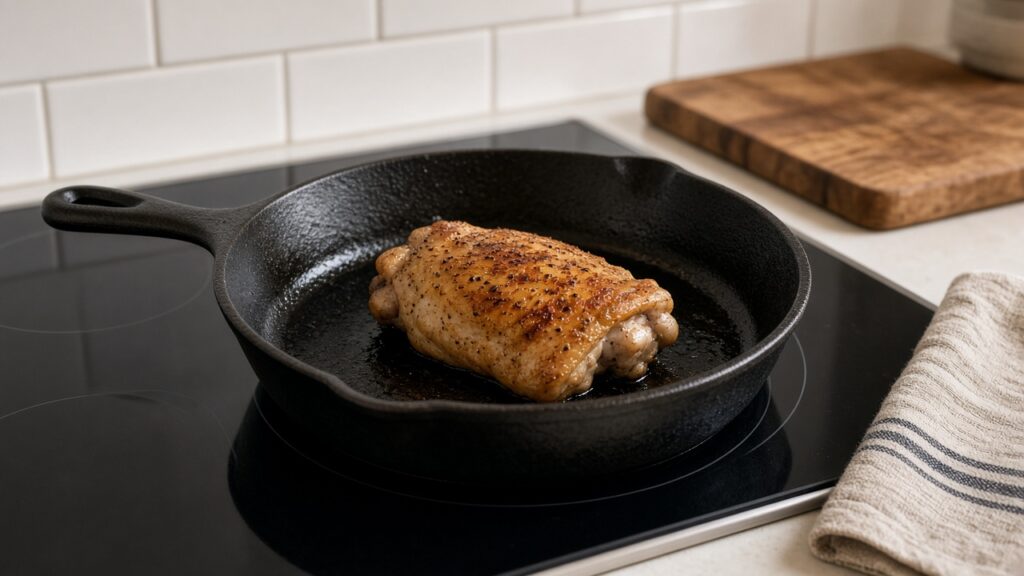
Yes, you can use cast iron on a glass top stove. Most glass-ceramic cooktop makers allow it, as long as the pan has a smooth, flat bottom, you lift it instead of sliding it, and you heat it up gradually. The real risks are scratches from a rough pan base and cracks from dropping a heavy skillet, not the cast iron itself.
Cast iron has a reputation as the cookware you should never put on a glass top, and plenty of people are nervous the first time they set a 5-pound skillet on a smooth-top range. The good news is that the warnings are mostly about how cast iron is handled, not whether it belongs there. This guide explains what can actually go wrong, how to protect your cooktop, and which kinds of cast iron are the easiest on glass.
Can You Use Cast Iron on a Glass Top Stove? The Short Answer
For most cooks, the answer is yes. Glass-ceramic cooktops are made to handle heavy pots and high heat. A cast iron skillet sitting still on a burner is not a problem. Trouble starts when the pan is dragged, dropped, heated too fast, or has a rough or warped base.
There is one important exception. Always check your cooktop's manual first. A small number of manufacturers caution against cast iron or set weight limits, and following the manual keeps your warranty intact. If your manual is gone, you can usually find it by searching your model number on the manufacturer's website.
If your smooth top is actually an induction cooktop, cast iron is not only safe, it is one of the best choices, because it is magnetic and heats well on induction. Not sure which type you have? Our guide on what induction stoves are explains how to tell.
What Can Go Wrong When You Use Cast Iron on Glass
Understanding the actual risks makes it much easier to avoid them.
Scratches
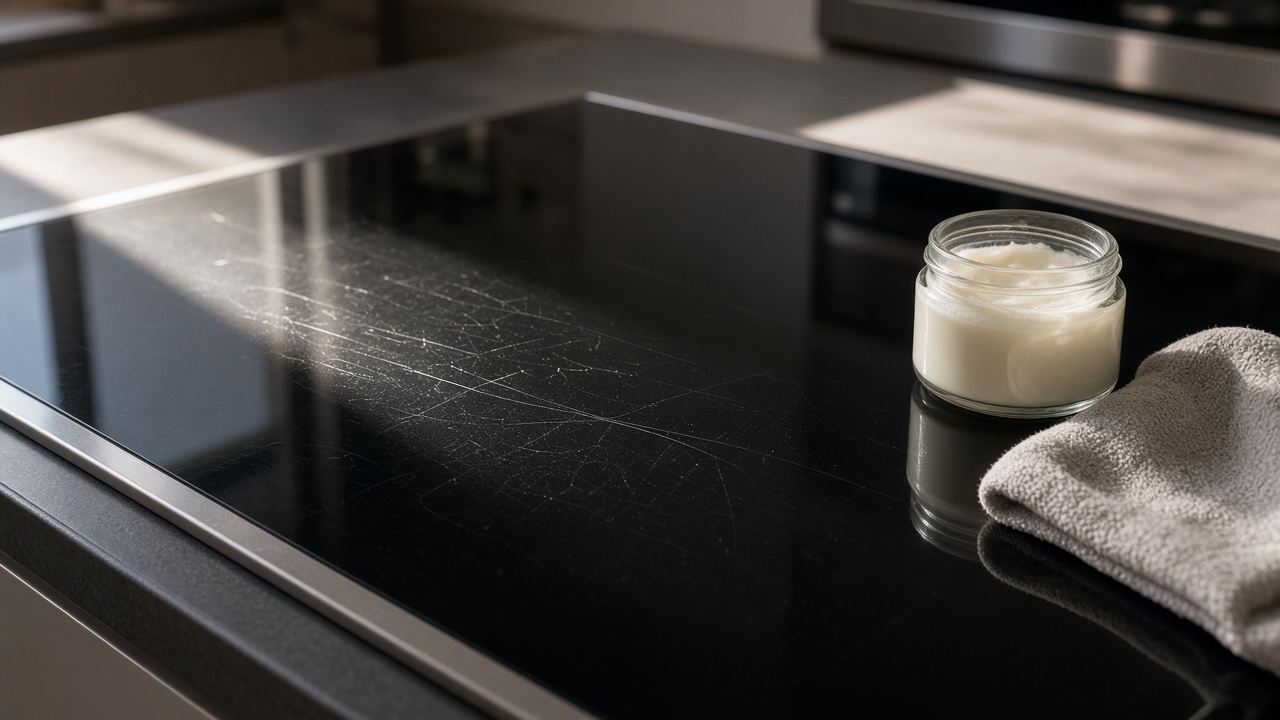
Traditional cast iron is sand-cast, which leaves the bottom slightly rough. Add a little grit or burnt-on food, and sliding the pan across the glass can leave scratches. Light marks can sometimes be polished out, but deep scratches are permanent. If you already have some, see our guide on how to remove scratches from a glass cooktop.
Cracks and Chips
A cast iron skillet is heavy. Dropping it, or setting it down hard on the edge of the glass, can chip or crack the surface. This is the most expensive mistake, because a cracked cooktop usually needs a new glass top or a new range.
Stains and Burnt Rings
Old seasoning and grease on the outside of the pan can carbonize onto the glass and leave dark rings or rainbow stains. These are usually cleanable, and our guide on how to get stains off a glass cooktop walks through it.
Uneven Heating and Thermal Shock
Radiant glass cooktops heat from below the glass, and cast iron heats slowly and unevenly. Cranking a cold skillet straight to high heat can create a very hot spot in the middle of the pan. In rare cases, rapid heating of a large pan on a small burner can stress or even crack the pan itself.
Heat Cycling
Many radiant cooktops have a temperature limiter that briefly turns the element off if the glass gets too hot. Cast iron holds a lot of heat, so you may notice the burner glowing on and off. That is normal, but it can make searing feel slower than on gas.
How to Use Cast Iron on a Glass Top Stove Safely
Follow these steps every time and cast iron and glass can live together for years.
- Check the bottom of the pan. Run your hand across it. It should be flat and smooth, with no burrs, bumps or crusty buildup. Set it on a counter and press the edges. If it rocks, it is warped and will not heat well on glass.
- Clean both surfaces. Wipe the cooktop and the bottom of the pan before cooking so no grit gets trapped in between.
- Lift, never slide. Use two hands or a helper handle to lift the skillet on and off the burner. Do not shake the pan on the glass the way you might on a gas grate.
- Match the pan to the burner. Use a burner that is about the same size as the base of the pan. A large skillet on a small element heats unevenly.
- Preheat gradually. Start on low to medium-low for a few minutes, then turn it up. This gives the iron time to heat evenly and is easier on both the pan and the glass.
- Avoid maximum heat for long periods. Medium to medium-high is enough for most cast iron cooking because the pan holds heat so well.
- Never drop it or set it down hard. Set the skillet down gently and keep it away from the outer edges of the cooktop.
- Let it cool on the burner or a trivet. You do not need to rush a hot pan off the cooktop, but do not put a hot skillet on a cold, wet surface.
Which Cast Iron Is Best for a Glass Top Stove?
Not all cast iron is equally kind to glass. Here is how the main types compare.
| Type | Bottom surface | How glass-friendly | Notes |
|---|---|---|---|
| Enameled cast iron | Smooth enamel | Very good | Smooth base, easy to lift-and-place, but avoid chipped enamel |
| Machined or smooth-bottom bare cast iron | Ground smooth | Good | Vintage and some premium pans have polished bottoms |
| Standard sand-cast cast iron | Slightly rough | Fair | Works well if you lift, never slide, and keep the base clean |
| Cast iron with heat rings or raised edges | Uneven contact | Poor | Rings were made for older stoves and reduce contact with glass |
| Warped cast iron | Rocks on the glass | Avoid | Heats poorly and can scratch as it wobbles |
Enameled cast iron is usually the easiest choice for glass tops because the base is smooth and glassy. Just check that the bottom rim is not chipped or rough, since exposed iron at the rim can scratch. If you want a smooth-bottomed enameled skillet, you can Check price on Amazon.
Bare cast iron works too, especially pans with a smooth, flat base. For specific pans that suit smooth tops, see our picks for the best cast iron skillet for a glass top stove. If you are open to other materials, our guide to the best skillet for a glass cooktop compares stainless, nonstick and carbon steel options. To browse smooth-bottom cast iron skillets, you can Check price on Amazon.
Does Cast Iron Work on Induction Glass Tops?
Yes. Induction cooktops also use a glass-ceramic surface, but the glass does not get hot from an element below. Instead, a magnetic field heats the pan directly, and cast iron is strongly magnetic. That means:
- Cast iron heats quickly and efficiently on induction.
- The glass only warms from contact with the hot pan, so burnt-on rings are less common.
- The scratch and drop risks are exactly the same as on a radiant glass top, so still lift instead of sliding.
Some cooks put a thin silicone or paper liner between cast iron and an induction surface to reduce scratching. Only do this if your cooktop's manual allows it, and never on a radiant electric glass top, where the element heats the glass directly.
Caring for Your Cast Iron So It Stays Glass-Friendly
A well-kept skillet is safer for your cooktop. Seasoning that flakes, crusty buildup on the bottom, and rust spots can all scratch or stain glass.
- Keep the outside clean. After cooking, wipe the bottom of the pan as well as the cooking surface so grease does not build up and carbonize.
- Season lightly and evenly. Thick, sticky seasoning on the bottom can leave residue on the glass. A thin coat of a good oil is best. Our guide to the best oil for a cast iron skillet covers which oils polymerize well.
- Remove rough spots. If the bottom has a raised burr or crusty patch, some owners smooth it gently with fine sandpaper and re-season the area. Never sand the cooktop itself.
- Store it dry. Rust on the base can transfer to the glass. Our guide on how to clean a cast iron skillet covers daily care, rust and re-seasoning.
Cleaning the Cooktop After Cooking With Cast Iron
Even careful cooks will see the occasional ring or haze. Once the cooktop is cool:
- Wipe away loose crumbs with a damp microfiber cloth.
- Apply a small amount of glass cooktop cleaning cream and work it in with a non-scratch pad.
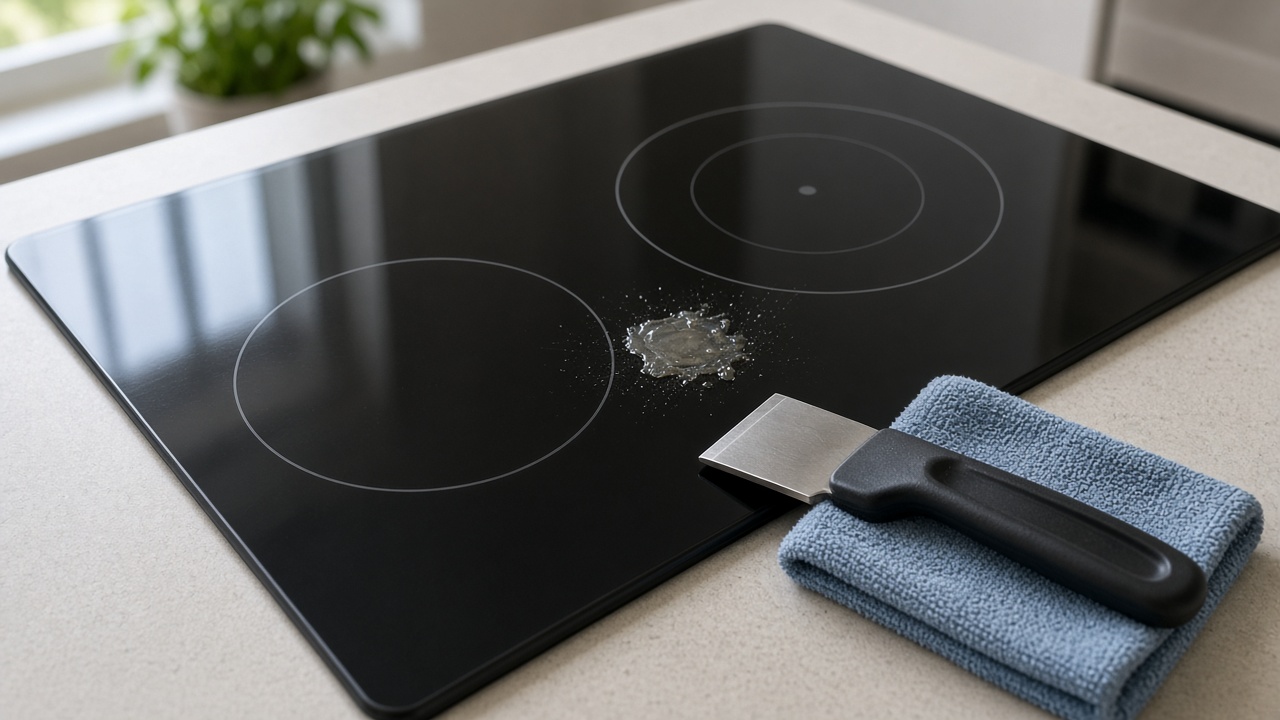
- For stubborn burnt spots, use a cooktop razor scraper held flat at a low angle.
- Buff dry with a clean cloth.
A dedicated cream is the safest way to keep the glass looking new, and our roundup of the best cleaner for a glass cooktop compares options. If you want to pick one up, you can Check price on Amazon.
Common Myths About Cast Iron and Glass Tops
Myth: Cast iron will always crack a glass top. A pan sitting still on the burner will not crack a healthy cooktop. Cracks come from impacts, like dropping the pan or banging it down.
Myth: You should never use cast iron on a smooth top. Most manufacturers allow it with care. The manual is the final word for your specific model.
Myth: A diffuser plate makes it safer. Heat diffusers are designed mainly for gas and coil stoves. On radiant glass tops, they can trap heat and may not be approved by the manufacturer, so check the manual before using one.
Myth: Enameled cast iron cannot scratch glass. It is smoother, but a chipped rim or trapped grit can still scratch. Lift-and-place still applies.
Frequently Asked Questions
Will cast iron scratch a glass top stove?
It can if you slide it or if the bottom is rough or dirty. Lifting the pan and keeping both surfaces clean prevents most scratches.
Can a cast iron skillet crack a glass cooktop?
Only from impact in most cases. Dropping a heavy pan or setting it down hard on the glass is what causes cracks, so handle it gently.
Is enameled cast iron better for glass top stoves?
Usually, yes. Its smooth enamel base is gentler on glass than bare sand-cast iron. Check the rim for chips before using it.
Can I use a cast iron griddle on a glass top stove?
Yes, if it is flat and sits evenly on the burners. Large griddles spanning two burners may heat unevenly, so preheat slowly and check your manual.
What heat setting should I use for cast iron on a glass top?
Start on low or medium-low for a few minutes, then raise it to medium or medium-high. You rarely need the highest setting because cast iron holds heat so well.
Is it safe to leave cast iron on a glass top to cool?
Yes. Leaving a hot skillet on the turned-off burner is fine. Just avoid moving it to a cold, wet surface while it is very hot.
Final Thoughts
You can use cast iron on a glass top stove with confidence as long as you treat both with a little care. Check your manual, choose a pan with a smooth, flat base, preheat gradually, and always lift instead of sliding. Do that, and your skillet will cook beautifully while your cooktop stays scratch-free.