As an Amazon Associate, I earn from qualifying purchases.
If you are searching for how to remove scratches from a glass cooktop, the honest answer is that it depends on what you are looking at. Many "scratches" are actually surface marks that clean right off, light scratches can often be made far less visible, and deep scratches are permanent.
Glass-ceramic cooktops are tough, but they are not scratch-proof. Sliding cast iron, gritty pan bottoms, sugar spills and abrasive cleaners can all leave marks. This guide will help you tell the difference between a mark and a true scratch, walk you through the methods that actually work for each, and show you how to keep new scratches from appearing.
First, Figure Out If It Is Really a Scratch
Before you try anything, look closely. A large share of what people call scratches are metal marks or residue sitting on top of the glass.
- Metal marks: Gray or silver lines left by aluminum or copper pan bottoms. They look like scratches but are a thin metal transfer on the surface. They usually come off with cooktop cream.
- Residue and film: Cloudy or rainbow streaks from cleaner, hard water or burnt-on grease.
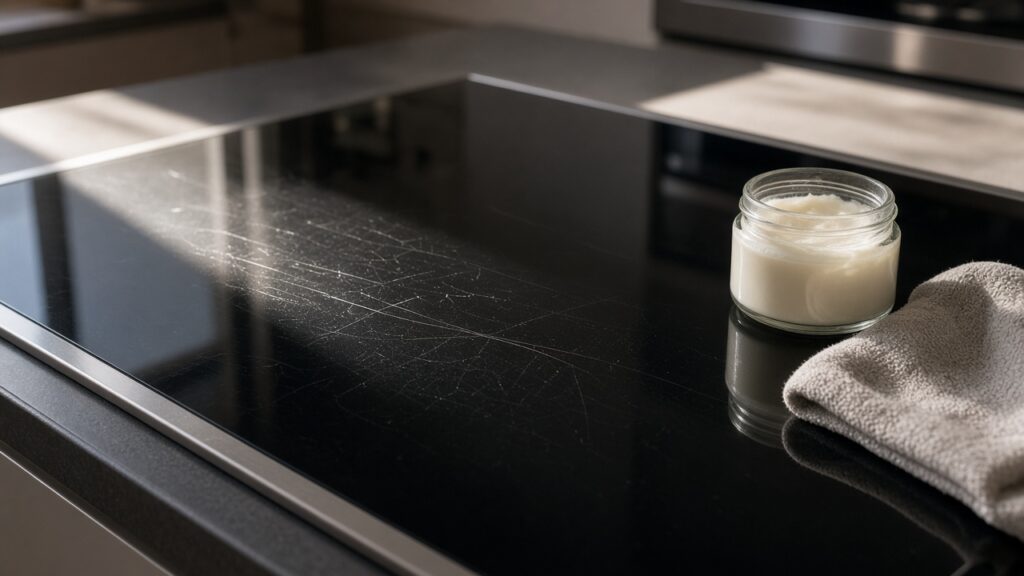
- True scratches: Lines that you can feel with a fingernail, that catch the light from any angle and that remain after a thorough cleaning.
The fingernail test: Run a fingernail gently across the line. If your nail glides over it, it is a surface mark or a very fine scratch. If your nail catches, it is a deeper scratch that cannot be removed, only made less noticeable.
How to Remove Scratches From a Glass Cooktop: Start With Cleaning
Always begin with the gentlest step. Clean the area thoroughly so you can see what is left.
- Make sure the cooktop is completely cool.
- Remove any loose debris with a damp microfiber cloth.
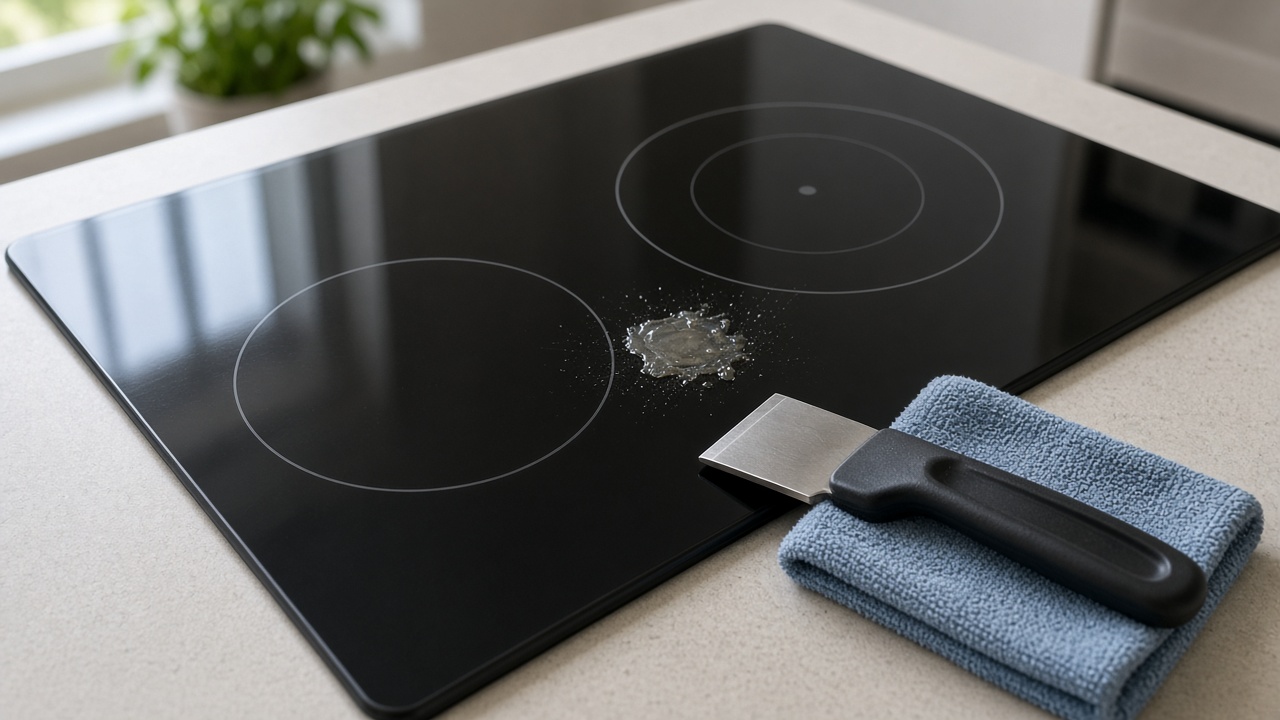
- Hold a razor scraper made for glass cooktops flat at a low angle and gently remove any burnt-on spots. Do not use the corners of the blade.
- Apply a small amount of glass cooktop cleaning cream and work it in with a non-scratch pad using small circular motions.
- Wipe off the residue and buff dry with a clean microfiber cloth.
Many "scratches" disappear at this stage. For more cleaning techniques, see our guide on how to get stains off a glass cooktop. If you recently had a plastic accident, our guide on how to get melted plastic off a glass cooktop covers removal without scratching.
A dedicated glass cooktop cleaning cream is the first thing to try on marks. Check price on Amazon.
Methods for Light Surface Scratches
If marks remain after cleaning and your fingernail does not catch on them, these methods can reduce their visibility. Test any method on a small area first, and always follow your manufacturer's care instructions.
Baking Soda Paste
Baking soda is a very mild abrasive. Mix it with a small amount of water to form a thick paste, apply it to the scratch, and rub gently with a soft damp cloth in small circles for a minute or two. Wipe clean and buff dry. This works best on fine haze and very shallow marks.
Cooktop Polishing Cream With Repeated Applications
The polishing agents in glass cooktop creams are formulated for ceramic glass. Several applications, buffing each one fully, can gradually soften the look of fine scratches and leave a protective layer that makes them less obvious. This is the safest option for most people.
Scratch Repair Kits for Glass Cooktops
Some products are sold specifically as glass cooktop scratch removers or polishing compounds. Results vary, and they are generally aimed at light scratches rather than deep ones. Read the label carefully to confirm the product is intended for ceramic glass cooktops, and check that it will not void your warranty.
What About Toothpaste?
Plain, non-gel whitening toothpaste is often suggested as a hack because it contains mild abrasives. It may slightly reduce the look of very fine marks, but it is less predictable than products designed for cooktops. If you try it, use only a small amount, rub gently and clean the surface fully afterward.
Can Deep Scratches Be Fixed?
Unfortunately, deep scratches in a glass-ceramic cooktop cannot be removed at home. Aggressively polishing or sanding the area can create a hazy, dull patch that looks worse than the scratch itself and may weaken the glass.
What you can do:
- Keep the surface clean and polished. A clean, glossy surface makes scratches far less noticeable.
- Monitor the scratch. A cosmetic scratch does not affect cooking. A chip or crack is different.
- Replace the glass if needed. If a scratch has turned into a crack, or if the surface is chipped, stop using the cooktop and contact the manufacturer or an appliance technician. Many models have a replaceable glass top.
Products and Methods to Avoid
- Steel wool and scouring pads, which create the very scratches you are trying to fix.
- Gritty powdered cleansers not labeled for glass cooktops.
- Sandpaper or power polishers, which can permanently haze the glass.
- Oven cleaner and harsh chemical strippers.
- Dirty cloths or sponges that may hold grit from other cleaning jobs.
Our roundup of the best cleaner for glass cooktop surfaces covers products made specifically for this job.
How to Prevent Scratches on a Glass Cooktop
Prevention matters more than any repair, because deep scratches are permanent.
- Lift, do not slide. Pick pans up to move them, especially heavy cast iron and stoneware.
- Use smooth-bottomed cookware. Pans with rough, warped or ridged bases are more likely to scratch. Our guide to the best skillet for glass cooktop use explains what to look for.
- Keep pan bottoms clean. Burnt-on grease on the outside of a pan can scratch and stain the glass.
- Wipe spills promptly. Sugary spills in particular can pit the surface if left to burn on. Clean them once the cooktop is safe to touch.
- Clean with the right tools. Use soft cloths, non-scratch pads, cooktop cream and a cooktop scraper only.
- Do not use the cooktop as a counter. Setting down jars, cans or appliances can leave marks.
Smooth-bottomed stainless steel or enameled pans are generally gentler on glass tops. You can browse options in a search for glass cooktop safe skillets. Check price on Amazon.
Should You Use a Cooktop Protector?
Silicone or fiberglass cooktop mats and covers are sometimes marketed as scratch protectors. They can protect the surface while the cooktop is off and being used as a work surface. However, always check your cooktop manufacturer's instructions before using any mat during cooking, since many radiant electric cooktops are not designed to have materials placed between the burner and the pan. Never leave a cover on while a burner is on unless the product and your manual both say it is safe.
Frequently Asked Questions
Does baking soda remove scratches from a glass cooktop?
Baking soda can reduce the look of very fine marks and haze because it is a gentle abrasive. It will not remove scratches that your fingernail catches on.
Do glass cooktop scratches affect cooking?
Cosmetic scratches do not affect heating or performance. Cracks and chips are different and should be inspected by a professional before you use the cooktop again.
Why does my glass cooktop scratch so easily?
Often the cause is grit trapped under pans, rough or dirty pan bottoms, or abrasive cleaning pads. Sliding heavy cookware across the surface is another common cause.
Is it safe to use a razor blade on a glass cooktop?
Yes, when it is a scraper designed for cooktops, the blade is new, and it is held flat at a low angle. Cooktop manufacturers commonly recommend this for burnt-on deposits.
Can a scratched glass cooktop be replaced?
On many ranges and cooktops, the glass top can be replaced as a part. Contact the manufacturer or an appliance repair technician with your model number for options.
Final Thoughts
Before you worry about how to remove scratches from a glass cooktop, clean it properly and do the fingernail test. Marks and residue usually come off with a cooktop cream and a scraper, fine scratches can be softened with gentle polishing, and deep scratches are best accepted and prevented. Lift your pans, keep their bottoms clean and stick to cleaners made for glass, and your cooktop will stay looking newer for longer.