As an Amazon Associate, I earn from qualifying purchases.
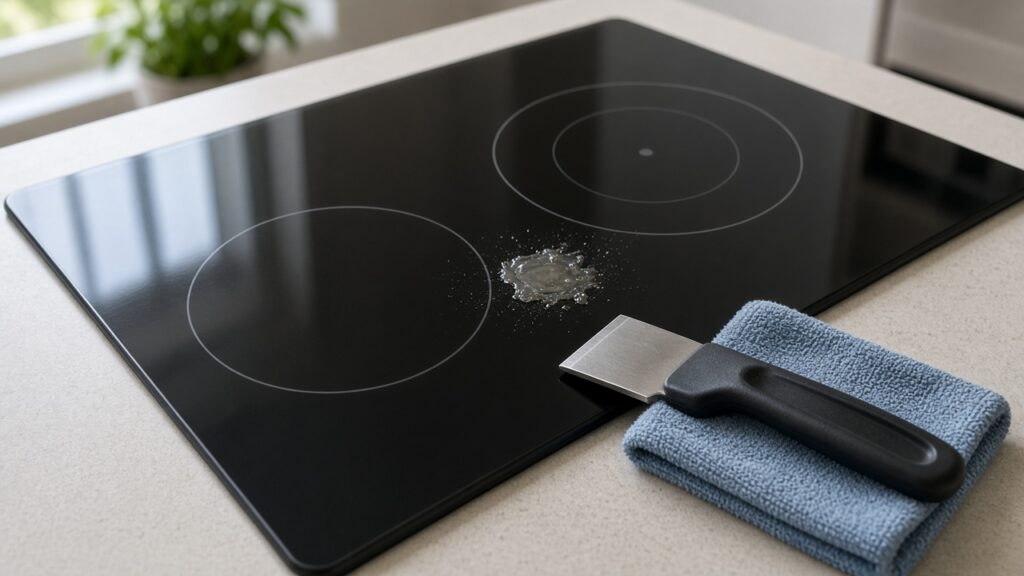
Knowing how to get melted plastic off a glass cooktop can save you from a panic moment: a bread bag, spatula or storage lid touches a hot burner and suddenly there is a hardened, smoking blob on your smooth stovetop.
The good news is that melted plastic usually comes off a glass or ceramic cooktop without permanent damage if you act carefully. The key is to use the right tool for the stage the plastic is in, warm and soft or cold and hard, and to avoid anything that could scratch or etch the glass. This guide covers both situations, the tools that work, and what not to do.
Safety First Before You Start
Before touching anything, take a few precautions:
- Turn off the burner and, if the plastic is smoking heavily, turn on the range hood and open a window. Burning plastic fumes are unpleasant and should not be breathed in.
- Remove the item that melted if you can do so safely with tongs or an oven mitt.
- Do not wipe the hot plastic with a cloth or paper towel. It will smear across the surface and may stick to the fabric.
- Check your manual. Most cooktop manufacturers include cleaning instructions, and some specifically mention melted plastic or sugar. Following them protects your warranty.
What You Need
- A single-edge razor blade scraper designed for glass cooktops
- Cooktop cleaning cream made for glass and ceramic surfaces
- A soft, non-scratch scrubbing pad or microfiber cloth
- Ice cubes in a zip-top bag (for the cold method)
- Baking soda and white vinegar (optional, for residue)
- Rubbing alcohol (optional, for haze)
A dedicated glass cooktop razor scraper is the most important tool here. Many come with replacement blades and a safety cover. Check price on Amazon.
How to Get Melted Plastic Off a Glass Cooktop: Two Methods
Which method you use depends on whether the plastic is still soft or has fully hardened. Both methods use a razor scraper, which is the standard tool cooktop manufacturers recommend for stuck-on deposits.
Method 1: The Warm Scrape (Soft Plastic)
Some cooktop makers recommend removing melted plastic while it is still slightly warm, because it lifts more easily before it fully bonds. Only do this if you can work safely.
- Turn off the burner and let the surface cool for a few minutes until the plastic is soft but no longer bubbling or smoking.
- Put on an oven mitt for the hand closest to the cooktop.
- Hold the razor scraper at a low angle, roughly 30 to 45 degrees, flat against the glass.
- Push gently under the edge of the plastic and lift it away in small sections, rather than dragging it across the glass.
- Wipe the scraper on a paper towel between passes so you are not spreading plastic back onto the surface.
Avoid pressing hard. You want the blade to slide under the plastic, not dig into it.
Method 2: The Ice and Scrape (Hard Plastic)
If the plastic has cooled and hardened, chilling it makes it brittle and easier to pop off.
- Make sure the cooktop is completely cool.
- Fill a zip-top bag with ice and set it on the plastic for several minutes. Keep the bag sealed so water does not pool on the glass.
- Remove the bag and dry the area.
- Using the razor scraper at a low angle, work the blade under the edge of the plastic. Cold plastic often chips away in pieces.
- Re-ice as needed for thicker spots.
Removing the Leftover Residue
Even after the bulk of the plastic is gone, you will usually see a thin film, shiny smear or faint ring. Clean it in stages, from gentlest to strongest.
Cooktop Cleaning Cream
Apply a small amount of glass cooktop cream to the area and work it in with a non-scratch pad or soft cloth in small circles. These creams contain fine polishing agents designed for ceramic glass, and they also leave a protective film. Buff dry with a clean microfiber cloth.
If you need help picking one, see our comparison of the best cleaner for glass cooktop surfaces. A widely used option is Weiman cooktop cleaner, often sold as a kit with a scraper and pad. Check price on Amazon.
Baking Soda and Vinegar Paste
For residue that the cream does not lift, sprinkle baking soda over the area, spray lightly with white vinegar, and lay a warm, damp towel over it for 10 to 15 minutes. Wipe away the paste with a soft cloth. This loosens greasy film around the plastic without abrasion.
Rubbing Alcohol for Haze
A light haze left by plastic or cleaner can often be wiped away with a little rubbing alcohol on a microfiber cloth. Let the surface cool fully first, and make sure it is completely dry and fume-free before turning the burner back on.
For general stains beyond plastic, our guide on how to get stains off a glass cooktop has more techniques.
What Not to Use on a Glass Cooktop
Many popular hacks can cause more damage than the plastic itself:
- Steel wool or scouring pads, which leave fine scratches.
- Abrasive powders not labeled for glass cooktops.
- Oven cleaner, which can damage the surface and trim.
- Metal knives or screwdrivers, which can gouge the glass.
- Nail polish remover or acetone in large amounts, which can affect some plastics and coatings on the trim and are flammable near heat.
- Turning the burner on to melt the plastic off. This can burn the plastic further and may permanently bond it to the glass.
When Melted Plastic Might Have Damaged the Glass
In most cases, melted plastic sits on top of the surface and comes off cleanly. Occasionally, especially with plastic that stayed on a very hot element for a long time, it can leave pitting or a cloudy area that does not respond to cleaning. Signs of damage include rough spots you can feel with a fingertip, visible pits, or cracks. If you see a crack, stop using that burner and contact the manufacturer or a technician, because cracked ceramic glass should not be used.
If you have a coil-style stove instead of a smooth top, the process is different. See our guide on how to get melted plastic off a stove burner.
How to Prevent Melted Plastic Accidents
- Keep bread bags, cutting boards, plastic utensils and food containers off the cooktop, even when it seems off.
- Watch for residual heat indicators, which show a burner is still hot after it is turned off.
- Use heat-resistant silicone or wooden utensils when cooking.
- Do not use the cooktop as extra counter space during or after cooking.
- Consider a cooktop cover only when the stove is completely cool and not in use.
Frequently Asked Questions
Can melted plastic permanently damage a glass cooktop?
Usually not, if removed promptly with a proper scraper. Plastic left on a hot element for a long time can sometimes cause pitting, which cannot be polished out.
Is it safe to use a razor blade on a glass stovetop?
Yes, when you use a scraper designed for cooktops, keep the blade flat at a low angle and use a fresh, undamaged blade. Most cooktop manufacturers recommend this method. Never use the corner of the blade.
Should I heat the burner to soften the plastic?
Generally no. Reheating can burn the plastic further and create more fumes. If the plastic is already warm and soft right after the accident, you can scrape it then, but do not turn the burner back on to melt it.
Is it safe to cook after melting plastic on the stove?
Once all plastic and residue are removed and the area is clean, it is fine to use the burner again. Ventilate the kitchen and make sure no plastic remains on the surface.
What if my cooktop is induction?
Induction cooktops have the same glass-ceramic surface, so the same cleaning steps apply. Plastic usually melts on induction only from residual heat transferred from a hot pan.
Final Thoughts
Learning how to get melted plastic off a glass cooktop mostly comes down to patience and the right scraper. Let the burner cool, use ice for hardened plastic, lift it away with a razor scraper held flat, then finish with a cooktop cream. Skip the harsh abrasives and your glass top should look as good as it did before the accident.