As an Amazon Associate, I earn from qualifying purchases.
What are induction stoves, and why are so many people switching to them? An induction stove cooks with electromagnetism instead of a flame or a glowing coil. The cooktop creates a magnetic field that heats the pan itself, so the pan gets hot while the glass surface around it stays comparatively cool.
Induction has gone from a niche option to a mainstream choice in many kitchens, and it raises plenty of questions: Is it safe? Will my pans work? Is it really faster? This guide explains how induction works, how it compares with gas and standard electric stoves, the pros and cons, and what cookware you need.
What Are Induction Stoves?
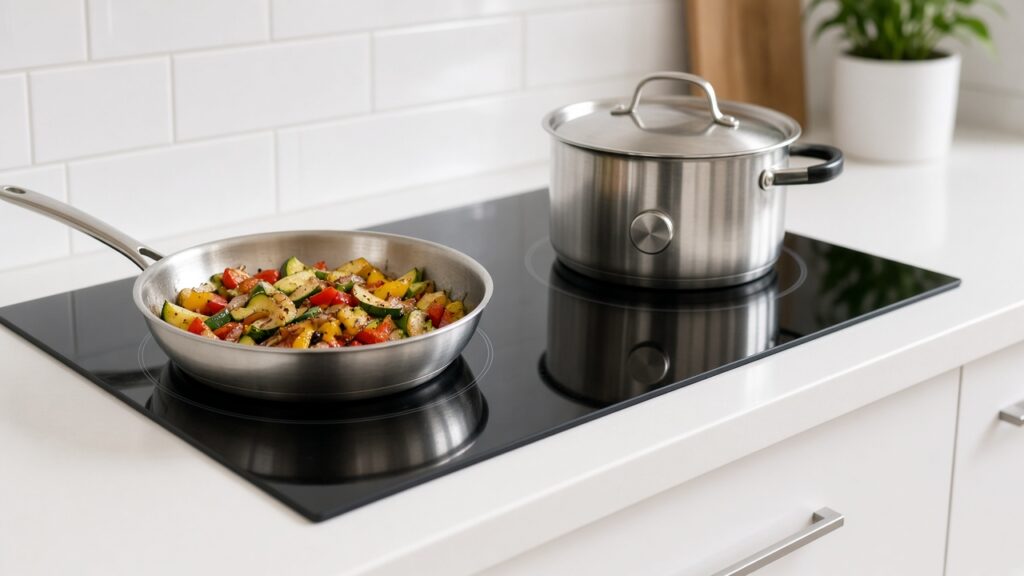
An induction stove, also called an induction range or cooktop, uses copper coils under a glass-ceramic surface. When you turn on a cooking zone, alternating electric current flows through the coil and creates a rapidly changing magnetic field. When you set a pan made of a magnetic metal, such as cast iron or most stainless steel, on the zone, that field induces electric currents in the base of the pan. The pan's own resistance turns those currents into heat.
In other words, the pan becomes the heat source. The glass only gets warm from contact with the hot pan.
Induction comes in a few formats:
- Freestanding or slide-in ranges with an induction cooktop and an electric oven.
- Built-in cooktops installed into a countertop.
- Portable single or double burners that plug into a standard outlet.
How Induction Compares With Gas and Electric Stoves
| Feature | Induction | Gas | Radiant electric |
|---|---|---|---|
| How it heats | Magnetic field heats the pan | Open flame | Heated coil or element under glass |
| Response to changes | Very fast | Fast | Slow |
| Surface heat | Cooler around the pan | Grates get very hot | Glass stays hot after use |
| Cookware | Magnetic pans only | Any | Any flat-bottomed pans |
| Cleaning | Easy, flat glass | Grates and burners | Easy, but spills burn on |
| Indoor combustion | None | Yes | None |
Benefits of Induction Stoves
- Speed. Because energy goes directly into the pan, induction can bring water to a boil quickly, often faster than gas or radiant electric.
- Precise control. Heat changes almost instantly when you adjust the setting, similar to gas. Low settings can hold a gentle simmer or melt chocolate without scorching.
- Efficiency. Less heat is lost to the air around the pan, so more of the energy goes into cooking. The U.S. Department of Energy notes that induction cooktops are more efficient than conventional electric and gas cooktops.
- Safety. There is no open flame, and most induction cooktops will not start heating without compatible cookware on the zone. Many have auto shut-off, child locks and residual heat indicators.
- Easy cleaning. Spills are less likely to burn onto the cooler glass, and the surface wipes clean.
- A cooler kitchen. Less wasted heat means less warming of the room.
- No combustion byproducts indoors. Unlike gas, induction does not burn fuel in your home.
Drawbacks to Consider
- Cookware compatibility. Aluminum, copper, glass and some stainless steel pans will not work unless they have a magnetic base.
- Cost. Induction ranges have traditionally cost more than comparable radiant electric models, though prices have become more competitive.
- Electrical requirements. Full-size induction ranges typically need a dedicated 240-volt circuit. Switching from gas may require electrical work.
- Noise. Some cooktops make a faint buzz or hum, particularly at high settings or with certain pans. Cooling fans can also be audible.
- Learning curve. Food heats quickly, so it is easy to scorch something until you get used to the speed.
- Glass surface care. Like any glass cooktop, it can scratch or crack if pans are dragged or dropped.
What Cookware Works on an Induction Stove?
Induction works only with cookware that has a magnetic base. Compatible materials include:
- Cast iron and enameled cast iron
- Carbon steel
- Most magnetic stainless steel
- Aluminum or copper pans with a bonded magnetic steel base, often labeled "induction ready"
Non-compatible materials include plain aluminum, copper, glass and ceramic without a magnetic layer.
The magnet test: Hold a refrigerator magnet to the bottom of your pan. If it sticks firmly, the pan will work. If it does not stick or sticks weakly, the pan may not heat well. Many manufacturers also print an induction symbol, a coil-like loop, on the base.
For recommendations, see our guides to the best pans for induction stove cooking and the best cookware sets for induction. You can also browse induction compatible cookware sets. Check price on Amazon.
How to Tell If You Have an Induction Stove
If you have just moved into a home or are not sure what type of glass cooktop you have, there are a few quick ways to check. Induction cooktops do not glow red, often show a pan detection or error symbol when no pan is present, and only heat magnetic cookware. Our guide on how do I know if I have an induction stove walks through every clue.
Trying Induction Before You Commit
If you are curious about induction but are not ready to replace a whole range, a portable induction burner is an inexpensive way to try it. These countertop units plug into a regular outlet and are useful for small kitchens, dorms, entertaining and as an extra burner during the holidays. Look at portable induction cooktops to compare features. Check price on Amazon.
Tips for Cooking on an Induction Stove
- Prep ingredients before you start. Induction is fast, so have everything ready.
- Use flat-bottomed pans that sit evenly on the surface.
- Match pan size to the zone. Very small pans may not be detected on large zones.
- Lift pans rather than sliding them to avoid scratching the glass.
- Start a bit lower than you would on gas and adjust as you learn your cooktop.
- Use a silicone mat carefully. Some cooks place a thin, heat-resistant silicone mat under the pan to reduce scratches and noise. Check your manufacturer's guidance first. Our guide to the best silicone mat for induction cooktop use covers the options.
Cleaning and Caring for an Induction Cooktop
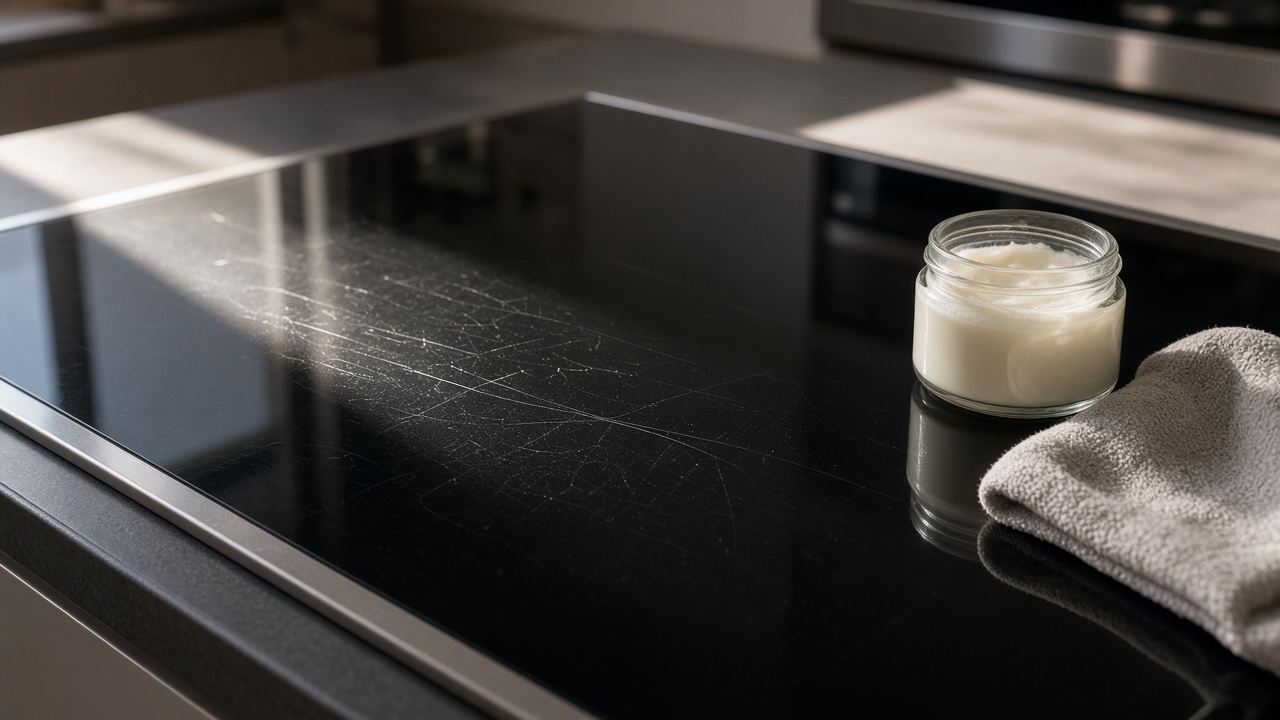
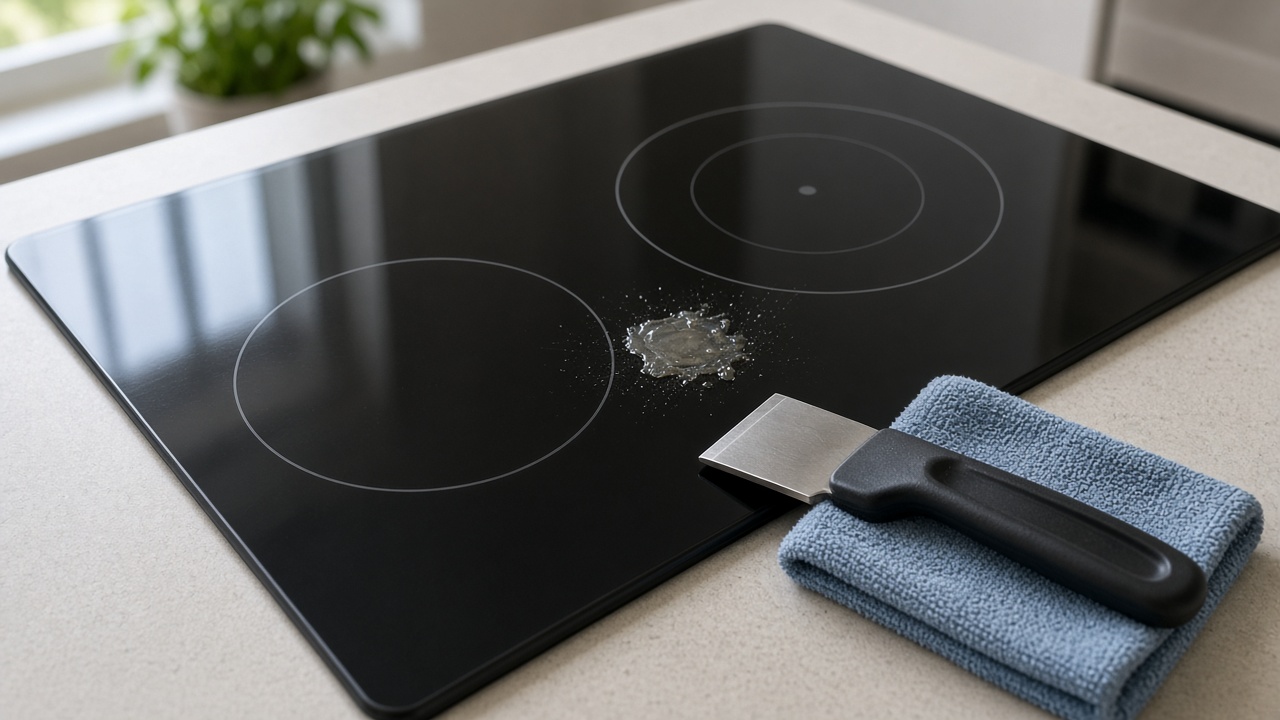
Wait until the surface is cool, then wipe it with a damp cloth and a little cooktop cleaner. For stuck-on residue, use a razor scraper held flat and a cooktop cream. Avoid steel wool and abrasive powders. Our guide on how to remove scratches from a glass cooktop explains how to tell marks from scratches and how to prevent new ones.
Are Induction Stoves Safe?
Induction cooktops are widely considered safe for home use. They create a magnetic field that drops off quickly with distance from the surface. People with pacemakers or other implanted medical devices are often advised by manufacturers to keep a recommended distance from the cooktop and to consult their doctor or device manufacturer, so check both the cooktop manual and medical guidance.
Frequently Asked Questions
Do induction stoves need special pots?
They need cookware with a magnetic base. Many pots and pans you already own, including cast iron and most stainless steel, will work. Test with a magnet.
Is induction better than gas?
It depends on your priorities. Induction is generally faster, more efficient and easier to clean, and it does not burn fuel indoors. Some cooks prefer gas for flame-based techniques like charring peppers or using a round-bottom wok.
Does an induction stove use a lot of electricity?
Induction is more efficient than conventional electric cooktops, so less energy is wasted. Actual energy use depends on how much you cook and your local electricity rates.
Can you use cast iron on an induction stove?
Yes. Cast iron is fully compatible. Lift rather than slide it, and avoid dropping it, since heavy pans can scratch or crack the glass.
Why does my induction cooktop make noise?
A low hum or buzz is normal, especially at high power or with multi-layer pans. Cooling fans may also run during and after cooking.
Final Thoughts
So, what are induction stoves? They are fast, efficient cooktops that heat the pan directly with a magnetic field, giving you gas-like control with a flat, easy-clean surface. If your cookware passes the magnet test and your kitchen has the right electrical setup, induction is one of the most practical upgrades you can make. If you are unsure, a portable induction burner is an easy way to try it first.