As an Amazon Associate, I earn from qualifying purchases.
How do I clean a cast iron skillet without ruining the seasoning? It is one of the most common kitchen questions, and the answer is simpler than the myths suggest: hot water, a little soap if you want it, the right scrubber, and thorough drying with a thin coat of oil.
Cast iron is nearly indestructible, but its nonstick surface, the seasoning, is a layer of polymerized oil that needs a little care. Clean it the wrong way and you get rust or sticky spots. Clean it the right way and the pan gets better every time you cook. This guide covers everyday cleaning, stuck-on food, rust removal and how to re-season when needed.
How Do I Clean a Cast Iron Skillet After Cooking?
This is the routine to use after almost every meal.
- Clean it while it is warm. Let the pan cool enough to handle safely, but do not let food sit and harden overnight.
- Scrape out food. Use a pan scraper or spatula to remove food bits and excess grease. Wipe out any oil with a paper towel.
- Rinse with hot water. Scrub with a stiff brush or nonscratch sponge under hot running water.
- Use a small amount of dish soap if needed. Modern dish soap does not strip properly polymerized seasoning. A drop of soap is fine for greasy or fishy pans.
- Dry immediately and completely. Towel dry, then place the pan on a burner over low to medium heat for a few minutes until every trace of moisture evaporates.
- Oil lightly. While the pan is still warm, add about half a teaspoon of cooking oil and wipe it over the entire cooking surface with a paper towel. Keep wiping until it looks almost dry, not glossy.
- Store in a dry place. If you stack pans, place a paper towel between them to absorb moisture and protect the surface.
Tools That Make It Easier
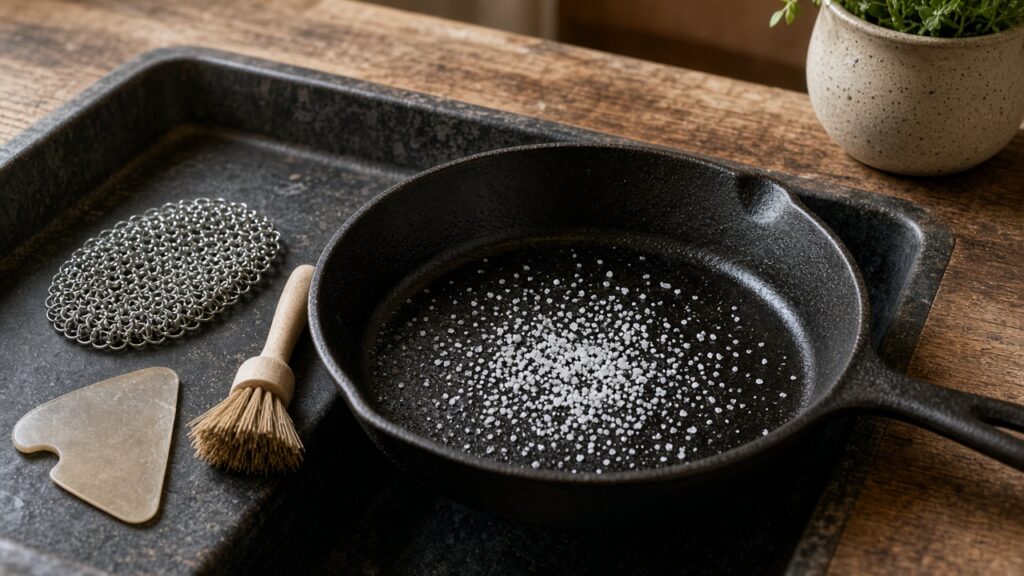
A few inexpensive tools speed up cleaning without harming the seasoning:
- Chainmail scrubber: Stainless steel rings that remove stuck food quickly and are safe for seasoned cast iron.
- Pan scrapers: Hard plastic scrapers with shaped corners for the edges of the pan.
- Stiff-bristle brush: Good for daily rinsing.
We cover more options in our guide to the best tools for cast iron skillet care. The Lodge Chainmail Scrubber is a popular choice for stuck-on food. Check price on Amazon.
How to Clean Stuck-On Food
For burnt-on bits or sticky residue, try these methods in order:
Coarse Salt Scrub
Pour a few tablespoons of coarse kosher salt into the warm pan with a splash of oil. Scrub with a folded paper towel or brush. The salt acts as an abrasive that will not damage the seasoning. Rinse, dry on the stove and oil lightly.
Simmer and Scrape
Add an inch of water to the pan and bring it to a simmer for three to five minutes. Turn off the heat and scrape the loosened food with a wooden spatula or pan scraper. Pour out the water, dry thoroughly on the burner and oil.
Chainmail Scrubbing
For really stubborn residue, scrub with a chainmail scrubber under hot water. It works quickly with little elbow grease.
What Not to Do When Cleaning Cast Iron
- Do not soak it. Leaving cast iron in water, or in the sink overnight, is the fastest way to cause rust.
- Do not put it in the dishwasher. The long, wet cycle and harsh detergent will strip seasoning and rust the pan.
- Do not air dry. Even a few minutes of standing water can cause spots of rust.
- Avoid steel wool for everyday cleaning. Save it for rust removal when you plan to re-season.
- Do not store it with food in it. Acidic foods in particular can damage the seasoning.
How to Clean a Rusty Cast Iron Skillet
Rust looks alarming, but cast iron can almost always be restored. Light orange spots and even fully rusted pans can be brought back with a little work.
- Scrub off the rust. Use steel wool or a coarse scrubbing pad with warm water and a bit of soap. Scrub until you reach bare gray or black metal.
- Try vinegar for heavy rust. For thick rust, soak the pan in a 50/50 mix of white vinegar and water. Check frequently, starting around 30 minutes, and do not exceed a few hours, because vinegar will eventually start to eat into the iron itself. Scrub again afterward.
- Rinse and dry completely. Wash with soap and water to remove all vinegar and rust particles, towel dry, then heat on the stove until fully dry.
- Re-season immediately. Bare iron rusts quickly, so move straight to the seasoning steps below.
The same process works for other pieces. Our guide on how to clean a rusty cast iron Dutch oven covers larger pots.
How to Re-Season a Cast Iron Skillet
Re-season after rust removal, or whenever the surface looks dull, patchy or gray.
- Preheat the oven to about 450°F to 500°F, or follow the temperature your oil and pan manufacturer recommend.
- Apply a very thin layer of oil to the entire pan, inside and out, including the handle.
- Wipe off as much oil as you can with a clean paper towel. It should look nearly dry. Too much oil leaves sticky spots.
- Place the pan upside down on the middle oven rack with a sheet of foil or a baking sheet on the rack below to catch drips.
- Bake for one hour, then turn off the oven and let the pan cool inside.
- Repeat two or three times for a durable base layer.
Choose an oil with a relatively high smoke point. Our guide to the best oil for cast iron skillet seasoning compares vegetable oil, canola, flaxseed, shortening and dedicated seasoning products. The process is very similar for other seasoned cookware, as you can see in our guide on how to season a carbon steel pan.
A dedicated seasoning product like Crisbee Puck is designed to make thin, even coats easier. Check price on Amazon.
How to Maintain Cast Iron Between Uses
- Cook with it often. Searing, frying and baking with fat builds seasoning naturally.
- Go easy on acidic foods at first. Long simmers of tomato sauce or wine can wear down young seasoning. A well-seasoned pan handles occasional acidic dishes fine.
- Heat gradually. Avoid putting a cold pan on a very hot burner or plunging a hot pan into cold water, which can warp or crack it.
- Keep it dry. Store in a dry cabinet, not in the oven drawer or a damp spot near the sink.
Frequently Asked Questions
Can I use soap on a cast iron skillet?
Yes. Today's dish soaps are mild and will not remove properly polymerized seasoning. The old rule against soap dates back to when soaps contained lye. Just avoid soaking and harsh scouring.
Why is my cast iron sticky after seasoning?
Too much oil was applied or it was not heated long enough to polymerize fully. Bake the pan again at a high temperature for an hour, and use thinner coats next time.
What are the black flakes coming off my cast iron?
Usually they are carbonized food or loose seasoning. Scrub the pan with salt or chainmail, then re-season if the surface underneath looks patchy.
Can I clean cast iron with vinegar?
Diluted vinegar is useful for removing rust, but it should not be used for routine cleaning. Vinegar breaks down seasoning and can pit the iron if left too long.
How often should I re-season a cast iron skillet?
A pan that is used regularly and oiled after cleaning rarely needs a full oven re-seasoning. Do it when the surface looks dull or rusty, or food begins to stick.
Final Thoughts
If you have been asking, "How do I clean a cast iron skillet the right way?" remember four habits: clean it while warm, never soak it, dry it on the stove and wipe on a thin coat of oil. With those steps, plus salt or chainmail for stuck food and a quick re-season when rust appears, your skillet will last for generations.