As an Amazon Associate, I earn from qualifying purchases.
An acacia wood cutting board is one of the most popular choices in kitchen stores today, thanks to its warm color, dramatic grain and price that is usually lower than walnut or maple. But is acacia actually a good choice for cutting, and how do you keep it from drying out or cracking?
This guide covers how acacia compares with other woods, its real pros and cons, what to look for when buying, and the care routine that will keep your board in good shape. If you are new to wood boards, you will also find tips on oiling and waxing that apply to any wooden cutting board.
What Is Acacia Wood?
Acacia is a large genus of trees and shrubs that grow in Australia, Africa, Asia and the Americas. Many cutting boards are made from acacia grown on plantations in Southeast Asia. Because acacia includes many species, the color, hardness and grain can vary noticeably from one board to the next, ranging from golden honey to deep reddish brown with light and dark streaks.
Pros of an Acacia Wood Cutting Board
- Attractive grain. The contrasting stripes and swirls make acacia boards popular for both prep and serving.
- Durability. Many acacia species used for boards are dense hardwoods that resist deep knife scoring.
- Natural oils. Acacia tends to be somewhat oily, which helps it resist moisture absorption.
- Affordability. Acacia boards are generally less expensive than comparable walnut or cherry boards.
- Sustainability. Many acacia species grow quickly, and plantation acacia is widely available.
Cons of Acacia Cutting Boards
- Inconsistent hardness. Because different species are used, some boards are quite hard and may be a little tougher on knife edges than maple or walnut.
- Can dry out and crack. Like any wood, acacia needs regular oiling, especially thin boards.
- Construction quality varies. Many inexpensive boards are made of narrow glued strips. Gaps or weak glue lines can split over time.
- Not dishwasher safe. Like all wood boards, acacia must be hand washed.
Acacia vs. Other Cutting Board Materials
| Material | Knife friendliness | Water resistance | Appearance | Typical price |
|---|---|---|---|---|
| Acacia | Good | Good, naturally oily | Warm, high-contrast grain | Lower to moderate |
| Walnut | Very good | Good, closed grain | Dark chocolate brown | Moderate to higher |
| Maple | Very good | Good, closed grain | Light, uniform | Moderate |
| Bamboo | Fair | Good | Light, uniform | Low |
| Plastic | Good | Excellent | Plain | Low |
Compared with walnut, acacia is usually less expensive and has a busier grain, while walnut tends to be more consistent and a bit easier on knives. Our walnut cutting board guide covers that species in detail. For a broader comparison of species and construction, see our guide to the best material for wooden cutting board use.
Is Acacia Wood Food Safe?
Yes, acacia is widely used for food contact and is considered a safe wood for cutting boards and serving ware when it has a food-safe finish. As with any cutting board, the main concern is cleaning. Wash it promptly after use, especially after raw meat, and let it dry thoroughly. Avoid boards finished with lacquer or varnish on the cutting surface, and look for finishes based on mineral oil or beeswax.
What to Look for When Buying an Acacia Wood Cutting Board
- Solid construction. Look for wide pieces of wood or tight, even glue lines. Avoid boards with visible gaps or rough patches.
- Thickness. About 3/4 inch or more resists warping better. Thicker boards also feel more stable on the counter.
- Grain type. Edge grain is the most common for acacia. End grain acacia boards exist and are easier on knives, but they cost more.
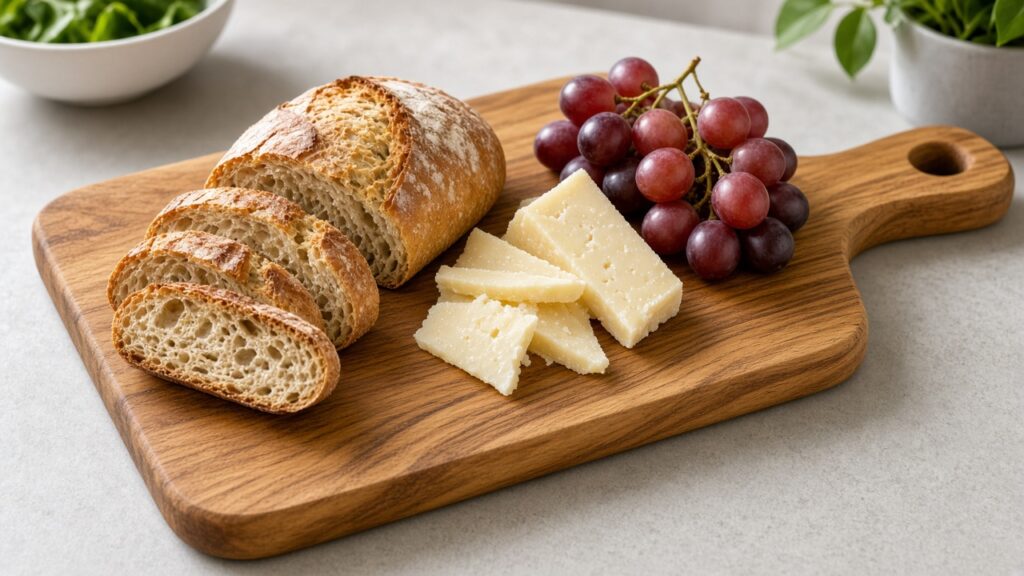
- Size and shape. Large rectangular boards are best for prep. Paddle-shaped boards with handles are often designed for serving bread and charcuterie.
- Finish. Food-safe oil or oil and wax finishes only.
- Juice groove. Handy for carving and fruit.
You can compare sizes and designs in a search for acacia wood cutting boards. Check price on Amazon. For a board that doubles as a serving platter, look at acacia serving boards with handles. Check price on Amazon.
How to Clean an Acacia Cutting Board
- Scrape off food. Use a bench scraper or the back of a knife.
- Wash with warm, soapy water. A soft sponge or brush works well. Clean both sides so the board dries evenly.
- Rinse quickly. Do not let the board sit in water.
- Towel dry and air dry upright. Stand it on its edge so air can circulate on all sides.
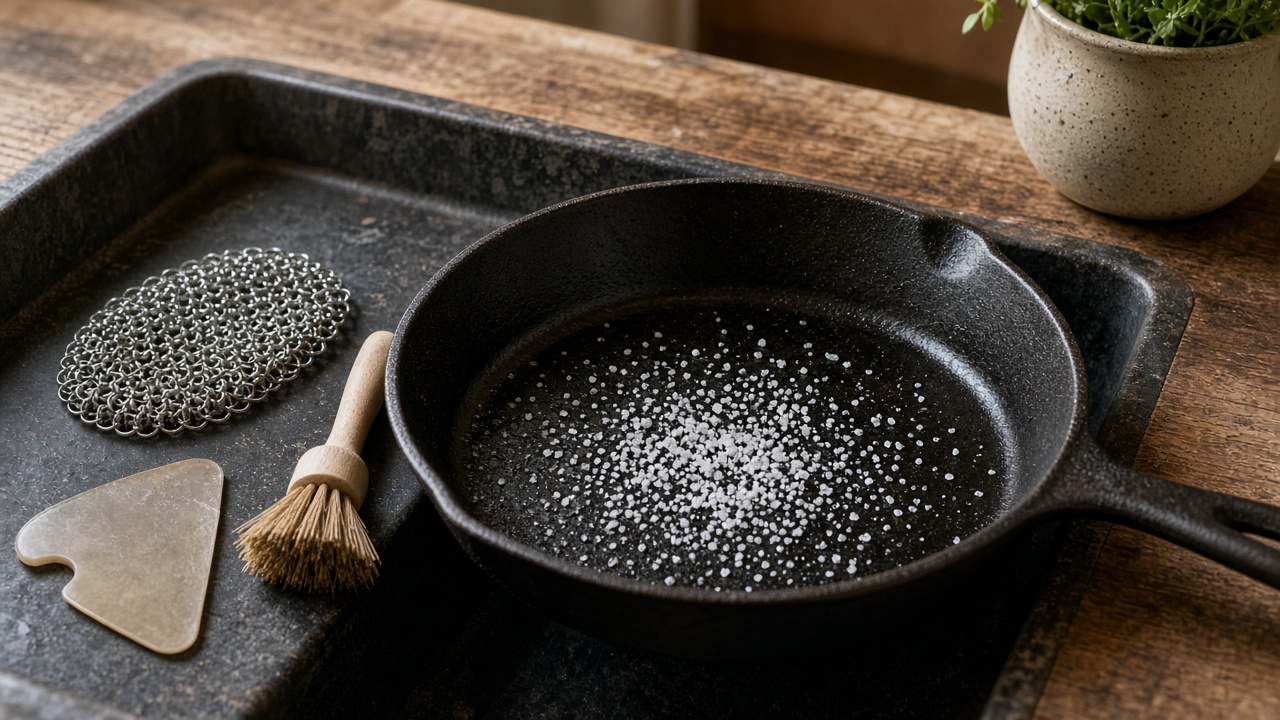
For deeper cleaning, scrub with coarse salt and half a lemon, or spray with white vinegar and wipe dry. Avoid bleach soaks and harsh cleaners, which can dry out the wood.
How to Oil and Wax an Acacia Wood Cutting Board
Acacia has natural oils, but repeated washing still removes moisture over time. Regular conditioning prevents dryness, cracking and warping.
How Often to Oil
For a new board, oil it once a week for the first few weeks. After that, oil it whenever the wood looks dull, pale or feels dry, which for most households works out to about once a month.
Step-by-Step Oiling
- Start with a clean, completely dry board.
- Pour food-grade mineral oil onto the surface.
- Spread it over all sides and edges with a clean cloth or paper towel.
- Let it soak in for several hours or overnight, standing the board on its edge.
- Wipe off any excess oil that has not absorbed.
Our step-by-step guide on how to oil a cutting board with mineral oil covers this in more detail.
Adding a Wax Finish
After oiling, a board cream or wax made with beeswax and mineral oil adds a protective layer that helps repel water. Rub a thin coat over the surface, let it sit for a few minutes, then buff with a clean cloth. Our guide to the best wax for cutting boards compares the main options.
A cutting board oil and wax set makes routine conditioning easy. Check price on Amazon.
What Oils to Avoid
Avoid olive oil, vegetable oil and other cooking oils for regular conditioning. They can go rancid and leave a sticky, smelly surface over time. Stick with food-grade mineral oil, fractionated coconut oil or products made specifically for boards.
Common Problems and Fixes
- Fuzzy or raised grain: Lightly sand with fine sandpaper, around 220 grit, then re-oil.
- Small cracks: Oil the board heavily and keep it out of dry, hot spots. Deep cracks that go through the board mean it is time to replace it.
- Warping: Usually from uneven drying. Always dry upright and wash both sides.
- Odors: Scrub with salt and lemon, or apply a baking soda paste and rinse.
Frequently Asked Questions
Is acacia good for cutting boards?
Yes. Acacia is durable, attractive and water resistant. Because hardness varies by species, some boards may be slightly tougher on knives than walnut or maple, but most cooks find acacia a good everyday choice.
Does acacia dull knives?
Harder acacia boards can dull knives a bit faster than softer hardwoods, but acacia is still far gentler than glass, stone or ceramic boards. End grain acacia is the most knife-friendly option.
Can you cut raw meat on an acacia cutting board?
Yes, if you wash it promptly with hot, soapy water and dry it well. Many cooks keep a separate board for raw meat to reduce cross-contamination.
Why is my acacia cutting board cracking?
Cracks usually come from drying out or from water exposure such as soaking or the dishwasher. Regular oiling and upright drying prevent most cracks.
How do I know if my acacia board needs oil?
If the surface looks lighter in color, feels dry or water soaks in instead of beading, it is time to oil it.
Final Thoughts
An acacia wood cutting board offers strong looks, good durability and a friendly price. Choose a solid, well-constructed board, wash it by hand, dry it standing up and oil it regularly with food-grade mineral oil and a little wax. With that simple care, acacia will serve you well for both prep and serving.