As an Amazon Associate, I earn from qualifying purchases.
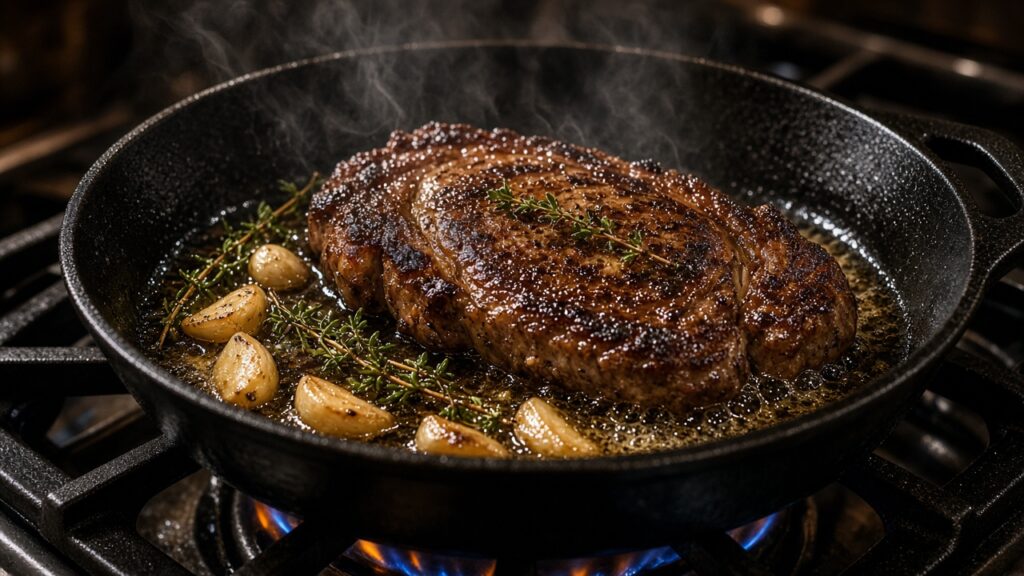
Few methods can match what happens when you cook steak with a cast iron skillet: a deep brown crust, a juicy center and a pan full of drippings for a quick butter baste or sauce. The heavy iron holds heat so well that the steak sears instead of steaming, which is exactly what you want.
This guide covers everything from choosing the cut and preparing the steak to timing, temperatures and basting. You will also find the reverse-sear method for thick steaks and a doneness chart to take the guesswork out of it.
Why Cast Iron Is Ideal for Steak
Cast iron is dense and heavy, so it stores a lot of heat. When a cold steak hits the pan, the temperature drops less than it would in a thin pan, which keeps the sear going. It also handles high heat without damage and can go straight from the stovetop into a hot oven to finish thick cuts.
If you are shopping for a pan, a 10 to 12 inch skillet fits one or two steaks without crowding. Our guide to the best size cast iron skillet for steak explains how to choose. A classic option is a Lodge 12-inch cast iron skillet. Check price on Amazon.
Choosing the Best Steak for a Cast Iron Skillet
Well-marbled cuts between 1 and 1 1/2 inches thick are the easiest to cook in a skillet:
- Ribeye: Rich marbling and lots of flavor. Very forgiving.
- New York strip: Firm texture with a good fat cap.
- Filet mignon: Tender and lean, best with a butter baste.
- Top sirloin: Budget-friendly and great for weeknights.
- Flat iron and hanger: Flavorful, cook quickly, and should be sliced against the grain.
For a deeper comparison, read our guide on the best cut of steak for cast iron skillet cooking.
What You Need
- 1 or 2 steaks, about 1 to 1 1/2 inches thick
- Kosher salt and freshly ground black pepper
- 1 to 2 tablespoons high smoke point oil, such as avocado, canola or vegetable oil
- 2 to 3 tablespoons butter
- 2 to 3 garlic cloves, lightly smashed
- A few sprigs of fresh thyme or rosemary
- A cast iron skillet, tongs, a spoon and an instant-read thermometer
An instant-read meat thermometer is the single best tool for consistent results. Check price on Amazon.
How to Cook Steak With a Cast Iron Skillet: Step by Step
- Dry and season ahead. Pat the steaks dry with paper towels and season generously with kosher salt on all sides. For the best crust, salt them 45 minutes ahead, or up to a day ahead uncovered in the refrigerator.
- Take the chill off. Let the steaks sit at room temperature for 20 to 30 minutes while the pan heats. Pat dry again just before cooking.
- Preheat the skillet. Heat the cast iron over medium-high heat for 5 to 7 minutes until it is very hot. A drop of water should sizzle and evaporate almost instantly.
- Add oil. Add a thin layer of high smoke point oil. It should shimmer and just begin to smoke.
- Sear the first side. Lay the steak in the pan away from you. Do not move it for 2 to 3 minutes, until a deep brown crust forms.
- Flip and sear the second side. Turn the steak with tongs and cook another 2 to 3 minutes. Use the tongs to sear the fat cap on its edge for 30 to 60 seconds.
- Butter baste. Lower the heat to medium. Add the butter, garlic and herbs. Tilt the pan and spoon the foaming butter over the steak continuously for 1 to 2 minutes.
- Check the temperature. Insert a thermometer into the thickest part of the steak and pull it a few degrees below your target, because it will keep cooking as it rests.
- Rest. Move the steak to a cutting board or rack for 5 to 10 minutes.
- Slice against the grain and spoon the pan butter over the top.
Steak Doneness Temperature Chart
Remove the steak from the pan about 5°F below the final temperature. These are commonly used doneness targets:
| Doneness | Pull from pan | Final temperature after rest |
|---|---|---|
| Rare | 120°F | 125°F |
| Medium rare | 125°F | 130°F to 135°F |
| Medium | 135°F | 140°F to 145°F |
| Medium well | 145°F | 150°F |
| Well done | 155°F | 160°F |
The USDA recommends cooking whole cuts of beef to at least 145°F followed by a 3-minute rest, so keep that in mind when deciding how to cook steak for anyone who needs to follow food safety guidance.
The Reverse Sear Method for Thick Steaks
For steaks thicker than about 1 1/2 inches, searing alone can overcook the outside before the center is ready. The reverse sear solves this.
- Season the steak and place it on a wire rack over a baking sheet.
- Bake at around 250°F until the center is about 10°F to 15°F below your target temperature.
- Heat your cast iron skillet until very hot while the steak rests briefly.
- Sear for 60 to 90 seconds per side, basting with butter at the end.
- Rest for a few minutes and slice.
You get edge-to-edge even doneness with a great crust.
Cast Iron Skillet vs. Grill Pan for Steak
A flat cast iron skillet gives you full-surface contact and an even crust. A ridged grill pan gives you grill marks and lets fat drain away, but less of the steak touches the hot metal. If you prefer the look of grill marks, see our guide on how to cook steak in a cast iron grill pan.
Simple Flavor Ideas
Salt and pepper are all a good steak needs, but a few easy additions change the character of the dish:
- Compound butter: Mash softened butter with minced garlic, parsley and a little lemon zest, then set a slice on the resting steak.
- Pan sauce: After removing the steak, pour off most of the fat, add a splash of broth or red wine, and scrape up the browned bits. Simmer until slightly reduced and finish with a pat of butter.
- Peppercorn crust: Press coarsely cracked black peppercorns into both sides before searing.
Common Mistakes to Avoid
- Cooking a wet steak. Moisture prevents browning. Always pat dry.
- Not preheating long enough. Cast iron needs time to heat evenly.
- Crowding the pan. Too many steaks lower the pan temperature and cause steaming.
- Moving the steak too soon. Let the crust form before flipping.
- Adding butter too early. Butter burns at high heat. Add it near the end.
- Skipping the rest. Cutting right away lets more juices run out onto the board.
Cleaning the Skillet After Cooking Steak
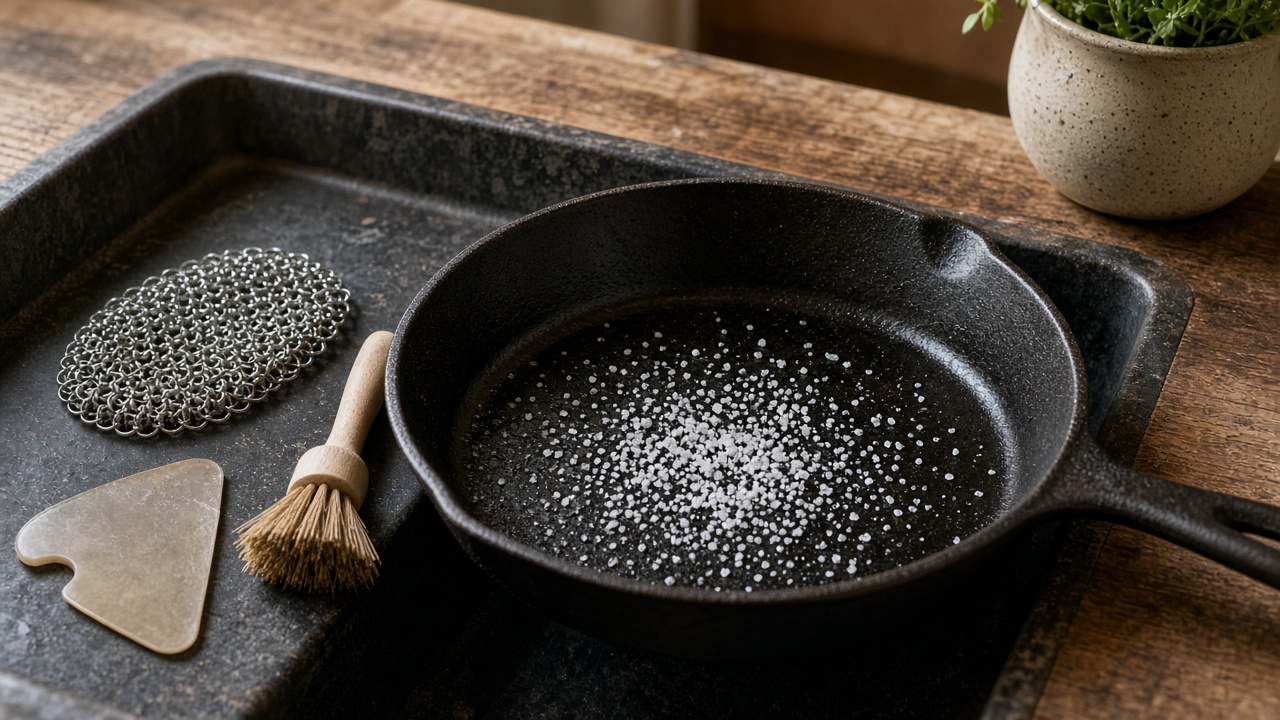
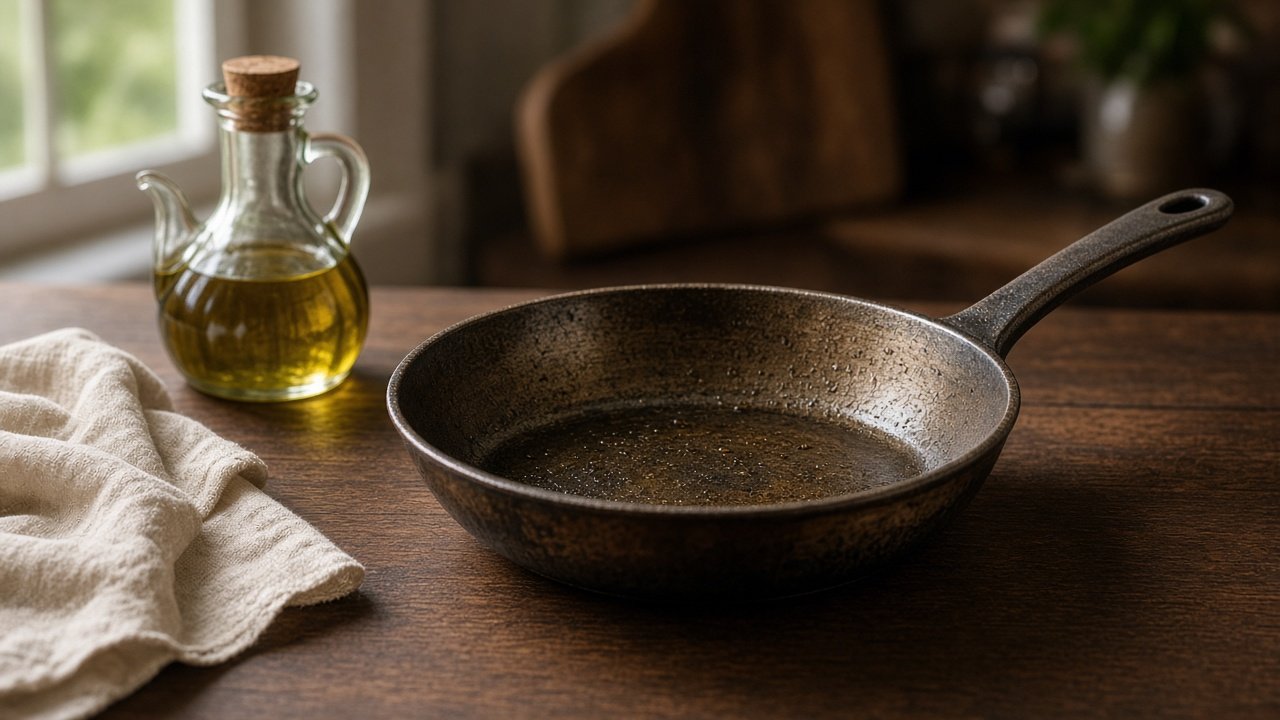
While the pan is still warm, pour off excess fat, scrape out any browned bits and rinse with hot water and a brush. Dry it on the burner and wipe on a thin coat of oil. Our guide on how to clean a cast iron skillet covers stuck-on bits and rust.
Frequently Asked Questions
How long do you cook a steak in a cast iron skillet?
For a 1-inch steak, about 2 to 3 minutes per side over medium-high heat for medium rare, plus 1 to 2 minutes of basting. Thickness and starting temperature change timing, so use a thermometer.
Should I use oil or butter to cook steak in cast iron?
Use both. Sear in a high smoke point oil, then add butter at lower heat near the end for flavor.
Do you cover steak when cooking in a cast iron skillet?
No. Covering traps steam and softens the crust. Leave the pan uncovered.
Can I finish steak in the oven in a cast iron skillet?
Yes. Sear both sides on the stove, then transfer the skillet to a 400°F oven until the steak reaches your target temperature. Use an oven mitt, because the handle will be very hot.
Why is my steak gray instead of brown?
The pan was not hot enough, the steak was wet, or the pan was overcrowded. Preheat longer and dry the steak thoroughly.
Final Thoughts
When you cook steak with a cast iron skillet, the formula is simple: a dry, well-salted steak, a properly preheated pan, an undisturbed sear, a quick butter baste and a thermometer to tell you when to stop. Master that once and you will get a steakhouse-quality crust at home every time.