As an Amazon Associate, I earn from qualifying purchases.
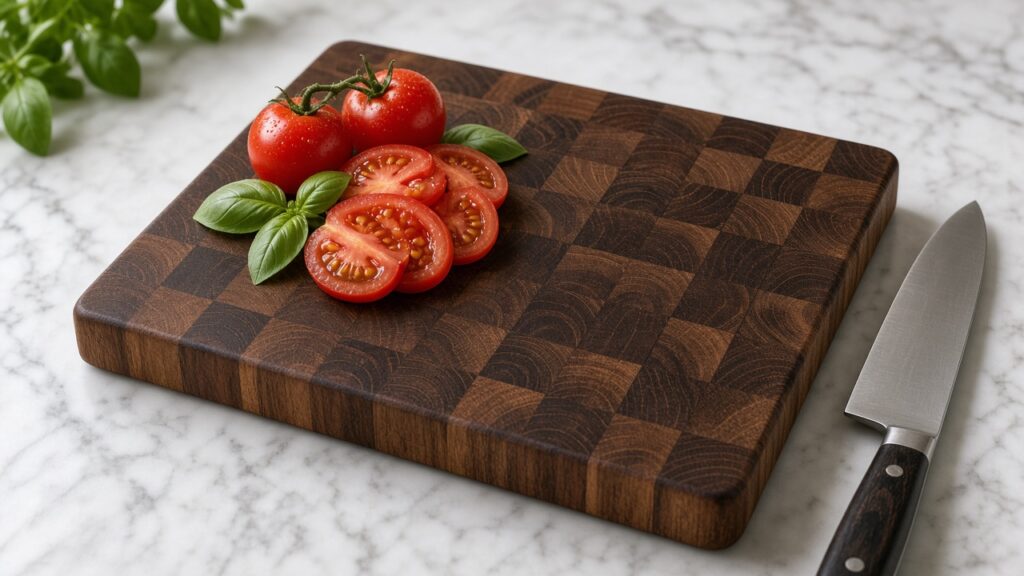
A walnut cutting board is one of the best-looking tools you can put on a kitchen counter, and it is not just about looks. Walnut is a closed-grain hardwood that is firm enough to stand up to daily chopping and soft enough to be kind to your knife edges.
If you are deciding whether a walnut board is worth it, comparing it with maple or acacia, or trying to figure out how to keep one looking rich and dark, this guide covers it all: the pros and cons of walnut, end grain versus edge grain, what to look for when buying, and the care routine that keeps it in good shape for years.
Why Choose a Walnut Cutting Board?
American black walnut has long been a favorite of woodworkers and cutting board makers. Here is why it works so well in the kitchen:
- Knife-friendly hardness. Black walnut is rated at roughly 1,010 lbf on the Janka hardness scale, softer than hard maple (about 1,450 lbf). That moderate hardness gives a little under the blade, which helps knives stay sharp longer.
- Closed grain. Walnut has relatively small pores, so it absorbs less liquid than open-grained woods like red oak and is easier to keep clean.
- Beautiful color. Deep chocolate brown with lighter sapwood streaks, it hides stains from berries, beets and herbs better than light woods.
- Durability. With basic care, a quality walnut board can last for many years.
We go deeper into how different species compare in our guides to the best hardwoods for cutting boards and the best wood species for cutting boards.
Walnut vs. Maple vs. Acacia vs. Bamboo
| Material | Hardness | Knife friendliness | Appearance | Maintenance |
|---|---|---|---|---|
| Walnut | Moderate | Very good | Dark, rich brown | Regular oiling |
| Hard maple | Harder | Very good | Light, creamy | Shows stains more |
| Acacia | Varies by species, often harder | Good | Warm, varied grain | Regular oiling |
| Bamboo | Hard, contains silica | Tougher on edges | Light, uniform | Low, but can split |
Walnut vs. maple: Maple is the traditional butcher block wood. It is a bit harder and lighter in color, so stains show more. Walnut is a little softer and darker and is often chosen for its looks.
Walnut vs. acacia: Acacia is usually more affordable and has a striking grain. Its hardness varies widely because acacia covers many species, and it is often oilier. Walnut tends to be more consistent from board to board.
Walnut vs. bamboo: Bamboo is technically a grass and is hard on knives because of its silica content and glue lines. Walnut is gentler.
End Grain vs. Edge Grain Walnut Boards
How the wood is cut and assembled matters as much as the species.
End Grain
End grain boards are made from short blocks glued with the ends of the wood fibers facing up, often forming a checkerboard pattern. The knife slides between fibers rather than cutting across them, so the board self-heals to a degree and is extremely kind to knife edges. End grain boards are typically thicker, heavier and more expensive, and they need more frequent oiling because the open fiber ends absorb more oil and water.
Edge Grain
Edge grain boards are made from long strips glued side by side, with the edges of the boards facing up. They are lighter, less expensive and more resistant to warping and splitting. They show knife marks more readily over time but are easier to maintain.
Which should you choose? If you do a lot of heavy chopping and want maximum knife protection, end grain is worth the investment. For everyday slicing, serving and an easier care routine, edge grain is a practical choice.
What to Look for When Buying a Walnut Cutting Board
- Thickness: At least about 1 inch for edge grain and 1 1/2 inches or more for end grain to resist warping.
- Size: A board around 18 by 12 inches is versatile for most home kitchens. Smaller boards are good for bread, cheese and quick jobs.
- Juice groove: Useful for carving roasts and slicing juicy fruit, although it reduces the flat working surface.
- Feet or handles: Feet lift the board for airflow but make it one-sided. Handles help with serving.
- Finish: Look for a food-safe finish such as mineral oil and beeswax. Avoid boards finished with lacquer or varnish.
- Construction quality: Tight, even glue lines with no gaps.
You can compare sizes and styles in a search for end grain walnut cutting boards. Check price on Amazon. If you prefer a lighter, easier-care board, browse edge grain walnut cutting boards. Check price on Amazon.
How to Care for a Walnut Cutting Board
Daily Cleaning
- Scrape off food scraps.
- Wash with warm water and a little dish soap using a sponge or brush.
- Rinse quickly and wipe dry with a towel.
- Stand the board on its edge to air dry completely so both sides get airflow.
Never soak a walnut board or put it in the dishwasher. Prolonged water exposure causes swelling, warping and cracks.
Oiling and Conditioning
Wood dries out with repeated washing. Oil it when the surface looks pale or dry, which may be weekly for a new board and monthly once it is well established.
- Make sure the board is clean and completely dry.
- Apply a generous layer of food-grade mineral oil to all surfaces.
- Let it soak in for several hours or overnight.
- Wipe off the excess.
- Optionally, finish with a board cream or wax that combines mineral oil and beeswax to seal the surface.
On walnut, a fresh coat of oil really brings out the deep brown tone. A bottle of food-grade mineral oil for cutting boards lasts a long time. Check price on Amazon.
Deodorizing and Stain Removal
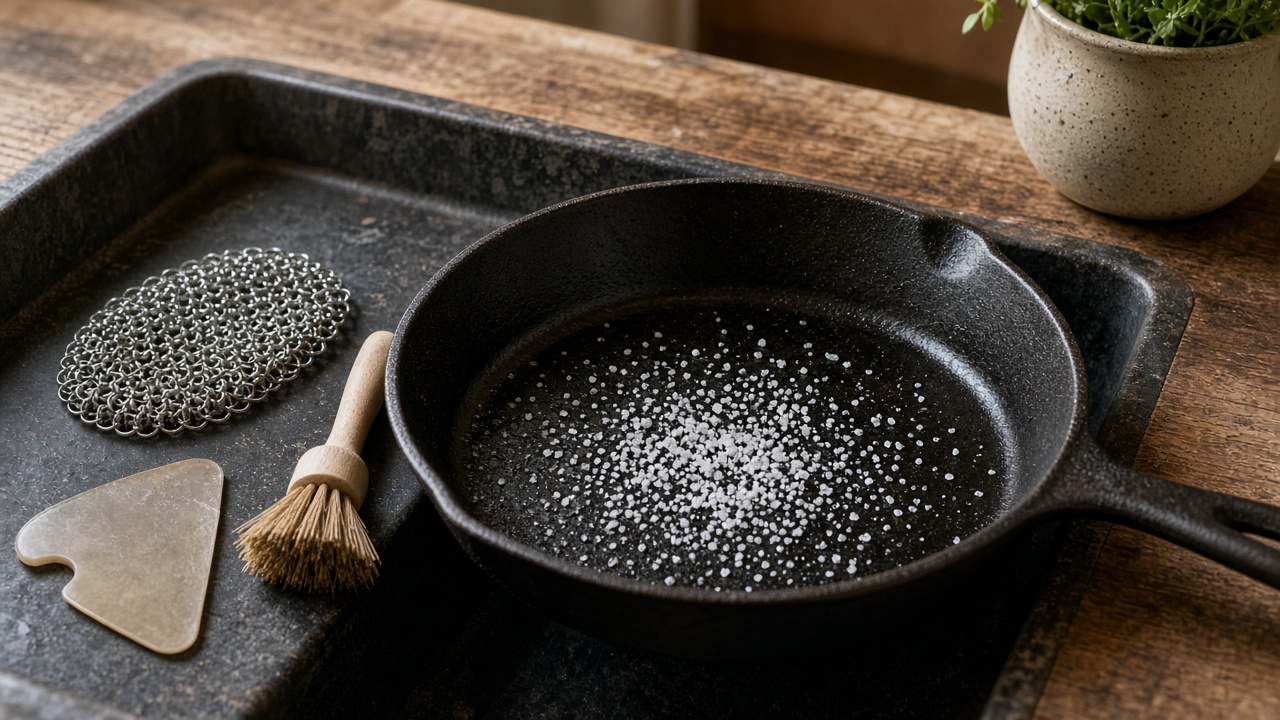
To refresh a board, sprinkle coarse salt over it, scrub with half a lemon, let it sit a few minutes and rinse. A paste of baking soda and water also helps with odors.
Restoring an Old Walnut Board
If your board has deep knife scars, rough fuzz or stubborn stains, it can be restored. Sand with progressively finer sandpaper, starting around 120 grit and finishing around 220, wipe off the dust, then re-oil generously. Our full guide on how to restore a cutting board walks through each step.
Is a Walnut Cutting Board Safe for Raw Meat?
Hardwood cutting boards can be used for raw meat as long as they are cleaned promptly and thoroughly with hot, soapy water and dried well. Many cooks prefer to keep a separate board for raw meat, poultry and fish to reduce cross-contamination risk. If you use your walnut board for both, clean and dry it immediately after contact with raw meat.
People with tree nut allergies sometimes ask about walnut boards. Walnut wood is not the same as walnut kernels, but if anyone in your household has a severe tree nut allergy, it is reasonable to consult a doctor or choose another species.
Frequently Asked Questions
Is walnut good for cutting boards?
Yes. Walnut's moderate hardness, closed grain and durability make it a very good choice. It is gentle on knives and hides stains well.
Does walnut or maple make a better cutting board?
Both are excellent. Maple is harder and lighter in color. Walnut is slightly softer and darker. The choice often comes down to appearance and budget.
How often should I oil a walnut cutting board?
Oil when the board looks dry or lighter in color. For a new board, that may be every week for the first few weeks, then roughly monthly.
Will a walnut cutting board dull my knives?
Walnut is one of the more knife-friendly woods, especially in an end grain design. It is far gentler than glass, stone or bamboo.
Can I put a walnut cutting board in the dishwasher?
No. The heat and moisture will warp and crack it. Hand wash and air dry only.
Final Thoughts
A walnut cutting board combines good looks with practical, knife-friendly performance. Choose a thick, well-made board in the grain style that suits your cooking, wash it by hand, dry it standing up and oil it regularly. With that simple routine, it will stay beautiful and useful for years.