Are you tired of your brown rice turning out mushy or undercooked? Cooking brown rice perfectly can be tricky, but your Aroma Rice Cooker can make it simple and foolproof.
Imagine having fluffy, nutritious brown rice ready without any guesswork or stress. In this guide, you’ll discover easy steps to get the best results every time. Keep reading, and unlock the secret to cooking brown rice that tastes great and keeps you coming back for more.
Choosing The Right Brown Rice
Choosing the right brown rice is the first step to perfecting your cooking experience in the Aroma Rice Cooker. The type and quality of rice you pick impact both the texture and flavor of your meal. Knowing what to look for can save you time and ensure every batch turns out delicious.

Types Of Brown Rice
Brown rice comes in several varieties, each with its own taste and cooking time. Short-grain brown rice is stickier and softer, making it ideal for dishes like sushi or risotto. Long-grain brown rice stays fluffy and separate, perfect for side dishes or salads.
There’s also medium-grain brown rice, which falls somewhere between sticky and fluffy. Choosing the right type depends on what you plan to cook and your personal texture preference. Have you ever noticed how the same rice can change the feel of a dish completely?
Selecting Quality Rice
Quality matters more than you might think. Look for rice that has a consistent color and no cracks or broken grains. Freshness is key—older rice can taste stale and take longer to cook.
Buying from a trusted source or a brand known for quality helps avoid surprises. You can even try rinsing a small amount before cooking to check its aroma and texture. How often do you test your rice before committing to a full pot?
Preparing Brown Rice For Cooking
Preparing brown rice properly ensures the best texture and flavor. It helps the rice cook evenly and prevents it from sticking. Taking time to measure, rinse, and soak the rice can make a big difference in your cooking results.
Measuring Rice And Water
Use a standard measuring cup for accuracy. Brown rice needs more water than white rice to cook well. The common ratio is 1 cup of brown rice to 2 1/2 cups of water. Adjust water slightly based on your rice cooker’s instructions. Too little water leads to hard rice; too much creates mushy rice.
Rinsing And Soaking Tips
Rinse brown rice under cold water until the water runs clear. This removes excess starch and dirt. Soaking rice for 30 minutes softens the grains and reduces cooking time. Drain the soaked rice well before placing it in the rice cooker. This step improves texture and helps the rice cook evenly. cooking dry beans in a rice cooker can also be a time-saving method. Just rinse the beans thoroughly and soak them for a few hours to enhance their texture. With the right amount of water, they'll cook evenly alongside your rice for a nutritious meal.
Using The Aroma Rice Cooker
Using the Aroma Rice Cooker to prepare brown rice changes the whole cooking experience. It’s designed to make the process straightforward, saving you time and effort. The key is understanding how to set it up properly and selecting the right settings to get perfectly cooked brown rice every time.
Setting Up The Cooker
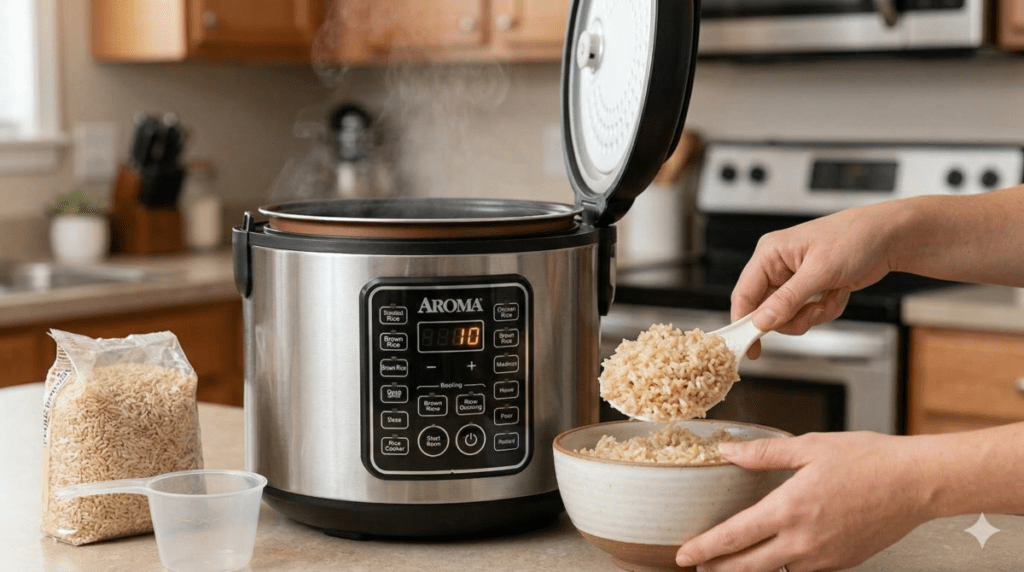
Start by placing the inner pot inside the cooker. Make sure it’s clean and dry to avoid any issues during cooking. Then, measure your brown rice and rinse it under cold water to remove excess starch.
After rinsing, add the rice to the inner pot along with the correct amount of water. Typically, brown rice requires more water than white rice—about 2 to 2.5 cups of water per cup of rice. Double-check the water level marks inside the pot if your cooker has them; they are a reliable guide.
Once the rice and water are in place, close the lid securely. Check that the steam vent is clear to ensure proper pressure and cooking. Plug in the cooker and you’re ready for the next step.
Choosing The Brown Rice Setting
The Aroma Rice Cooker has specific settings for different types of rice. Press the “Brown Rice”button to select the right cooking mode. This setting adjusts the cooking time and temperature to handle the tougher texture of brown rice.
Have you ever noticed how brown rice can turn out mushy or undercooked in a regular cooker? The dedicated setting prevents that by extending the cooking time and allowing the rice to absorb water evenly.
After selecting the brown rice option, hit the “Start”button. The cooker will begin its cycle, and you can leave it alone until it switches to “Keep Warm.” It’s that simple to get fluffy, well-cooked brown rice without constant checking. Using the techniques from cooking rice with Zojirushi techniques, you can explore different types of grains and achieve perfect results every time. The precise control over cooking times and temperatures makes this appliance stand out, ensuring your meals are both nutritious and delicious. Don't hesitate to experiment with various seasonings or add-ins to enhance the flavor of your rice dishes.
Cooking Process And Timing
Cooking brown rice in an Aroma rice cooker is simple and efficient. Understanding the cooking process and timing ensures your rice turns out perfectly every time. Brown rice needs more time and water than white rice due to its outer bran layer. Precise timing and careful monitoring help achieve a fluffy texture without being mushy or undercooked.
Starting The Cooker
First, rinse the brown rice under cold water to remove excess starch. Use the rice cooker’s measuring cup to add the right amount of rice. Add water according to the Aroma cooker’s guidelines for brown rice, usually about 2 to 2.5 cups of water per cup of rice. Close the lid securely before pressing the “Brown Rice” setting. If your cooker lacks this option, use the “Manual” or “White Rice” mode but increase the cooking time.
Monitoring Cooking Progress
Once the cooker starts, avoid opening the lid to keep steam inside. The Aroma cooker will automatically switch to “Keep Warm” after cooking. Let the rice sit for 10 to 15 minutes on “Keep Warm” to finish steaming. This rest time improves texture and fluffiness. Use a fork or rice paddle to gently fluff the rice before serving.
Post-cooking Steps
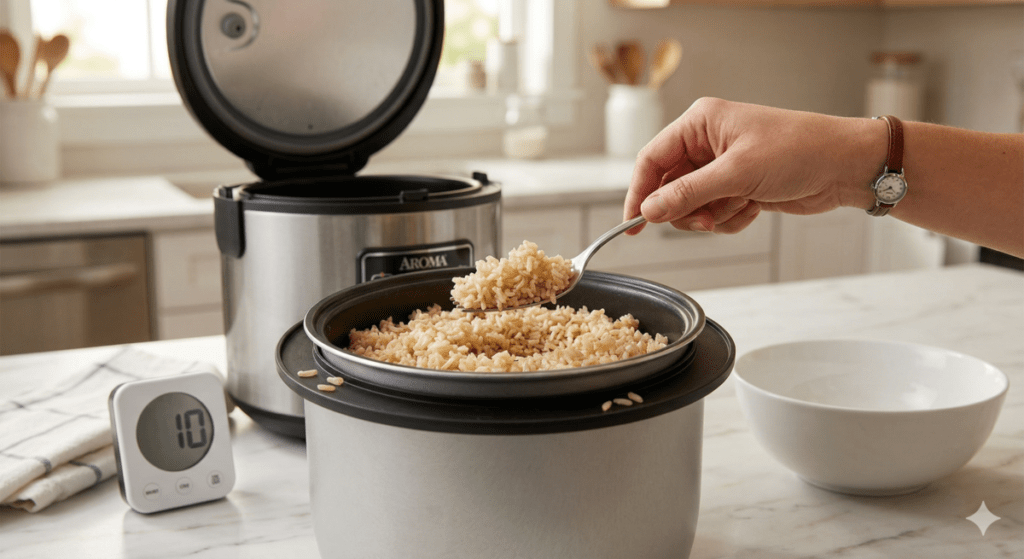
After cooking, let the brown rice sit for 10 minutes. Fluff it gently with a fork before serving. This step enhances texture and flavor.
After the Aroma rice cooker has worked its magic on your brown rice, you might think the job is done. However, the post-cooking steps are just as crucial to ensure your rice is perfect. Paying attention to the details here can make a significant difference in the texture and flavor of your dish.
Letting Rice Rest
Once the cooking cycle is complete, resist the temptation to open the lid immediately. Allow the rice to rest for about 10 minutes. This resting period helps the grains settle and prevents them from becoming sticky. During this time, the steam continues to work its way through the rice, enhancing the fluffiness. It's a small patience test, but the reward is well worth it. Have you ever noticed how some chefs let dishes sit before serving? The same principle applies here for optimal texture.
Fluffing And Serving
After the resting period, it's time to fluff the rice. Use a fork to gently separate the grains. This step ensures the rice is light and airy, not clumpy. Fluffing might seem like an unnecessary step, but it really brings out the best in your rice. It’s a quick task that makes a world of difference in presentation and taste. Now, serve the rice immediately, pairing it with your favorite dish. Consider how the aroma fills the room as you fluff and serve. Isn’t it satisfying to know that such a simple step can elevate your meal?
Troubleshooting Common Issues
Troubleshooting common issues with your Aroma rice cooker can improve your brown rice results. Small adjustments in water and cooking time often fix most problems. Understanding why rice turns out too dry, wet, or uneven helps you cook better every time.
Rice Too Dry Or Too Wet
Dry rice usually means there is not enough water. Add a little more water next time to get softer rice. Wet rice means too much water was used or cooking time was too short. Try reducing water by one-fourth cup or increase cooking time slightly. Always rinse brown rice well before cooking. This removes extra starch and prevents clumping.
Uneven Cooking
Uneven cooking occurs if rice is not spread evenly in the pot. Stir rice gently before starting the cooker. Avoid opening the lid during cooking. This causes heat loss and affects cooking consistency. If your rice cooker has a "brown rice" setting, use it for better results. Check that the inner pot sits flat inside the cooker. A tilted pot can cause uneven heat distribution.
Tips For Enhancing Flavor
Enhancing the flavor of brown rice cooked in your Aroma rice cooker is easier than you might think. Small changes to the cooking liquid or what you add after cooking can make each meal exciting and unique. Let’s look at some simple ways to boost taste and texture without extra effort.
Adding Broth or Spices
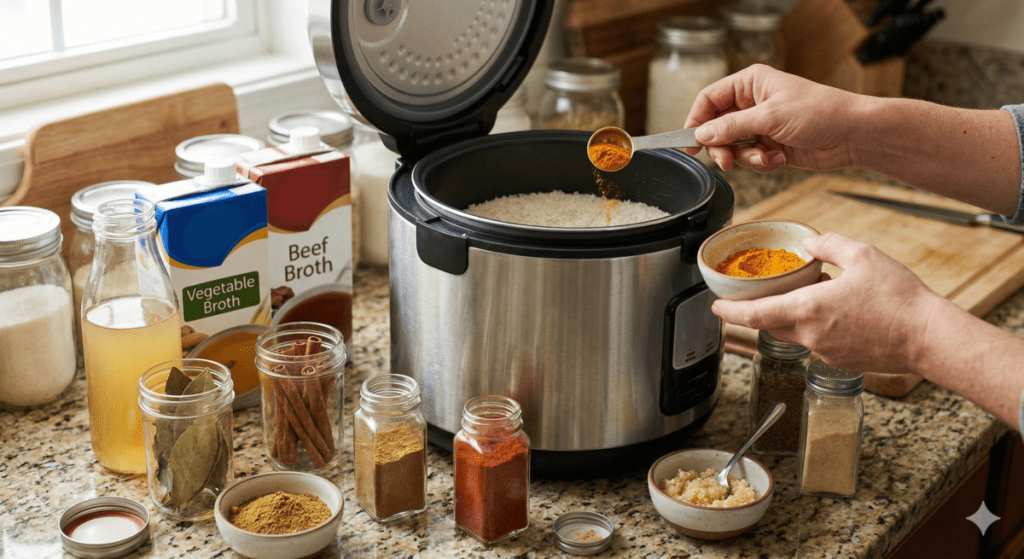
Swap the water for chicken, vegetable, or beef broth to give your rice a richer taste. The broth infuses every grain, making your dish more savory and satisfying.
You can also add spices directly into the cooker before starting. Try:
- Bay leaves or cinnamon sticks for warmth
- Garlic powder or minced garlic for a punch
- Cumin or turmeric for an earthy touch
Have you ever noticed how a pinch of smoked paprika can bring out a subtle depth? Experiment with what you have in your pantry—you might discover your new favorite flavor.
Mix-ins And Toppings
Adding ingredients after the rice is cooked can elevate the dish even more. Stir in chopped fresh herbs like cilantro or parsley for a bright finish.
Consider topping your rice with toasted nuts, seeds, or even a sprinkle of cheese to add texture and richness. Sautéed vegetables mixed in right after cooking can turn plain rice into a colorful, nutrient-packed meal.
Think about what you enjoy on salads or pastas—why not try those flavors on your rice? Your Aroma rice cooker is just the start; the real magic happens when you make the rice your own. Exploring flavored rice recipes for rice cookers can transform a simple side dish into a gourmet experience. Consider adding herbs, spices, or even a splash of citrus to elevate the taste. You'll find that with a little creativity, your rice can become a flavorful centerpiece for any meal.
Frequently Asked Questions
How Much Water Is Needed For Brown Rice In Aroma Cooker?
Use 2 to 2. 5 cups of water for every cup of brown rice. This ratio ensures the rice cooks thoroughly without being mushy or dry.
How Long Does Brown Rice Take To Cook In Aroma Cooker?
Brown rice typically takes about 45 to 50 minutes to cook in an Aroma rice cooker. The cooker’s brown rice setting optimizes this timing.
Can I Use The Same Settings For White And Brown Rice?
No, brown rice requires more water and a longer cooking time than white rice. Use the brown rice setting for best results.
Should I Rinse Brown Rice Before Cooking In Aroma Cooker?
Yes, rinse brown rice under cold water until water runs clear. This removes excess starch and prevents rice from being sticky.
Conclusion
Cooking brown rice in an Aroma rice cooker is simple and quick. Just follow the steps carefully. Measure rice and water well for the best result. The cooker does most of the work, saving time and effort. You get fluffy, healthy brown rice every time.
Enjoy it with your favorite dishes or as a side. Practicing this method will make cooking easier. Try it today and enjoy tasty brown rice without fuss.