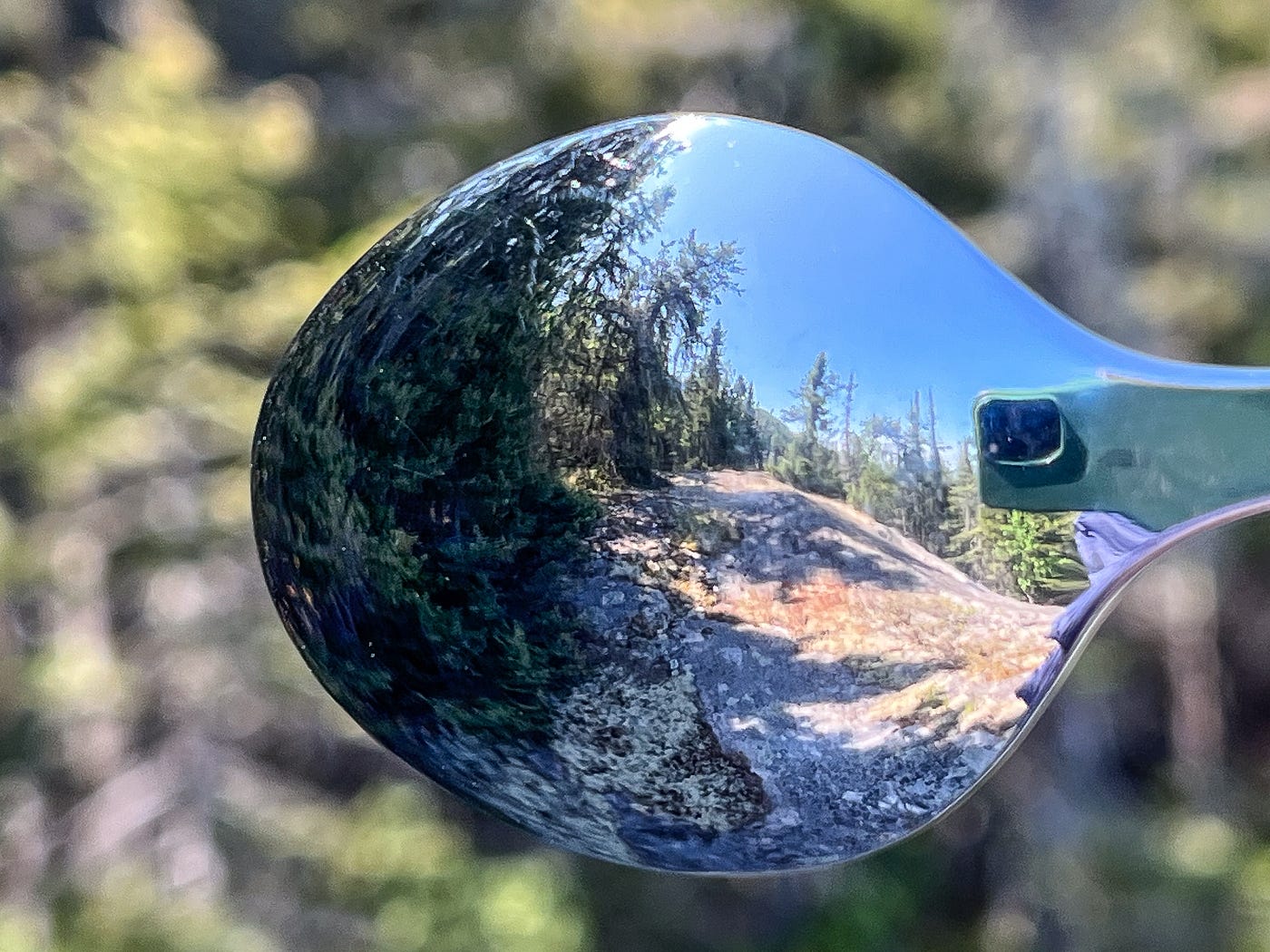
Have you ever looked into a spoon and noticed your reflection was upside down? It’s a strange and surprising sight that makes you wonder, “Why does this happen?” You might think it’s just a trick of the light, but there’s an interesting science behind it.
Understanding why your reflection flips in a spoon can change the way you see everyday objects around you. Keep reading, and you’ll discover the simple secrets that explain this curious reflection—and next time you look in a spoon, you’ll see it in a whole new way.

Credit: www.youtube.com
How Curved Surfaces Affect Reflections
Curved surfaces change how light bounces back to our eyes. They can twist, flip, or stretch reflections. This effect makes your image look different in objects like spoons or bottles. Understanding these changes helps explain why your reflection sometimes appears upside down.
Concave And Convex Shapes
Concave surfaces curve inward, like the inside of a spoon. They focus light rays to a point. This focusing can flip your reflection upside down near the center. The edges may show a stretched or distorted image.
Convex surfaces curve outward, like the back of a spoon. They spread light rays apart. This spreading makes your reflection smaller and right side up. The image looks wider and sometimes warped at the edges.
Reflection Angles Explained
Light hits a surface at an angle and bounces off at the same angle. Curved surfaces change this angle continuously. Each part of the curve sends light in a different direction.
Concave shapes bend light inward, causing images to flip. Convex shapes bend light outward, making images appear smaller and upright. The angle change creates the upside-down effect on some curves.
The Science Behind Spoon Reflections
Have you ever stared into a spoon and noticed your reflection looking strange—sometimes upside down or warped? This odd effect isn’t magic; it’s all about how light behaves when it hits curved surfaces. Understanding the science behind spoon reflections can help you see everyday objects in a whole new way.
Spoon As A Curved Mirror
A spoon acts as a curved mirror because its surface is not flat. The inside of the spoon curves inward, creating a concave mirror, while the outside curves outward, acting like a convex mirror.
Each curve bends light differently. The concave side can flip your image upside down depending on how far you are from it. The convex side always makes your reflection appear smaller and right side up but distorted.
Think about holding a spoon close to your face. Have you noticed how the reflection flips as you move it away? That happens because the curved surface changes the way light rays bounce back to your eyes.
Light Path And Image Formation
Light travels in straight lines until it hits a surface. When light rays hit the spoon, they reflect off at angles determined by the spoon’s curve.
In the concave part, light rays converge or come together. If you are at the right distance, these converging rays create an upside-down image. Move closer or farther, and the image flips back to normal.
On the convex side, light rays spread out, which makes the image smaller and upright. This spreading also causes the reflection to look stretched or squished in odd ways.
- Concave side = light rays converge = possible upside-down image
- Convex side = light rays diverge = smaller, upright image
Next time you look in a spoon, try moving it slowly while watching your reflection change. Can you predict when your image will flip? Understanding this can sharpen your grasp of how light shapes the world around you.
Why Reflections Appear Upside Down
Have you ever noticed your reflection appearing upside down when you look into a spoon? This strange effect isn’t magic—it’s all about how light behaves when it hits curved surfaces. Understanding why reflections flip can make everyday objects like spoons feel a little less ordinary and a lot more fascinating.
Inversion In Concave Surfaces
Spoons often have a concave shape, meaning they curve inward like a bowl. When light rays bounce off this inward curve, they change direction in a way that flips the image upside down. This happens because the spoon's surface acts like a simple mirror, bending the light paths to create an inverted reflection.
Think about how a magnifying glass bends light to focus it. Similarly, the curved surface of a spoon bends light but also reverses the image you see. This inversion is more noticeable near the center of the spoon, where the curve is steepest.
Distance And Image Orientation
The way your reflection appears also depends on how far your face is from the spoon. If you hold the spoon close, the reflection might look right side up but smaller or distorted. Move further away, and the image flips upside down because of the way light rays cross before reaching your eyes.
Have you ever tried moving a spoon closer and farther from your face to watch the reflection change? This simple action shows how distance influences the orientation of the image. It’s a clear example of physics at work in a way you can see and easily experiment with yourself.

Credit: www.youtube.com
Everyday Examples Of Upside Down Reflections
Curved spoons bend light, flipping reflections upside down. This happens because the spoon acts like a concave mirror, changing how you see yourself. Everyday objects like spoons show these interesting reflection effects clearly.
Everyday Examples of Upside Down Reflections Have you ever noticed how everyday items can surprise you with an upside-down reflection? It's not just spoons that play tricks on your eyes. Various objects around your home and in nature can present this curious phenomenon.
Other Household Items
Spoons aren't the only culprits. Consider the shiny surface of a ladle or a stainless steel kettle. Both can flip your reflection upside down due to their curved surfaces. Mirrors might seem straightforward, but concave mirrors, like those in certain makeup mirrors, can also invert images. Have you ever tried to use such a mirror, only to find your face looking back at you upside down? Even the humble doorknob can surprise you. If it's shiny and rounded, it might reflect your image in a topsy-turvy manner. Next time you're reaching for the door, take a closer look.
Natural Occurrences
Nature, too, has its way of turning things upside down. Consider the surface of a calm pond. When viewed from an angle, the water can reflect the sky and trees in an inverted fashion. Raindrops hanging from a leaf can act like tiny lenses. They capture and invert miniature reflections of their surroundings. It's a small but fascinating example of how nature plays with light. Have you ever noticed how fish swimming just below the water surface appear upside down when viewed from above? It's another natural trick of reflection and refraction. These everyday examples highlight how light and surfaces interact in surprising ways. Have you encountered any other objects or settings where reflections turned your world upside down?
How To Experiment With Spoon Reflections
Experimenting with spoon reflections is a fun way to understand how curved surfaces affect the images we see. By trying simple activities with a spoon, you can watch how your reflection changes and flips. These experiments help you see the science behind the upside-down image and make the learning process interactive and memorable.
Simple Diy Experiments
Start by holding a spoon close to your face in a well-lit room. Notice how your reflection looks different on the inside versus the outside of the spoon. The inside, which curves inward, acts like a concave mirror and flips your image upside down at certain distances.
Try moving your head slowly closer and farther from the spoon and watch how your reflection shifts from normal to upside down. You can also try using different spoons with various sizes and curves to see how the reflection changes. This hands-on approach reveals the role of spoon shape in creating those surprising images.
Observing Changes By Moving The Spoon
Hold the spoon steady and move your eyes instead of your head. Notice how the reflection shifts position and shape as your viewing angle changes. This happens because the curved surface bends light differently depending on where you look.
Try tilting the spoon or rotating it slowly. See how the reflection may stretch, shrink, or flip. This simple movement helps you understand how light behaves on curved surfaces and why your reflection might appear upside down or distorted.
Have you ever wondered why the same spoon can show multiple reflections at once? Try observing the spoon under different lights and backgrounds to discover more about reflection and refraction. Experimenting like this turns a regular spoon into a powerful tool for seeing physics in action.
Credit: medium.com
Frequently Asked Questions
Why Is My Reflection Upside Down In A Spoon?
The reflection in a spoon appears upside down due to its curved surface. The concave side of the spoon acts like a concave mirror, flipping the image vertically. This optical effect changes how light rays reflect and form an inverted image.
Does Spoon Shape Affect Reflection Orientation?
Yes, the spoon’s shape affects reflection. The inner concave surface flips the image upside down, while the outer convex surface shows a smaller, upright reflection. Different spoon curves alter how light bends and reflects, changing the reflection’s orientation.
How Does Concave Surface Flip Reflections?
A concave surface bends light rays inward. When rays converge, they invert the image vertically. This causes the upside-down reflection seen in a spoon’s inner surface. The spoon acts like a concave mirror, forming an inverted virtual or real image.
Can Reflections In Spoons Be Corrected?
No, reflections in spoons cannot be corrected without changing the spoon’s shape. The curvature determines how light reflects. Only a flat or differently curved surface can produce an upright, undistorted reflection.
Conclusion
Seeing your reflection upside down in a spoon feels strange at first. This happens because of how light bends on the spoon’s curved surface. The spoon works like a simple mirror, but its shape flips the image. Understanding this helps us see everyday objects in a new way.
Next time you look in a spoon, remember the science behind the fun twist. It’s a small example of how light and shapes create interesting effects around us. Curved mirrors show us that even simple things can surprise us.