Are you ready to make your fondue night unforgettable? Preparing the right vegetables can turn a simple dip into a delicious experience that everyone will love.
But how do you get your veggies just right—crisp, flavorful, and perfect for dipping? You’ll discover easy tips and tricks to prepare your vegetables so they complement every bite of melted cheese or chocolate. Keep reading, and your fondue will become the highlight of any gathering!
Choosing The Best Vegetables
Choosing the best vegetables for fondue can make a huge difference in your dipping experience. The right vegetables will not only taste great but also hold their texture when dipped into hot cheese or oil. Knowing which vegetables to pick helps you avoid soggy or mushy bites and keeps every dip satisfying.
Vegetables That Hold Up Well
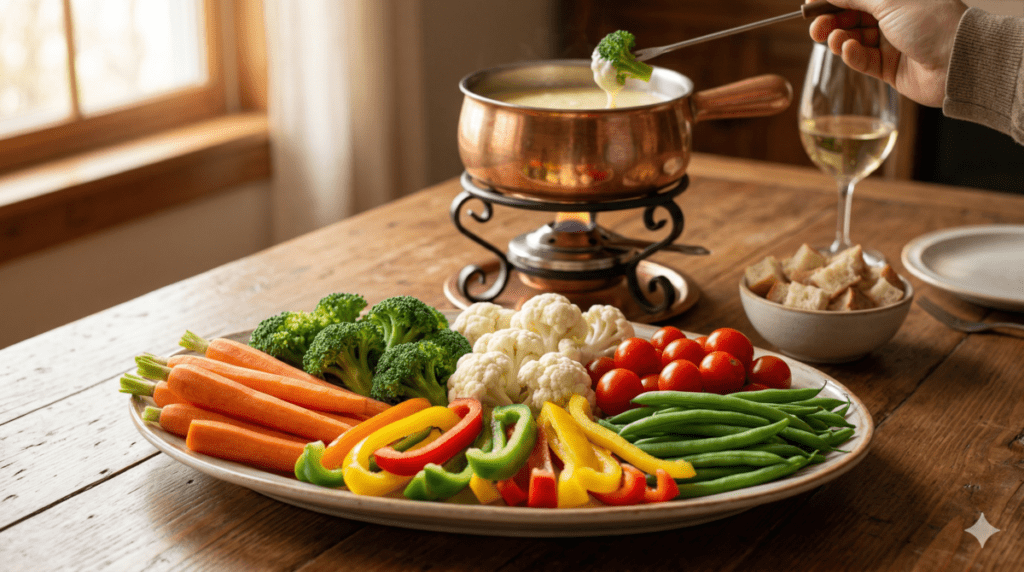
Some vegetables stay firm and crunchy even after being dipped in hot fondue. These include:
- Carrots: Their natural sweetness and crunch make them perfect for cheese fondue.
- Broccoli and Cauliflower: These florets are sturdy and absorb flavors without turning mushy.
- Bell Peppers: Crisp and colorful, they add a fresh snap to your fondue plate.
- Cherry Tomatoes: They burst with juice but keep their shape well in oil fondues.
- Green Beans: Thin yet firm, they offer a nice bite when properly blanched.
Have you ever dipped a soft vegetable that just fell apart? Avoid that by choosing veggies known for their firmness.
Seasonal And Fresh Picks
Picking seasonal vegetables means fresher, tastier options. Seasonal produce usually has better texture, which is key for fondue dipping.
- In spring, try asparagus and sugar snap peas for their tender crunch.
- Summer offers zucchini and cherry tomatoes, both excellent for fondue.
- Fall brings in root vegetables like parsnips and turnips, which add a hearty twist.
- Winter’s best includes Brussels sprouts and carrots, perfect for cheese fondues.
Freshness impacts flavor and texture more than you might think. Have you noticed how fresh vegetables snap better and taste sweeter? Keep an eye on the market for what’s fresh and in season—it can transform your fondue night.
Washing And Cleaning Tips
Preparing vegetables for fondue begins with proper washing and cleaning. Clean vegetables ensure a fresh taste and a safe eating experience. Dirt and pesticide residues can hide in the crevices of vegetables. Thorough cleaning removes these unwanted elements.
Removing Dirt And Pesticides
Start by rinsing vegetables under cold running water. Use your hands to rub the surface gently. For leafy vegetables, soak them in water for a few minutes. This loosens dirt trapped between leaves.
To remove pesticides, prepare a solution with water and vinegar. Mix one part vinegar to three parts water. Soak the vegetables in this mix for 5 to 10 minutes. After soaking, rinse the vegetables again with cold water. This step helps reduce harmful residues.
Drying For Better Dipping
Dry vegetables well before serving. Moisture can make fondue cheese or oil splatter. Use a clean kitchen towel or paper towels to pat vegetables dry. For leafy greens, spin them in a high-quality salad spinner. Dry vegetables hold the fondue coating better and improve taste.
Cutting Techniques
Cutting vegetables for fondue is more than just chopping them up. The way you cut impacts how well they cook and how enjoyable they are to dip. Mastering the right techniques can make your fondue experience smoother and tastier.
Ideal Sizes For Dipping
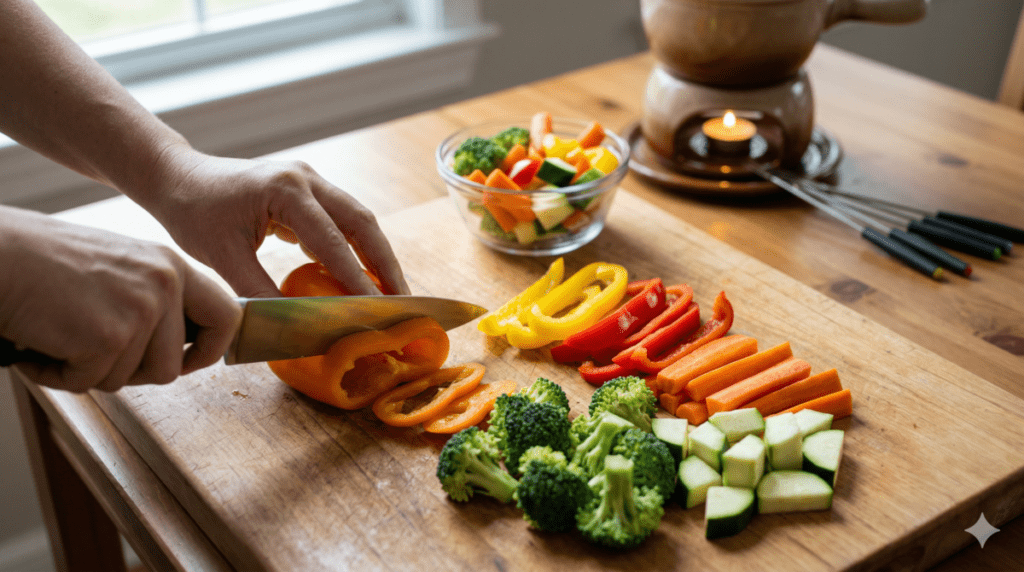
Cut vegetables into sizes that are easy to hold and dip without slipping. Aim for pieces about 1 to 2 inches long or wide. This size feels comfortable between your fingers and won’t fall apart in the fondue pot.
Too small, and the pieces might get lost in the cheese or chocolate. Too large, and they may not cook evenly or absorb the flavors well. Think about your own grip and how you like to eat when deciding the size.
Uniform Cuts For Even Cooking
Keeping your cuts uniform ensures everything cooks at the same speed. If some pieces are thicker or thinner, you’ll end up with a mix of undercooked and overcooked bites.
Try using a sharp knife and steady your hand to make consistent slices or sticks. (Or, save yourself a ton of prep time and use an adjustable mandoline slicer!) If you’re preparing multiple vegetables, cut each type to a similar thickness for balanced cooking times.
Have you noticed how uneven cuts can ruin your dipping rhythm? Paying attention to size and shape saves you from that frustration and keeps the flavor experience just right.
Blanching And Pre-cooking
Preparing vegetables for fondue involves more than just cutting them. Blanching and pre-cooking help soften vegetables without losing their color or flavor. This step ensures each piece cooks evenly in the fondue pot. It also makes vegetables easier to dip and eat.
When To Blanch Vegetables
Blanching is best for hard or dense vegetables. Carrots, broccoli, and cauliflower benefit from this quick cook. It softens them enough for fondue without making them mushy. Vegetables that cook quickly, like cherry tomatoes or mushrooms, usually do not need blanching. Use blanching if you want a tender bite and bright color.
Simple Blanching Steps
- Boil a large pot of water.
- Prepare a bowl of ice water nearby.
- Drop vegetables into boiling water for 1 to 3 minutes.
- Remove vegetables quickly with a stainless steel spider strainer or slotted spoon.
- Immediately place them in ice water to stop cooking.
- Drain and pat dry before serving.
This process locks in texture and taste. It also makes vegetables last longer on the fondue fork.
Arranging For Fondue
Chop vegetables into bite-sized pieces for easy dipping in fondue. Choose fresh veggies like bell peppers, carrots, and broccoli. Steam or blanch them lightly to maintain crispness while enhancing flavor.
Arranging for fondue involves more than just chopping vegetables. It’s about creating a delightful experience. Each vegetable should be prepared to complement the fondue. This ensures a delicious and enjoyable meal.
Presentation Tips
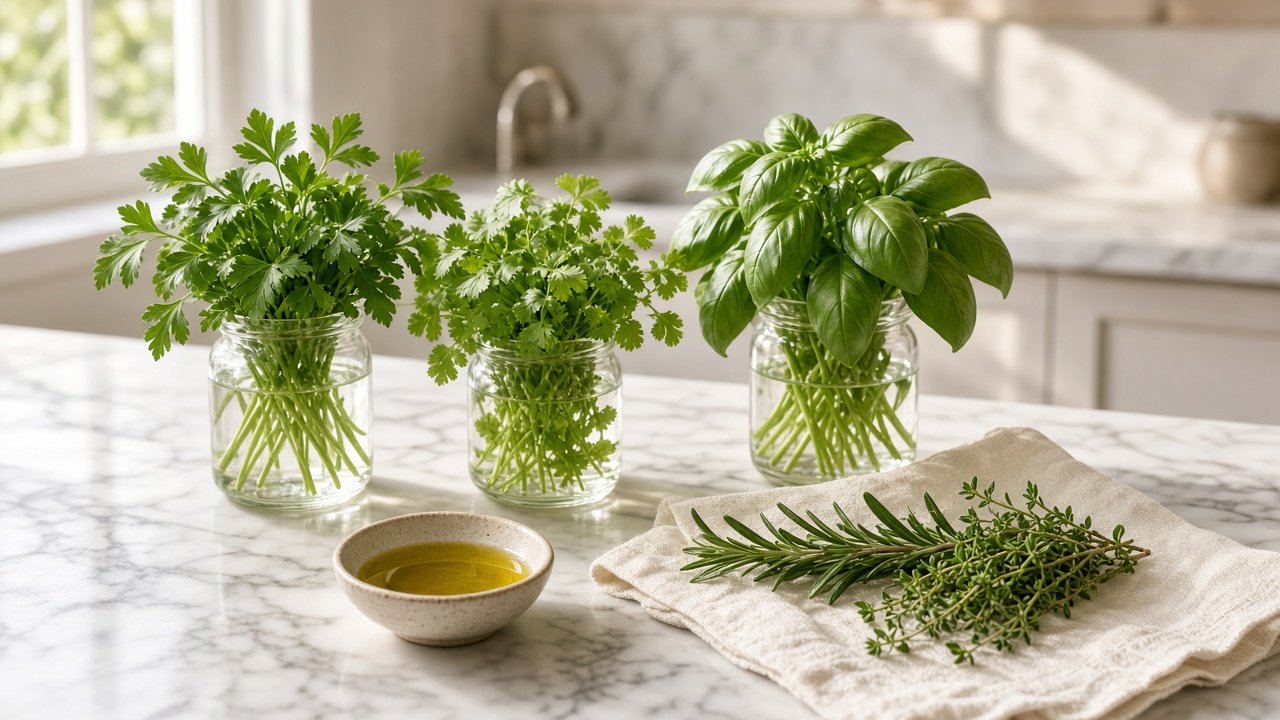
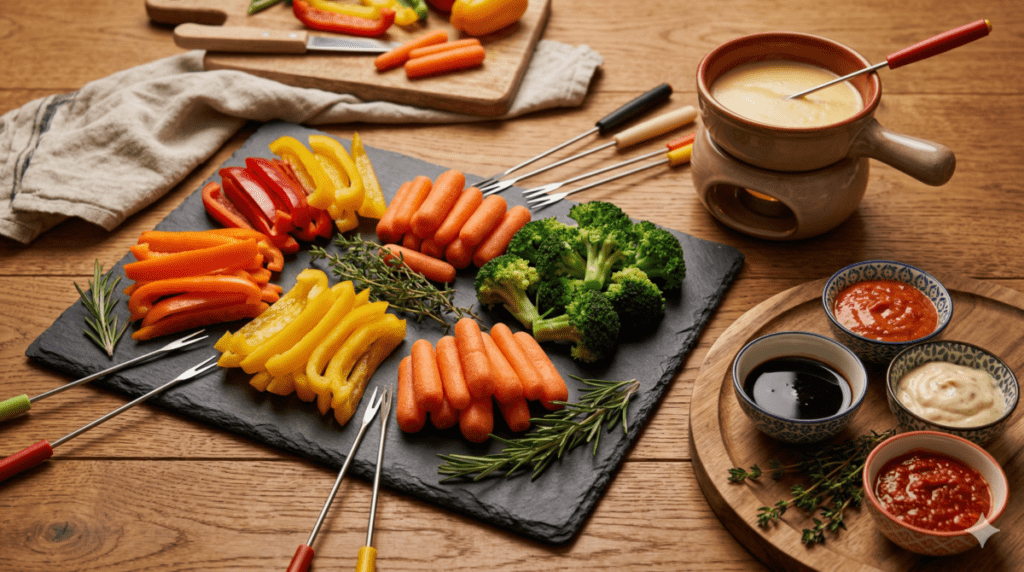
Presentation adds charm to your fondue night. Use a large divided serving platter for arrangement. Group similar vegetables together. This creates a neat and organized look. Use small bowls for sauces or dips. They add color and variety to the platter. Consider using fresh herbs as garnish. They add a pop of green and fresh aroma.
Keeping Vegetables Fresh
Freshness is key for a tasty fondue. Cut vegetables just before serving. This preserves their crispness and flavor. Store cut vegetables in the fridge if needed. Use a damp paper towel to cover them. This keeps them moist and fresh. Avoid cutting vegetables too small. Larger pieces hold moisture better. They also provide a better dipping experience. By following these steps, your fondue presentation will be inviting and fresh. Enjoy the flavors and textures of each vegetable dip.
Pairing Vegetables With Fondue Types
Choosing the right vegetables for different types of fondue makes your meal tastier. Each fondue type pairs best with certain vegetables. This helps balance flavors and textures. Prepare vegetables fresh and cut them into bite-size pieces for easy dipping.
Cheese Fondue Matches
Cheese fondue has a rich and creamy flavor. It works well with crunchy and mild vegetables.
- Broccoli florets
- Cauliflower pieces
- Baby carrots
- Bell pepper strips
- Cherry tomatoes
- Steamed asparagus
These vegetables provide a nice contrast to melted cheese. Their natural sweetness and crunch enhance the fondue experience.
Chocolate Fondue Choices
Chocolate fondue is sweet and smooth. Choose fruits and some vegetables that pair well with chocolate’s taste.
- Strawberries
- Banana slices
- Apple wedges
- Cooked sweet potato cubes
- Roasted pumpkin pieces
These options add sweetness and softness. They melt nicely in chocolate and offer variety.
Broth And Oil Fondue Options
Broth and oil fondues have lighter or savory flavors. Select vegetables that cook quickly and absorb flavors well.
- Zucchini slices
- Mushroom caps
- Green beans
- Baby corn
- Snow peas
- Potato chunks
These vegetables stay firm and tasty after cooking. Their textures complement the broth or oil base perfectly.
Storing Prepared Vegetables
Storing prepared vegetables properly is key to keeping them fresh and tasty for your fondue experience. If you don’t store them right, you might end up with limp, soggy veggies that no one wants to dip. A little care goes a long way in preserving that perfect crunch and vibrant flavor.
Short-term Storage Tips
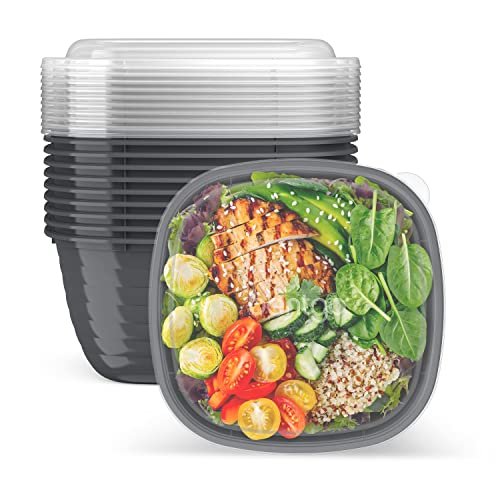
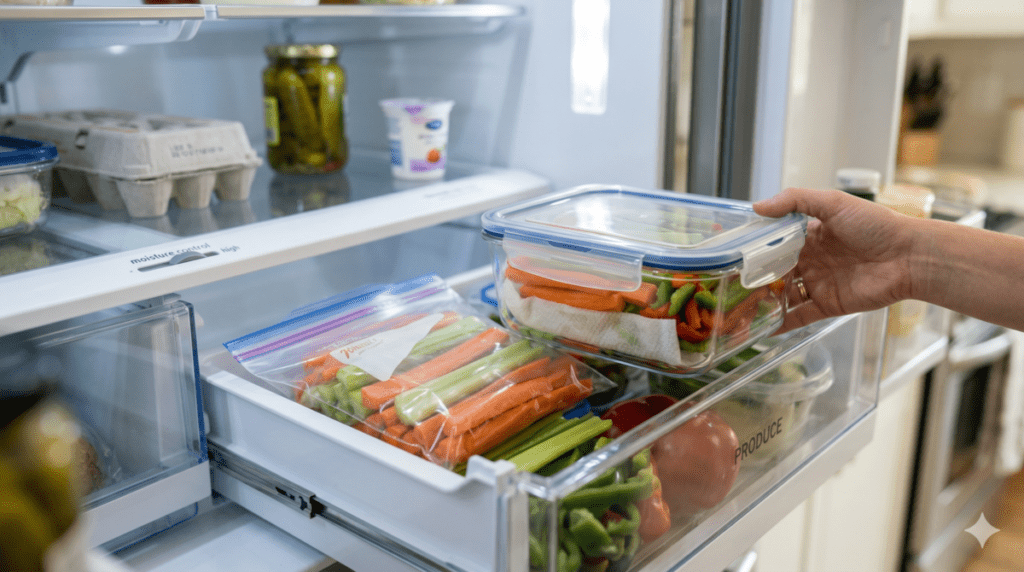
Keep your cut vegetables in an airtight container or sealed plastic bag to avoid exposure to air, which can dry them out. Adding a damp paper towel inside the container helps maintain moisture without making the vegetables wet. Store them in the crisper drawer of your fridge, which is designed to keep produce fresh longer.
Have you noticed how some veggies lose their snap after just a few hours? That’s because they lose moisture quickly. Chilling them promptly slows down this process and keeps them ready for dipping.
Avoiding Sogginess
Sogginess ruins the fun of fondue, but it’s easy to prevent. Don’t wash the vegetables until just before serving; excess water encourages sogginess. If you do rinse them early, dry them thoroughly with a clean kitchen towel or salad spinner.
Also, avoid stacking vegetables tightly in containers. Air circulation keeps them crisp. Have you ever bitten into a soggy carrot and wished you had stored it better? Small changes like these make a noticeable difference.
Frequently Asked Questions
What Vegetables Are Best For Fondue Dipping?
Firm vegetables like broccoli, carrots, bell peppers, and cauliflower work best. They hold their shape when dipped and cooked in cheese or oil fondue, providing a satisfying crunch and flavor.
How Should I Cut Vegetables For Fondue?
Cut vegetables into bite-sized pieces or sticks. Uniform sizes ensure even cooking and easier dipping. Avoid pieces too small or large to prevent burning or undercooking.
Should Vegetables Be Pre-cooked Before Fondue?
Lightly blanching or steaming firm vegetables softens them slightly. This enhances texture and reduces cooking time in cheese or oil fondue, ensuring a perfect bite every time.
How To Keep Vegetables Fresh Before Serving Fondue?
Store cut vegetables in cold water or cover tightly with plastic wrap. Keep them refrigerated until serving to maintain crispness and prevent browning or drying out.
Conclusion
Preparing vegetables for fondue keeps the meal fresh and tasty. Cut them into bite-sized pieces for easy dipping. Choose firm vegetables that hold well in hot cheese or chocolate. Wash and dry them thoroughly to avoid watery fondue. Arrange the vegetables nicely on the serving plate.
This makes the fondue experience more enjoyable for everyone. Simple steps lead to a perfect fondue night. Enjoy the rich flavors with your favorite veggies. Keep it easy, fun, and delicious every time.