Cooking a turkey in a convection oven can be a game-changer for your holiday meal. But how long should you actually cook it to get that perfect golden-brown skin and juicy meat inside?
If you’ve ever wondered about the exact timing and tips for roasting turkey with a convection oven, you’re in the right place. You’ll discover simple, clear answers that make your cooking easier and your turkey tastier. Keep reading, and you’ll never worry about undercooked or dry turkey again!
Benefits Of Convection Cooking
Convection cooking offers several benefits that enhance the turkey roasting experience. It uses a fan to circulate hot air evenly around the food. This process speeds up cooking and improves texture.
The heat reaches the turkey from all sides. This results in a crispy skin and juicy meat inside. Convection ovens also maintain a consistent temperature, reducing hot spots.
Faster Cooking Times
Convection ovens cook food more quickly than traditional ovens. The circulating air transfers heat efficiently. This means your turkey will be ready sooner.
Even Browning And Crisping
The fan helps the turkey brown evenly. This creates a golden, crispy skin all over. The meat stays moist while the skin crisps up nicely.
Energy Efficiency
Because cooking times are shorter, less energy is used. The oven doesn’t need to stay on as long. This saves electricity and reduces cooking costs.
Improved Flavor And Texture
The steady airflow locks in juices. This keeps the turkey tender and flavorful. The skin develops a pleasant crunch without drying out the meat.
Choosing The Right Turkey Size
Choosing the right turkey size is crucial when cooking with a convection oven. The size affects cooking time, oven space, and how evenly your bird cooks. Picking the perfect turkey can save you from undercooked or overly dry results.
Understanding Turkey Sizes And Portions
Think about how many people you’re feeding. A good rule is 1 to 1.5 pounds of turkey per person. If you have 8 guests, a 12-pound turkey usually works well.
Keep in mind that smaller turkeys cook faster, which can be a big advantage with convection ovens. But, if you need leftovers or want to impress a larger crowd, bigger birds are the way to go.
How Size Influences Cooking Time In A Convection Oven
Convection ovens cook more evenly and faster than traditional ovens. Smaller turkeys, around 10 pounds, might only need 1.5 to 2 hours. Larger turkeys, like 16 pounds, could take closer to 3 hours.
Have you ever started cooking a turkey too big for your oven’s fan to circulate air properly? It’s a common issue that slows cooking and affects crispness. Choosing a size that fits comfortably inside your oven makes a big difference.
Practical Tips For Picking Your Turkey
- Measure your oven’s internal space before buying.
- Consider if you want stuffing inside; it adds bulk and cooking time.
- Think about your carving plans—larger birds can be harder to handle.
- Check if your turkey is fresh or frozen; frozen ones might shrink slightly when thawed.
Have you tried cooking a turkey that was too large or too small? How did the cooking times and results turn out? Share your experience to help others choose wisely.
Preparing The Turkey For Roasting
Preparing your turkey before roasting it in a convection oven is essential for a juicy, flavorful result. The right preparation sets the stage for even cooking and helps you avoid common pitfalls like dryness or uneven seasoning. Let’s dive into the key steps that will get your bird ready for the oven.
Thawing Guidelines
Thawing your turkey properly is the first crucial step. A frozen bird won’t cook evenly, and the outside might dry out before the inside is done.
Plan ahead and thaw your turkey in the refrigerator. It generally takes about 24 hours of thawing time for every 4 to 5 pounds of turkey. For example, a 16-pound turkey needs roughly 4 days in the fridge.
If you’re short on time, you can use the cold water method: submerge the turkey in its original packaging in cold water, changing the water every 30 minutes. This speeds up thawing to about 30 minutes per pound, but you must cook the turkey immediately afterward.
Seasoning And Stuffing Tips
Seasoning your turkey well makes a huge difference in taste. You can rub the skin with a mix of salt, pepper, garlic powder, and herbs like rosemary or thyme.
Don’t forget to season inside the cavity too. This helps the flavors penetrate the meat during roasting.
Stuffing is optional, but if you choose to stuff your turkey, keep the stuffing loose to allow heat to circulate. Overstuffing can cause uneven cooking and increase the risk of foodborne illness.
Consider cooking the stuffing separately if you want to ensure it’s fully cooked and easier to manage. What spices do you like to add to your stuffing? Experimenting here can give your turkey a unique twist.
Convection Oven Settings
Curious about cooking a turkey in a convection oven? It cooks faster than a traditional oven. Typically, a turkey needs about 10-15 minutes per pound at 325°F. Keep an eye on it to ensure juicy perfection.
Cooking a turkey in a convection oven can be a game-changer for your holiday meal. The convection settings allow for faster cooking times and even heat distribution. This can result in a perfectly roasted turkey with a crispy skin and juicy meat. But to achieve this culinary success, understanding the correct settings is crucial. Let's dive into the specifics of convection oven settings to ensure your turkey turns out flawless.
Optimal Temperature
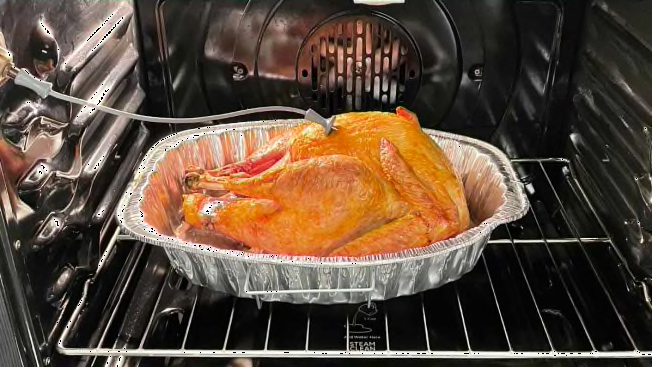
Setting the right temperature is the cornerstone of roasting a turkey in a convection oven. Generally, you should lower the temperature by about 25°F from what you'd use in a conventional oven. This usually means setting your convection oven to 325°F. This adjustment helps prevent the turkey from drying out while still taking advantage of the convection oven’s efficient heat distribution. Keep a meat thermometer handy. Aim for an internal temperature of 165°F in the thickest part of the turkey.
Rack Placement
Where you place your turkey in the oven can impact how evenly it cooks. Position the oven rack in the lower third of the oven. This placement ensures the top of the turkey doesn't get too close to the heating element, preventing it from burning. Using a shallow roasting pan can also help. It allows hot air to circulate freely around the turkey, ensuring even cooking. Have you ever noticed uneven browning when cooking in your oven? Adjusting the rack placement might just be the simple fix you need. Finding the balance between optimal temperature and rack placement can make all the difference. Happy cooking, and may your turkey be the star of the meal!
Cooking Times By Weight
Cooking times for turkey vary mainly by weight. Using a convection oven shortens the cooking time due to better heat circulation. Knowing the right cooking time ensures the turkey is juicy and safe to eat. Below are general guidelines for different turkey weights in a convection oven.
Small Turkeys (8-12 Lbs)
Small turkeys cook faster in a convection oven. Expect about 9 to 10 minutes per pound at 325°F (163°C). For an 8-pound turkey, cook approximately 1 hour 15 minutes to 1 hour 20 minutes. A 12-pound turkey needs roughly 1 hour 45 minutes to 2 hours. Always check the internal temperature to confirm doneness.
Medium Turkeys (12-16 Lbs)
Medium turkeys require more time but still less than in a conventional oven. Aim for 9 to 10 minutes per pound at 325°F (163°C). For example, a 14-pound turkey takes about 2 hours 5 minutes to 2 hours 20 minutes. Keep the skin crispy and the meat tender by not overcooking.
Large Turkeys (16-20 Lbs)
Large turkeys need careful timing to cook evenly. Plan on 9 to 10 minutes per pound at 325°F (163°C). A 20-pound bird might take up to 3 hours 20 minutes. Use a meat thermometer to check the thickest part of the thigh for 165°F (74°C) to ensure safety.

Checking For Doneness
Knowing when your turkey is perfectly cooked is crucial, especially when using a convection oven. Cooking times can vary, so relying solely on the clock can be risky. Checking for doneness ensures your turkey is juicy, safe to eat, and ready to impress your guests.
Using A Meat Thermometer
A meat thermometer is your best friend for checking turkey doneness. Insert it into the thickest part of the thigh without touching the bone. The safe internal temperature for turkey is 165°F (74°C).
Keep in mind that convection ovens cook faster, so start checking the temperature about 30 minutes before the estimated finish time. This helps avoid overcooking. Have you ever cut into a turkey only to find it dry? A thermometer prevents that disappointment.
Visual And Texture Cues
Besides temperature, look for visual signs. The turkey skin should be golden brown and crispy, especially in a convection oven that promotes even browning.
Check the juices by piercing the thigh with a fork or knife. Clear juices mean your turkey is done, while pink or red juices indicate more cooking time is needed. Also, the meat should feel firm but not hard when pressed.
Trust your senses alongside the thermometer. Have you noticed how a perfectly cooked turkey feels different to the touch? Paying attention to these cues can save your bird from over or undercooking.
Resting And Carving Tips
Resting and carving your turkey after cooking it in a convection oven is just as important as the cooking process itself. Proper resting allows the juices to redistribute, making every bite juicy and tender. Carving the bird correctly helps you serve neat, flavorful slices that impress your guests.
Resting Your Turkey For Perfect Juiciness
Once your turkey comes out of the convection oven, resist the urge to carve it immediately. Cover it loosely with foil and let it rest for at least 20 to 30 minutes. This resting time lets the meat fibers relax and reabsorb the juices, preventing dryness when you cut into it.
Have you noticed how sometimes carved turkey turns out dry? Skipping or shortening the resting period is often the culprit. Give your turkey this crucial pause, and you’ll notice a big difference in moisture and flavor.
Tools You’ll Need For Easy Carving
Using the right tools makes carving less stressful and more precise. A sharp carving knife and a sturdy carving fork are essentials. These tools help you make clean cuts without tearing the meat or shredding the skin.
Don’t forget a cutting board with a groove around the edge to catch juices. This keeps your kitchen tidy and lets you use those flavorful drippings for gravy or sauces.
Step-by-step Carving Tips
- Start by removing the legs and thighs. Cut through the joint where the leg meets the body for easy separation.
- Next, slice the breast meat. Make horizontal cuts across the breast, following the natural grain of the meat.
- Carve the wings last, slicing through the joint for neat pieces.
Try carving in front of your guests—it shows confidence and adds a personal touch to your meal. What’s your favorite way to serve turkey slices?

Common Mistakes To Avoid
Cooking a turkey in a convection oven can save time and create a crispy skin. Mistakes can ruin this experience. Avoiding common errors helps you get juicy and evenly cooked meat. Here are some frequent mistakes to watch out for.
Not Adjusting Cooking Time And Temperature
Convection ovens cook faster than regular ovens. Using the same time and temperature leads to overcooked or dry turkey. Reduce temperature by 25°F and check turkey earlier than usual. This prevents burning and drying out.
Skipping The Use Of A Meat Thermometer
Guessing doneness causes undercooked or overcooked turkey. A meat thermometer ensures safety and perfect texture. Insert it into the thickest part of the thigh. Remove turkey at 165°F for safe eating.
Overcrowding The Oven
Placing too many items inside blocks hot air circulation. Poor air flow causes uneven cooking. Cook turkey alone or give enough space for air to move freely. This keeps the convection effect strong and consistent.
Ignoring The Resting Time
Cutting turkey immediately after cooking loses juices. Resting lets juices redistribute inside the meat. Cover turkey loosely with foil and wait 20 minutes. This step makes the meat tender and flavorful.
Failing To Use A Rack
Placing turkey directly on the pan bottom traps moisture. This leads to soggy skin. Use a roasting rack to lift turkey. Hot air circulates all around for crispy skin and even cooking.
Frequently Asked Questions
How Long Does A Turkey Take In A Convection Oven?
A turkey cooks about 25% faster in a convection oven. For example, a 12-pound turkey takes roughly 2 to 2. 5 hours at 325°F. Always use a meat thermometer to ensure the internal temperature reaches 165°F for safety and doneness.
What Temperature Is Best For Cooking Turkey In Convection Oven?
Set your convection oven to 325°F for cooking turkey. This temperature ensures even cooking and a crispy skin. Avoid higher temperatures to prevent drying out the meat. Use a thermometer to check internal temperature for perfect results.
Do I Need To Adjust Cooking Time For Convection Oven Turkey?
Yes, reduce the cooking time by 25% compared to conventional oven times. Convection ovens circulate hot air, cooking the turkey faster. Always start checking the internal temperature earlier to avoid overcooking and ensure juiciness.
Should I Tent The Turkey While Using A Convection Oven?
Tenting with foil is optional in a convection oven. It can prevent the skin from over-browning if the turkey cooks quickly. Remove the tent in the last 30 minutes for crispier skin. Monitor the turkey’s temperature for best results.
Conclusion
Cooking a turkey in a convection oven saves time and cooks evenly. Set the temperature lower than a regular oven for best results. Check the turkey’s internal temperature to ensure it’s fully cooked. Rest the turkey before carving to keep it juicy.
Follow these tips, and your turkey will turn out tender and delicious every time. Enjoy your meal with confidence and ease.