Baking a turkey in a convection oven can save you time and give you a perfectly crispy skin. But how long should you actually cook it to get that juicy, tender meat inside? Cooking time for convection oven turkey can vary depending on the size of the bird and your oven's specific settings. Generally, you should plan for about 13 to 15 minutes per pound at 325°F. With the right timing, you'll achieve a deliciously cooked turkey that your guests will love.
If you’ve ever felt unsure about the timing, you’re not alone. Getting it just right can make all the difference between a dry bird and a delicious centerpiece. You’ll discover exactly how long to bake your turkey in a convection oven, plus simple tips to make your next holiday meal a hit.
Keep reading—you’re about to become the turkey expert everyone will ask for advice!

Convection Oven Basics
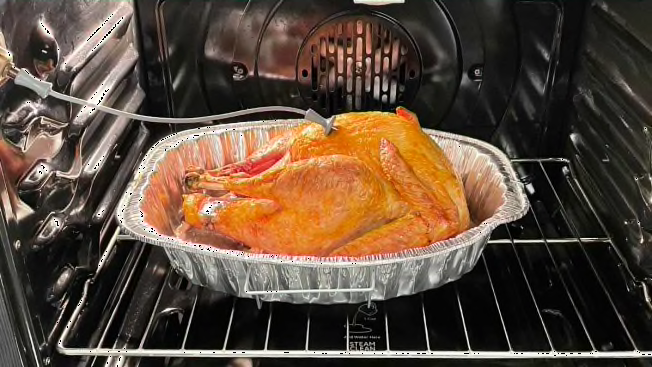
Understanding the basics of a convection oven can change the way you roast your turkey. This appliance uses a fan and exhaust system to circulate hot air around the food. This simple feature impacts cooking times and results, especially for large dishes like turkey.
How Convection Differs
Unlike traditional ovens, convection ovens have a fan that moves heat evenly. This means the hot air reaches all parts of your turkey, cooking it more uniformly.
Without this circulation, heat can pool in some areas and leave others undercooked. The even distribution helps avoid these hot and cold spots.
Have you noticed how your last turkey sometimes had uneven browning? That’s often because traditional ovens don’t circulate heat as well.
Benefits For Roasting
The main benefit of using a convection oven is faster cooking. You can expect your turkey to cook about 25% quicker than in a standard oven.
Another advantage is the crispy skin you get. The moving air helps dry out the skin, making it golden and crunchy.
Plus, the consistent heat reduces the risk of drying out the meat. Your turkey stays juicy inside while the outside crisps up beautifully.
Turkey Size And Weight
Understanding the size and weight of your turkey is key to baking it perfectly in a convection oven. Each bird cooks differently depending on its mass, and knowing how to choose and adjust for size helps you avoid undercooking or drying out your turkey. Let’s break down what to consider when selecting your turkey and how its weight affects your cooking time.
Choosing The Right Size
Think about how many people you are serving. A turkey that’s too small might leave guests hungry, while one that’s too large can be tricky to cook evenly in a convection oven.
A good rule of thumb is to allow about 1 to 1.5 pounds per person. For example, a 12-pound turkey works well for 8 to 10 people.
Also, consider the size of your oven. A very large bird may not fit comfortably or allow proper air circulation, which is essential in convection cooking.
Impact On Cooking Time
The weight of your turkey directly influences how long it needs to bake. Convection ovens cook faster than traditional ones because the hot air circulates evenly, but heavier birds still require more time.
| Turkey Weight (lbs) | Approximate Cooking Time (minutes) |
|---|---|
| 8 - 12 | 1 hour 15 minutes – 1 hour 45 minutes |
| 12 - 16 | 1 hour 45 minutes – 2 hours 15 minutes |
| 16 - 20 | 2 hours 15 minutes – 2 hours 45 minutes |
| 20 - 24 | 2 hours 45 minutes – 3 hours 15 minutes |
Have you ever noticed how a smaller turkey can finish baking much sooner? That’s the convection oven at work, pushing heat evenly through the bird.
Keep a meat thermometer handy. The safest internal temperature for turkey is 165°F (74°C). Cooking times vary, so rely on the thermometer rather than the clock alone.
Temperature Settings
Setting the right temperature is key when baking a turkey in a convection oven. It affects how evenly your bird cooks and how juicy the meat stays. Getting this right can make your holiday meal stand out.
Ideal Oven Temperature
The best temperature for roasting a turkey in a convection oven is usually lower than in a traditional oven. Aim for about 325°F (163°C). This temperature allows the hot air to circulate without drying out the turkey.
Many cooks find that 325°F strikes the perfect balance. The skin crisps nicely while the inside stays moist. Have you ever noticed the difference in texture between a turkey roasted at high heat versus moderate heat?
Adjusting For Convection
Convection ovens cook faster because of the fan that circulates hot air. To avoid overcooking, reduce the temperature by 25°F from your regular roasting temperature. So if your recipe calls for 350°F, set your convection oven to 325°F instead.
Also, check your turkey earlier than the suggested time. Start checking the internal temperature about 30 minutes before the timer goes off. This prevents drying out and ensures your turkey is perfectly cooked.
Calculating Cooking Time
Baking a turkey in a convection oven takes less time than a regular oven. Generally, roast at 325°F for 10-12 minutes per pound. Always check the internal temperature to ensure it reaches 165°F for safe eating.
Calculating how long to bake a turkey in a convection oven can be a bit tricky, but with the right approach, it becomes a breeze. Understanding the precise cooking time is crucial for ensuring your turkey turns out moist, flavorful, and perfectly cooked. Let’s dive into how you can calculate the cooking time for your turkey in a convection oven.
Standard Time Per Pound
Generally, a convection oven cooks food 25% faster than a conventional oven. For turkeys, this usually translates to about 10 to 12 minutes per pound at 325°F. So, if you have a 12-pound turkey, you’re looking at approximately 2 to 2.5 hours of cooking time. It’s a good idea to start checking the internal temperature of the turkey around the 2-hour mark. Aim for an internal temperature of 165°F in the thickest part of the turkey. Keep a reliable meat thermometer handy to avoid any guesswork.
Factors That Affect Time
Several factors can influence the cooking time of your turkey. The size of your turkey is the most obvious factor, but other elements like whether the bird is stuffed or unstuffed can add extra time. Stuffed turkeys generally require an additional 5-7 minutes per pound. The type of convection oven also plays a role. Some ovens distribute heat more evenly, potentially reducing cooking time further. Always consider the manufacturer’s instructions for the best results. Are you cooking at a higher altitude? If so, expect to add a few more minutes to your cooking time. High altitudes can affect cooking time due to lower atmospheric pressure, which may slow down the cooking process. Being aware of these factors ensures your turkey comes out perfectly every time. So, what other factors have you encountered that affect your cooking times? Share your experiences in the comments!
Preparing The Turkey
Preparing the turkey properly is key to a juicy, flavorful roast. A well-prepped bird cooks evenly and stays tender throughout baking. Take time to clean, season, and secure the turkey before placing it in the convection oven.
Proper preparation also helps the heat circulate around the bird. This leads to a crisp, golden skin and perfectly cooked meat inside. Follow these tips to get your turkey ready for the oven.
Trussing Tips
Trussing keeps the turkey’s wings and legs close to the body. This helps the bird cook evenly and prevents the tips from burning.
- Use kitchen twine to tie the legs together at the ankles.
- Tuck the wing tips under the body to avoid charring.
- Wrap twine around the body to secure the shape if needed.
Trussing improves heat circulation and gives a nice, compact shape. It also makes the turkey easier to handle and carve after baking.
Seasoning And Stuffing
Seasoning adds flavor and moisture to the turkey. Use salt, pepper, and your favorite herbs or spices.
- Rub seasoning under the skin for deeper flavor.
- Coat the outside evenly with oil or melted butter.
- Stuff the cavity with aromatics like onion, garlic, and herbs.
Stuffing the turkey can add moisture but may increase cooking time. Keep the stuffing loose for even heat flow. Avoid overpacking the cavity to ensure safe cooking.
Monitoring The Roast
Monitoring the turkey while it roasts in a convection oven is key for juicy meat. Constant checking helps prevent overcooking or undercooking. Pay close attention to the turkey’s temperature and visual cues. This ensures a perfect roast every time.
Using A Meat Thermometer
A meat thermometer is the best tool to check doneness accurately. Insert it into the thickest part of the turkey, usually the thigh. Avoid touching bone, as it gives false readings.
Look for a temperature of 165°F (74°C) for safe eating. Check the temperature during the last 30 minutes of cooking. This stops the turkey from drying out by preventing overcooking.
Signs Of Doneness
Besides temperature, watch for these visual signs:
- Juices run clear when pierced with a fork.
- The skin turns golden brown and crisp.
- The legs move easily in the joints.
These signs show the turkey is fully cooked and tender. Trust your senses along with the thermometer for best results.
Resting And Serving
Resting and serving the turkey after baking in a convection oven is vital for juicy, tender meat. Resting lets the juices spread evenly inside the turkey. This keeps the meat moist and flavorful.
Serving the turkey properly enhances the dining experience. Carving it well shows off the bird's texture and taste. Knowing the right resting time and carving tips makes a big difference.
How Long To Rest
Rest the turkey for 20 to 30 minutes. Cover it loosely with foil. This keeps the heat inside but stops the skin from getting soggy. Resting allows the juices to settle, preventing them from running out when sliced.
Carving Tips
- Use a sharp, long knife for clean cuts.
- Start by removing the legs and thighs.
- Cut along the breastbone to separate the breast meat.
- Slice the breast meat against the grain for tenderness.
- Serve the white and dark meat separately for best presentation.
Common Mistakes To Avoid
Baking a turkey in a convection oven requires attention to detail. Mistakes can ruin the texture and flavor. Avoiding common errors helps achieve a juicy, perfectly cooked bird.
Understanding these pitfalls improves your cooking process. It saves time and prevents frustration. Below are key mistakes to watch out for.
Overcooking Risks
Convection ovens cook faster than traditional ones. Overcooking dries out the turkey quickly. The outer parts become tough and unappetizing.
Check the turkey’s temperature early. Use a meat thermometer to avoid guessing. Aim for 165°F (74°C) in the thickest part.
- Start checking 30 minutes before estimated time
- Remove the turkey as soon as it reaches the right temperature
- Let it rest to keep juices inside
Uneven Cooking Issues
Convection ovens circulate hot air, but uneven cooking can still happen. Large turkeys or crowded ovens cause hot spots. Some parts cook faster than others.
Rotate the turkey halfway through cooking. Use a rack to lift it off the pan bottom. This allows air to circulate evenly.
- Avoid covering the turkey tightly with foil too early
- Check different parts with a thermometer
- Adjust cooking time if needed for thick or thin parts
Troubleshooting Tips
Baking time varies with turkey size and oven temperature. Check the bird often to avoid overcooking. Use a meat thermometer for best results.
Baking a turkey in a convection oven can be a game-changer, but what happens when things don't go as planned? Even experienced cooks face challenges. Here are some troubleshooting tips to ensure your turkey emerges golden and juicy from the oven.
Fixing Dry Turkey
Sometimes, despite your best efforts, the turkey turns out dry. But don't worry, there are ways to rescue it. - Add Broth: Pour warm chicken or turkey broth over the slices to add moisture. This is a quick fix that can make a world of difference. - Butter and Herbs: Melt some butter and mix in fresh herbs. Drizzle this over the turkey to enhance both moisture and flavor. - Gravy to the Rescue: Serve the turkey with a rich gravy. It can mask dryness and bring out the savory goodness of the meat. Have you ever faced this challenge? How did you solve it?
Adjusting Mid-cook
What if you realize mid-cook that something's off? Adjustments can save the day. - Temperature Check: Always have a meat thermometer on hand. If the turkey's not cooking evenly, consider rotating it in the oven. - Cover It Up: If you notice the skin browning too quickly, cover the turkey with foil. This helps prevent over-browning while the inside continues to cook. - Lower the Heat: If the turkey seems to be cooking too fast, lower the oven temperature slightly. This gives the inner parts more time to reach the desired temperature without drying out the exterior. Have you tried adjusting your turkey mid-cook before? What was the result? Being proactive and having these tricks up your sleeve can help transform potential turkey disasters into triumphs. Don't be afraid to experiment and find what works best for you and your convection oven.

Frequently Asked Questions
How Long Does A Turkey Take In A Convection Oven?
A turkey takes about 10-15 minutes per pound in a convection oven. Cooking time depends on size and oven temperature. Use a meat thermometer to ensure the internal temperature reaches 165°F for safety. Cooking time for convection turkey can vary based on the cooking method you choose. It is helpful to consult a cooking chart for exact times based on weight. Additionally, allowing the turkey to rest before carving can enhance its juiciness and flavor.
What Temperature Should I Set For Convection Turkey?
Set your convection oven to 325°F for baking a turkey. This temperature cooks the bird evenly without drying it out. Adjust time based on turkey weight and check internal temperature regularly.
Can I Cook A Frozen Turkey In A Convection Oven?
It’s not recommended to cook a frozen turkey directly in a convection oven. Thaw the turkey completely before baking for even cooking and food safety. Thawing in the refrigerator is safest.
How Do I Know When The Turkey Is Done?
Use a meat thermometer to check doneness. The internal temperature should reach 165°F in the thickest part of the thigh. This ensures the turkey is safely cooked and juicy.
Conclusion
Baking a turkey in a convection oven saves time and cooks evenly. Set the right temperature and check the bird often. Use a meat thermometer to ensure the turkey is fully cooked. Rest the turkey after baking for juicy, tender meat.
Follow these simple steps for a perfect turkey every time. Enjoy your meal and happy cooking!