Your bamboo cutting board is more than just a kitchen tool—it’s a hardworking companion that deserves the best care. If you want to keep it looking fresh, strong, and resistant to cracks or stains, knowing how to treat it properly is key.
Imagine slicing your favorite ingredients on a smooth, well-maintained board that feels like new every time. You’ll discover simple, effective steps to care for your bamboo cutting board so it lasts longer and stays safe for your meals. Ready to protect your investment and improve your cooking experience?
Let’s dive in.
Choosing The Right Bamboo Board
Choosing the right bamboo cutting board is key to lasting use and easy care. Bamboo varies in style and quality. Picking the best board helps protect your knives and keeps your kitchen safe.
Types Of Bamboo Boards
Bamboo cutting boards come in different styles. Some are solid bamboo, made from glued bamboo strips. Others use bamboo veneer over a core material. The solid type is stronger and lasts longer. Veneer boards are lighter and usually cheaper.
Boards differ in surface texture too. Smooth boards are good for slicing fruits and vegetables. Boards with grooves catch juices from meats or fruits, keeping counters clean. Some have handles or feet for better grip.
Quality Indicators
Look for dense bamboo strips tightly glued together. This means less chance of cracks or warping. The board should feel heavy for its size. Check for a smooth surface without splinters or rough spots.
Good boards have a natural, even color. Avoid boards with dark stains or uneven coloring. These could mean poor processing or damage. The edges should be smooth and rounded to prevent chipping.
Eco-friendly boards use natural adhesives without harmful chemicals. Certification labels can confirm this. Such boards are safer for food and the environment.
Initial Cleaning And Preparation
Preparing a new bamboo cutting board is key to keeping it safe and lasting long. The first cleaning helps remove dust, dirt, and residues from the manufacturing process. Proper preparation also prevents stains and odors from developing later. This makes the board ready for daily use and protects the bamboo’s natural strength.
Washing Techniques
Use warm water and mild dish soap to clean the board gently. Avoid harsh detergents or bleach as they can damage bamboo fibers. Scrub the surface with a soft sponge or cloth. Rinse thoroughly to remove all soap. Do not soak the board in water to prevent warping or cracking.
Drying Methods
Dry the board immediately after washing. Use a clean towel to wipe off excess water. Stand the board upright or lean it against a wall for air drying. Avoid placing it flat on a wet surface. Keep the board in a well-ventilated area to prevent moisture buildup. Never put bamboo boards in a dishwasher or direct sunlight.
Oiling Your Bamboo Board
Oiling your bamboo board keeps it strong and stops cracks. Use food-safe oil and apply it evenly to protect the surface. Regular oiling helps your board last longer and stay smooth.
Oiling Your Bamboo Board A bamboo cutting board is not just a kitchen tool; it's an investment in your culinary journey. To keep it looking fresh and functioning well, proper care is essential. One of the most crucial steps in maintaining your bamboo board is regular oiling. This process not only enhances the board’s longevity but also keeps it hygienic and visually appealing.
Best Oils To Use
Choosing the right oil is vital for effective maintenance. Food-grade mineral oil is often recommended as it doesn't go rancid and is safe for food contact. Coconut oil can also be a good option due to its antimicrobial properties. However, avoid using olive or vegetable oils as they can spoil and leave an unpleasant odor.
Application Process
Applying oil to your bamboo board is a straightforward process. Start by ensuring your board is clean and dry. Pour a small amount of oil onto the board and use a clean cloth or paper towel to spread it evenly. Gently rub the oil into the surface in the direction of the grain, making sure to cover all areas. Allow the oil to soak in for at least a few hours, or overnight for best results. Wipe off any excess oil with a clean cloth before using the board.
Frequency Of Oiling
How often should you oil your bamboo cutting board? It depends on how frequently you use it. If you cook daily, consider oiling your board once a week. For less frequent use, once a month might suffice. A good rule of thumb is to oil your board whenever it looks dry or feels rough to the touch. Regular oiling not only protects your board but also keeps your culinary creations safe from bacteria. By integrating these simple steps into your kitchen routine, you ensure that your bamboo cutting board remains a reliable partner in your culinary adventures. What has your experience been with maintaining your bamboo board? Share your insights and keep the conversation going!

Credit: food52.com
Daily Maintenance Tips
Daily care keeps your bamboo cutting board safe and long-lasting. Small habits protect the wood from damage and stains. Clean and dry your board after every use. These simple steps prevent bacteria and keep the board looking fresh.
Cleaning After Use
Rinse your bamboo board with warm water right after use. Avoid soaking it in water or using a dishwasher. Use a mild dish soap and a soft sponge for cleaning. Scrub gently to remove food particles. Rinse well to remove all soap. Dry the board quickly with a clean towel. Let it air dry standing up to avoid moisture buildup.
Avoiding Excess Moisture
Moisture can cause your bamboo board to warp or crack. Do not leave it wet or submerged in water. Avoid placing the board near heat sources or direct sunlight. Store the board in a dry place with good air flow. Apply mineral oil regularly to keep the wood hydrated. This oil helps repel water and prevents drying out. Keep the board dry for a longer life.
Dealing With Stains And Odors
Stains and odors can spoil the look and smell of a bamboo cutting board. They can build up from food juices or spices. Treating these issues keeps your board fresh and clean. Simple, natural methods work best to protect the bamboo.
Natural Cleaning Solutions
Use natural ingredients to clean stains without damage. Lemon juice and salt make a great scrub. Sprinkle salt on the stain. Rub it with half a lemon. Let it sit for a few minutes. Rinse with warm water and dry thoroughly.
Baking soda also helps remove stains. Mix baking soda with water to form a paste. Apply it on the stain and scrub gently. Rinse and dry the board well.
Removing Persistent Odors
Vinegar is effective at neutralizing odors. Wipe the board with white vinegar and let it air dry. The smell will fade quickly.
Another way is to use coffee grounds. Spread dry coffee grounds on the board. Leave them for a few hours. Brush off and rinse the board. Coffee absorbs bad smells naturally.

Credit: www.amazon.com
Preventing Cracks And Warping
Preventing cracks and warping is key to keeping bamboo cutting boards durable. These problems happen when the board loses or gains moisture unevenly. Controlling the environment around the board helps keep it stable and strong. Proper care extends the life of your bamboo board and keeps it safe for food use.
Proper Storage
Store the bamboo cutting board in a dry place. Avoid stacking heavy items on top of it. Keep it standing upright to allow air circulation. Do not leave the board soaking in water or wet for long. Use a clean, dry towel to wipe it after washing. This stops moisture build-up that causes warping.
Temperature And Humidity Control
Keep the board away from direct heat sources like stoves or ovens. Sudden temperature changes can cause cracks. Maintain a stable room temperature around the board. Avoid storing it in very humid areas. Use a dehumidifier if necessary to keep moisture levels low. Balanced humidity prevents the bamboo from swelling or shrinking.
When To Replace Your Bamboo Board
Knowing when to replace your bamboo cutting board is key to kitchen safety and hygiene. Bamboo boards are durable but do wear out over time. Replacing your board at the right moment keeps your food safe and your kitchen clean.
Signs Of Wear
- Deep grooves or cracks that trap food particles
- Splintering edges that could cause injury
- Warping or bending that affects stability
- Persistent stains or odors that do not go away
- Fading or rough texture indicating loss of finish
Safety Considerations
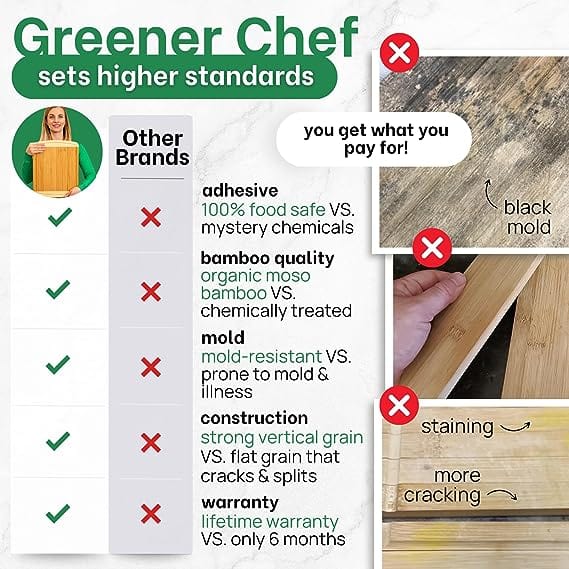
Bacteria can hide in cracks and grooves on worn boards. This raises the risk of food contamination. A damaged board may also harbor mold or mildew. Sharp cracks may cause cuts or splinters. Replace your board if cleaning no longer restores it fully. Always choose a new board that is easy to sanitize and maintain.
Credit: greenerchef.com
Frequently Asked Questions
How Do I Clean A Bamboo Cutting Board?
Clean your bamboo cutting board with warm, soapy water immediately after use. Avoid soaking it to prevent warping. Dry it thoroughly with a towel to maintain its durability and prevent bacteria growth.
How Often Should I Oil My Bamboo Cutting Board?
Oil your bamboo cutting board once a month or when it looks dry. Use food-grade mineral oil or bamboo-specific conditioner. This prevents cracking and keeps the board smooth and water-resistant.
Can Bamboo Cutting Boards Go In The Dishwasher?
No, do not put bamboo cutting boards in the dishwasher. The heat and water can cause warping and cracking. Hand wash them gently with mild soap and water instead.
How Do I Remove Stains From A Bamboo Cutting Board?
To remove stains, sprinkle coarse salt or baking soda on the board. Rub it with half a lemon, then rinse and dry. This natural method brightens the board and eliminates odors effectively.
Conclusion
Treating your bamboo cutting board keeps it strong and clean. Regular oiling stops cracks and warping. Clean it gently with mild soap and warm water. Avoid soaking or using harsh chemicals. Dry it well after washing to prevent damage. A well-cared board lasts longer and looks great.
Small steps make a big difference in its life. Your bamboo board will stay safe for food and easy to use. Simple care protects your investment and helps your kitchen stay healthy.