Have you ever found yourself needing exactly half a teaspoon of an ingredient but only had a regular spoon on hand? Measuring small amounts like ½ teaspoon can be tricky without the right tools.
But don’t worry—you don’t need special gadgets to get it right. You’ll discover simple, practical ways to measure ½ teaspoon using just a spoon you already have. By the end, you’ll never have to guess or worry about your recipes turning out wrong because of imprecise measurements.
Keep reading, and make your cooking and baking more accurate and stress-free!

Credit: www.amazon.com
Choosing The Right Spoon
Choosing the right spoon is essential for accurate measurement in cooking and baking. Using the wrong spoon can change the taste and texture of your dish. It is important to understand the differences between spoons and how to select one that fits the exact measurement you need. This helps keep your recipes consistent and successful every time.
Standard Teaspoon Vs Tablespoon
A standard teaspoon holds about 5 milliliters of liquid. It is the basic unit for measuring small amounts of ingredients. A tablespoon is larger and holds roughly 15 milliliters. Using a tablespoon instead of a teaspoon can triple the amount. Make sure to use the correct spoon to avoid mistakes in your recipe.
Using Measuring Spoons
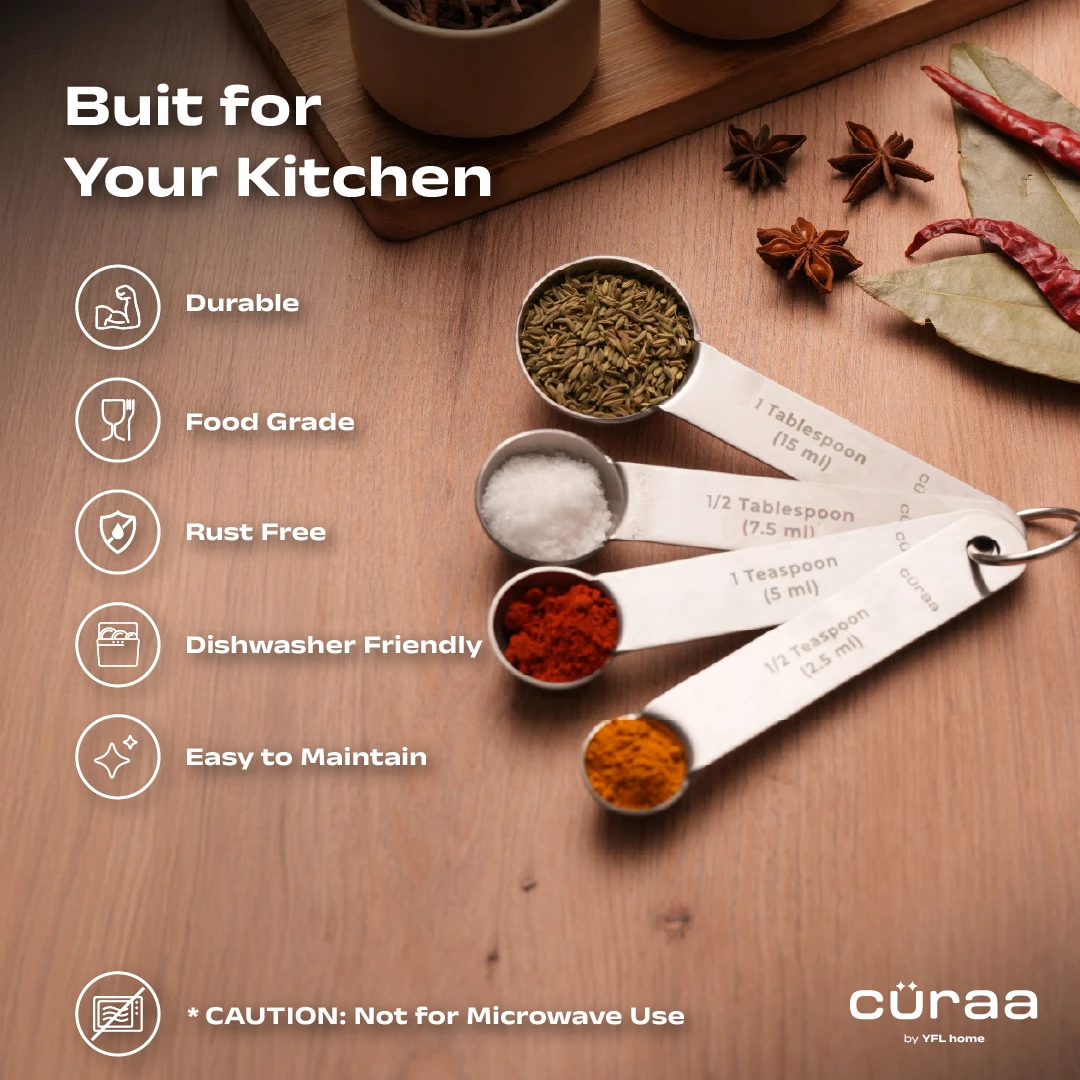
Measuring spoons are designed for accuracy. They come in sets with sizes like 1/4 teaspoon, 1/2 teaspoon, 1 teaspoon, and 1 tablespoon. For measuring 1/2 teaspoon, use the spoon labeled exactly that size. This method ensures precise amounts. Measuring spoons are easy to find and affordable.
Alternative Household Spoons
If you do not have measuring spoons, some household spoons can work in a pinch. A regular teaspoon from your cutlery drawer is close to a standard teaspoon but may vary slightly. A soup spoon is closer to a tablespoon size. For 1/2 teaspoon, fill a regular teaspoon halfway. Be aware this is less precise but helpful in a quick fix.
Credit: curaahome.com
Techniques For Accurate Measurement
Measuring 1/2 teaspoon accurately can be tricky if you don’t have the right tools. But with a few simple techniques, you can get the right amount every time, even if you only have a regular spoon at hand. These methods help you avoid common mistakes and keep your recipes on track.
Leveling The Spoon
Start by scooping the ingredient with a spoon until it’s heaping full. Then, use the flat edge of a knife or the back of another spoon to gently scrape off the excess. This levels the spoon, ensuring you have exactly the right amount without any extra spilling over.
This technique works well with dry ingredients like salt or baking powder. Have you noticed how a rounded spoon can throw off your recipe? Leveling fixes that instantly.
Using The Pinch Method
If you don’t have measuring spoons, you can use your fingers to estimate half a teaspoon. Pinch the ingredient between your thumb and forefinger, which is roughly equivalent to 1/8 teaspoon. So, four pinches will get you close to 1/2 teaspoon.
This method is especially handy when you’re cooking on the go or adding spices to taste. It may not be perfect, but it gives you a quick and practical estimate without extra tools.
Estimating Half Teaspoon
Another way to gauge 1/2 teaspoon is by using a regular teaspoon and dividing its contents. Fill a teaspoon halfway, then eyeball the middle point. You can also use visual cues, like thinking of a teaspoon as two equal parts, and just take one.
Try this a few times to train your eye. It’s surprising how precise you can get with practice, and it saves you from washing multiple measuring spoons during cooking.
Tools To Improve Precision
Measuring small amounts like 1/2 teaspoon can be tricky. Using the right tools helps get the exact amount needed. Precision is key in cooking and baking. It affects taste and texture. The following tools improve accuracy and make measuring easier.
Measuring Spoons With Markings
Measuring spoons with clear markings show exact measurements. Some spoons have lines for half, quarter, and full teaspoons. This helps measure 1/2 teaspoon without guessing. They are simple and affordable. Made of metal or plastic, these spoons are easy to clean and store.
Digital Scales For Small Quantities
Digital scales measure tiny amounts by weight. They show grams or ounces with great accuracy. Use a scale to weigh 1/2 teaspoon of ingredients like spices or baking powder. Scales reduce errors caused by packing or scooping. Some models have tare functions to subtract container weight.
Adjustable Measuring Spoons
Adjustable measuring spoons slide to set different volumes. They can measure 1/4, 1/2, 1 teaspoon, and more. These spoons save space and cost less than full sets. Turn the dial or slide the marker to set the spoon size. They work well for both dry and liquid ingredients.

Credit: www.youtube.com
Common Mistakes To Avoid
Measuring 1/2 teaspoon accurately might seem simple, but many people make avoidable mistakes that affect their recipe results. Small errors can change the flavor or texture of your dish, especially in baking or delicate sauces. Let’s look at some common pitfalls so you can measure confidently and get it right every time.
Overpacking Ingredients
It’s easy to scoop a spoonful and pack it tightly, thinking that more means better flavor. However, overpacking can add too much of an ingredient, like salt or baking powder, which can ruin your dish.
Imagine adding a heaping 1/2 teaspoon of cinnamon instead of a level one—your cookies might turn out too spicy. Use a gentle scoop and level off with a flat edge to avoid this mistake.
Ignoring Ingredient Density
Not all ingredients fill a spoon the same way. For example, powdered sugar is light and fluffy, while brown sugar is dense and sticky.
If you measure both the same way, you’ll get very different amounts by weight, which can throw off your recipe. Consider the density and texture; sometimes, packing is necessary (like with brown sugar) and sometimes it’s not (like with flour).
Using Inconsistent Spoons
Using different spoons for the same measurement can lead to confusion. A teaspoon in one kitchen might be a bit larger or smaller in another.
Always use a proper measuring spoon set for accuracy. If you don’t have one, try to use the same spoon consistently and check your results to adjust if needed.
Tips For Specific Ingredients
Measuring ingredients accurately is vital for cooking and baking success. Different ingredients require different techniques for precise measurement. This guide will provide you with practical tips for measuring various types of ingredients. From dry goods to sticky substances, learn how to use a spoon effectively.
Measuring Dry Ingredients
Use a clean, dry spoon for measuring dry ingredients. Pour the ingredient into the spoon until it's full. Use a flat edge, like a knife, to level off the excess. Avoid tapping or shaking the spoon to prevent packing.
Measuring Liquids
Hold the spoon steady for measuring liquids. Pour the liquid into the spoon carefully. Ensure the spoon is level to get an accurate measurement. Check at eye level to confirm the measurement.
Handling Sticky Substances
For sticky ingredients, coat the spoon with oil or water. This helps the substance slide off easily. Spoon the sticky substance into the spoon. Use a second spoon or spatula to scrape off any excess.
Frequently Asked Questions
How To Measure 1/2 Teaspoon Without A Measuring Spoon?
You can use a regular spoon and fill it halfway. A standard teaspoon holds 1 teaspoon, so half of it equals 1/2 teaspoon. Use the back of a knife to level off the amount for accuracy.
Can I Use A Tablespoon To Measure 1/2 Teaspoon?
Yes, but carefully. One tablespoon equals 3 teaspoons. Fill the tablespoon about one-sixth full to approximate 1/2 teaspoon. This method works when you lack smaller spoons.
Is 1/2 Teaspoon Measurement Important In Cooking?
Yes, precise 1/2 teaspoon measurements ensure consistent flavor. Too much or too little can affect taste and texture. Accurate measuring is crucial for baking and delicate recipes.
What Kitchen Tools Help Measure 1/2 Teaspoon Accurately?
Measuring spoons are best for accuracy. If unavailable, use a regular teaspoon and fill it halfway. Digital scales can also measure small amounts by weight for precision.
Conclusion
Measuring half a teaspoon with a regular spoon is simple. Use a small spoon and fill it halfway. Level off the top for accuracy. This method saves time and avoids extra tools. Cooking and baking become easier with these tips.
Practice a few times to get comfortable. Soon, measuring small amounts will feel natural. Enjoy your cooking with confidence and ease.