Craving a refreshing iced latte but unsure how to make it at home? You’re in the right place.
Making an iced latte with your espresso machine is easier than you think, and it can save you trips to the coffee shop. Imagine enjoying a perfectly balanced, cold coffee drink that you made yourself—customized just the way you like it.
In this guide, you’ll discover simple steps to create a creamy, flavorful iced latte that hits the spot every time. Ready to impress yourself and your friends with your barista skills? Let’s get started.
Choosing The Right Espresso Machine
Choosing the right espresso machine is key to making a perfect iced latte. The machine affects taste, texture, and ease of use. Picking one that fits your needs helps you enjoy coffee at home.
Types Of Espresso Machines
Espresso machines come in various styles. Each type suits different skill levels and preferences.
- Manual:Requires skill to control brewing. Best for coffee lovers who enjoy hands-on making.
- Semi-Automatic:Offers control with some automation. You start and stop the shot.
- Automatic:Controls shot length for consistency. Easy to use and saves time.
- Super-Automatic:Does everything from grinding to brewing. Perfect for quick and simple coffee.
Features To Look For
Choose features that improve your coffee experience. Some important ones include:
- Built-in Grinder:Freshly ground beans make better espresso.
- Steam Wand:Essential for frothing milk, which is needed in iced lattes.
- Temperature Control:Keeps water at the perfect heat for espresso.
- Easy Cleaning:Makes maintenance simple and fast.
- Size and Design:Fits your kitchen space and style.
Budget Considerations
Espresso machines vary widely in price. Set a budget before choosing one.
Lower-priced machines are good for beginners. They offer basic functions but may lack durability.
Mid-range machines balance features and cost. They often include grinders and steam wands.
High-end machines give excellent control and quality. Ideal for those serious about espresso.
Think about long-term use and maintenance costs too. A good machine can last many years.

Selecting Coffee Beans And Milk
Choosing the right coffee beans and milk is key to crafting a delicious iced latte with your espresso machine. These two ingredients shape the flavor and texture of your drink more than any other factor. Paying attention to their quality and characteristics will elevate your iced latte from average to café-quality.
Best Coffee Beans For Iced Lattes
Not all coffee beans behave the same when iced. Beans with a medium to dark roast tend to work best because they offer rich, bold flavors that don't get lost when cooled.
- Medium roast:Offers balanced acidity and sweetness, perfect if you want a smooth, approachable taste.
- Dark roast:Brings out smoky, chocolatey notes that contrast nicely with cold milk.
- Single-origin beans:Can add unique fruity or floral notes, but test a small batch first to see how they taste cold.
Have you ever noticed how some coffees taste flat when iced? That’s often due to weak or light roasts losing their complexity when chilled.
Milk Options And Alternatives
Milk influences the creaminess and sweetness of your iced latte. Whole milk adds richness, but you can adjust based on your preference or dietary needs.
- Whole milk:Gives a full, velvety texture that pairs well with strong espresso.
- Skim or low-fat milk:Creates a lighter drink but can feel less creamy.
- Plant-based milks:Almond, oat, and soy milks are popular choices. Oat milk, in particular, froths well and has a natural sweetness that complements espresso.
Which milk have you found blends best with your espresso? Trying different types can reveal surprising flavor combinations.
Importance Of Fresh Ingredients
Freshness is essential for both coffee beans and milk. Beans lose flavor quickly after roasting, so aim to use them within a few weeks of the roast date.
Milk should be fresh and cold to keep your iced latte tasting crisp and clean. Using milk close to its expiration date can result in off-flavors that ruin your drink.
Next time you prepare your iced latte, check the roast date on your beans and the freshness of your milk. This small step can make a big difference in taste.
Preparing The Espresso Shot
Preparing the espresso shot is the key to a delicious iced latte. It sets the base flavor and strength. A well-made shot gives a rich, smooth taste and beautiful crema. This process starts with fresh coffee beans and ends with a perfect espresso pull.
Grinding Coffee Beans
Grind fresh coffee beans just before brewing. Use a burr grinder for consistent size. Aim for a fine grind, but not too powdery. The grind size controls the flow of water. Too coarse makes weak espresso. Too fine causes bitter taste.
Tamping Techniques
Even tamping packs the coffee grounds firmly. Use a tamper that fits your portafilter. Press down with steady, firm pressure. About 30 pounds of force works well. Level the surface to avoid channeling. Uneven tamping leads to uneven extraction.
Pulling The Perfect Shot
Start the espresso machine and lock the portafilter in place. Aim for a shot time between 25 and 30 seconds. Watch the espresso flow like warm honey. Stop the shot when it turns pale and thin. The perfect shot has a deep brown color and creamy texture.

Frothing And Chilling The Milk
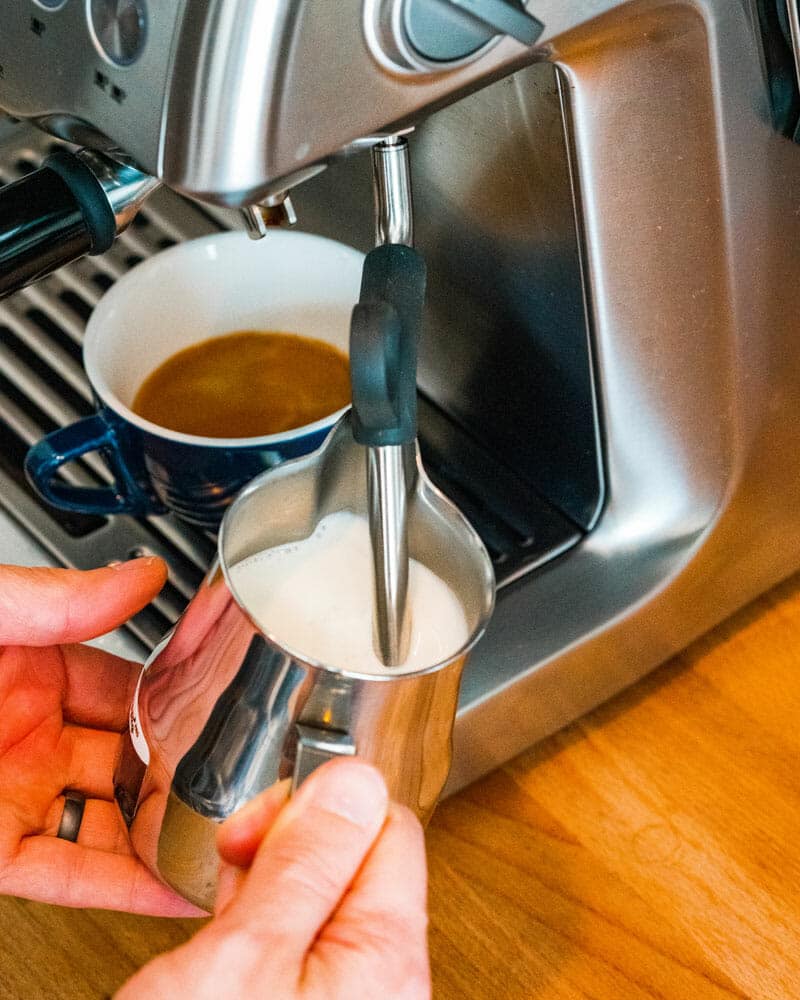
Froth the milk using the espresso machine’s steam wand until it becomes creamy and smooth. Chill the frothed milk quickly in the refrigerator or with ice to keep it cold for the iced latte.
Frothing and chilling the milk are key steps in making an iced latte. They determine the texture and temperature of your drink. Proper frothing creates creamy, foamy milk, adding richness. Chilling milk ensures your latte remains refreshingly cold.
Steaming Vs Frothing Milk
Steaming and frothing serve different purposes. Steaming heats milk, creating tiny bubbles. This makes it smooth and velvety. Frothing, on the other hand, injects air, forming thicker foam. Use a frothing wand for this. It makes more foam, ideal for lattes.
Chilling Techniques For Milk
Chilled milk keeps your iced latte cold. Use these techniques for best results:
- Refrigerate milk before use.
- Add ice cubes to the frothing pitcher.
- Use a metal pitcher for faster cooling.
These methods ensure milk is cold and refreshing.
Using Milk Alternatives
Milk alternatives suit various diets. Almond, soy, and oat milk froth well. They add unique flavors to your latte. Almond milk offers a nutty taste. Soy milk is creamy, while oat milk provides a mild sweetness. Choose based on taste preference and dietary needs.
Assembling The Iced Latte
Assembling the iced latte is the final step to enjoy this refreshing drink. It involves careful layering and mixing of ingredients. The goal is to keep the flavors balanced and the drink chilled perfectly. Follow these simple tips to assemble a delicious iced latte using your espresso machine.
Adding Ice Correctly
Fill your glass with fresh, cold ice cubes. Avoid crushed ice as it melts too fast. Leave some space at the top for espresso and milk. Use enough ice to keep the drink cold without watering it down quickly.
Pouring Espresso And Milk
Brew a fresh shot of espresso using your machine. Pour the hot espresso slowly over the ice. This cools the espresso quickly and prevents bitterness. Next, add cold milk to the glass. Use whole or skim milk based on your taste. Pour gently to keep the layers distinct if desired.
Mixing And Serving Tips
- Stir the drink gently to blend espresso and milk.
- Use a tall spoon or straw for easy mixing.
- Serve immediately to enjoy the fresh flavors.
- Optionally, add a splash of flavored syrup for sweetness.
- Use a clear glass to showcase the drink’s layers.
Customizing Your Iced Latte
Customizing your iced latte allows you to create a drink that fits your exact taste and mood. You have the freedom to experiment with flavors, sweetness, and even the texture of your drink. This section will help you tailor every sip to your liking.
Flavor Syrups And Sweeteners
Adding flavor syrups is an easy way to change the character of your iced latte. Vanilla, caramel, and hazelnut are popular options that add a pleasant twist without overpowering the espresso’s boldness.
If you prefer natural sweetness, try honey or maple syrup. They dissolve well in warm espresso shots before pouring over ice.
Are you someone who likes to avoid added sugars? Consider using stevia or monk fruit sweetener as a low-calorie alternative that still brings sweetness to your drink.
Toppings And Garnishes
Toppings can add both texture and visual appeal to your iced latte. Whipped cream is a classic choice that adds creaminess and a little indulgence.
Sprinkling cocoa powder, cinnamon, or nutmeg on top can introduce a warm spice note. You might also try crushed nuts or chocolate shavings for extra crunch.
Think about how you want your drink to feel and taste with each sip—would a sprinkle of sea salt on caramel syrup enhance the flavor for you?
Adjusting Strength And Sweetness
You control how strong or mild your iced latte feels by changing the espresso-to-milk ratio. Using a double shot of espresso results in a bolder, more robust drink.
If you want a lighter taste, increase the milk or add ice cubes. Keep in mind that ice dilutes the flavor, so balance it with the strength of your espresso.
Sweetness can be adjusted by varying the amount of syrup or sweetener. Start small and taste as you go—too much can mask the espresso, too little might leave it flat.
Cleaning And Maintenance
Keeping your espresso machine clean is key to crafting the perfect iced latte every time. Neglecting maintenance not only affects taste but can also shorten your machine's life. Let’s dive into simple yet effective cleaning habits that keep your machine in top shape.
Daily Cleaning Routine
After each use, rinse the portafilter and group head with hot water to remove coffee oils and grounds. Wiping down the steam wand immediately prevents milk residue from hardening. Don’t forget to empty the drip tray and clean any spills on the machine’s surface to avoid buildup.
Consider keeping a microfiber cloth nearby; it makes quick cleaning easier and more efficient. Have you noticed how even small residues can change your latte’s flavor? Staying on top of daily cleaning keeps every cup tasting fresh.
Descaling The Machine
Mineral deposits from water can clog your espresso machine over time, affecting performance and taste. Descaling removes these deposits and should be done every 1-3 months depending on your water hardness and usage. Use a descaling solution recommended by your machine’s manufacturer to ensure safety.
Run the descaling solution through the machine as you would for brewing, followed by several cycles of clean water to rinse. Skipping this step can lead to slower brewing, inconsistent temperature, and even damage. Have you checked your machine for scale buildup lately?
Extending Machine Lifespan
Regular cleaning and descaling are the foundation of extending your espresso machine’s lifespan. Beyond that, replace worn parts like group head gaskets and filters as needed to maintain optimal performance. Pay attention to any unusual noises or leaks—early fixes save costly repairs later.
Store your machine in a dry, clean area and avoid letting water sit inside for long periods. Treat your espresso machine with care, and it will reward you with delicious iced lattes for years. What’s one maintenance habit you think you could improve today?
Frequently Asked Questions
How Do You Make Iced Latte With An Espresso Machine?
To make an iced latte, brew a double shot of espresso. Pour it over ice, then add cold milk. Stir gently and enjoy a refreshing iced latte made with your espresso machine.
Can I Use Any Espresso Machine For Iced Lattes?
Most espresso machines work well for iced lattes. Choose one that can pull strong espresso shots quickly. Consistency and temperature control are key for the perfect iced latte.
What Type Of Milk Is Best For Iced Lattes?
Whole milk creates a creamy iced latte, but skim or plant-based milks also work. Choose milk based on your taste preference and dietary needs for the best flavor.
How Much Espresso Do I Need For One Iced Latte?
Use a double shot of espresso, around 2 ounces. This provides a strong coffee base that balances well with cold milk and ice.
Conclusion
Making an iced latte with an espresso machine is simple and fun. Start with fresh espresso and cold milk. Pour over ice to keep it cool and tasty. Adjust sweetness to your liking with syrup or sugar. Enjoy your drink anytime you want a refreshing coffee treat.
Practice a few times to find your perfect balance. Now, you can enjoy café-style iced lattes at home. Give it a try today!