Grilling thick steaks on a gas grill can feel tricky. You want that perfect crust outside and juicy, tender meat inside.
If you’ve ever ended up with a steak that’s burnt on the outside but raw in the middle, you know the frustration. But don’t worry—this guide will show you simple, foolproof steps to master grilling thick steaks every time. By the end, you’ll have the confidence to impress your friends and enjoy steakhouse-quality meals right at home.
Ready to unlock the secrets? Let’s get started!
Choosing The Right Steak
Choosing the right steak is the foundation of grilling thick steaks successfully. The cut you pick directly affects taste, texture, and how well it holds up on the grill. Knowing which cuts work best and how to spot quality meat will give you a big advantage before the grill even heats up.
Best Cuts For Thick Steaks
Not all steaks are made for thick cuts. Some handle thickness better, offering juicy flavor and tenderness even after longer grilling times.
- Ribeye:Rich in marbling, ribeye stays juicy and flavorful. Its fat content helps keep it tender when grilled thick.
- New York Strip:A bit leaner but still tender. This cut has a firm texture that grills evenly when thick.
- Filet Mignon:Known for tenderness, filet mignon is perfect if you prefer a buttery soft bite. It’s lean, so watch the grilling time carefully.
- T-Bone or Porterhouse:Combines two textures in one steak—tenderloin and strip. Great for thick grilling but needs attention to cook both sides well.
Think about how you like your steak cooked. Do you want a bold beefy flavor or melt-in-your-mouth tenderness? Your preference can guide your cut choice.
Selecting Quality Meat
Quality matters more than just the cut. The best thick steak starts with fresh, well-marbled meat.
- Look for Marbling:Fine white streaks of fat inside the meat add flavor and keep the steak juicy. Avoid cuts with little to no marbling for thick steaks.
- Check Color and Texture:Bright red meat with a firm, slightly springy texture signals freshness. Avoid dull or brownish colors.
- Ask Your Butcher:Don’t hesitate to ask for thick cuts and advice on the freshest options. Butchers can often recommend the best pieces for grilling.
I remember once grabbing a thick ribeye with minimal marbling, thinking the thickness would make up for it. The result was dry and tough. That taught me to always prioritize marbling over thickness alone.
What qualities do you look for in a steak? Paying attention to these details will make your thick steak grilling experience much more rewarding.
Preparing Steaks For Grilling
Preparing thick steaks for grilling is key to a juicy, flavorful result. Proper prep ensures even cooking and enhances taste. Simple steps before placing steaks on the grill make a big difference.
Trimming And Seasoning
Start by trimming excess fat from the steak edges. Leave a thin fat layer to keep the meat moist. Too much fat can cause flare-ups on the grill.
Next, season the steak well. Use salt and pepper for classic flavor. Sprinkle both sides evenly. For more taste, add garlic powder or your favorite herbs.
Bringing Steaks To Room Temperature
Take the steaks out of the fridge about 30 to 60 minutes before grilling. This step helps steaks cook evenly inside and out. Cold meat can cook unevenly, leading to a tough texture.
Pat the steaks dry with paper towels. Moisture on the surface stops good searing. Dry steaks get a nice crust and lock in juices better.
Setting Up Your Gas Grill
Getting your gas grill ready is crucial before you place those thick steaks on the grates. Proper setup ensures even cooking and helps you achieve that perfect sear without burning the outside or leaving the inside undercooked. Let’s look at how to prepare your grill for the best results.
Preheating And Temperature Zones
Preheat your gas grill with all burners on high for about 15 minutes. This heats the grates thoroughly and reduces sticking. Once preheated, adjust the burners to create temperature zones: one side on high for searing and the other on medium-low for slow cooking.
Why bother with zones? Thick steaks need a quick sear and then slower cooking to avoid burning. This two-zone setup gives you control over the cooking process and lets you move the steaks as needed.
Cleaning And Oiling The Grates
Clean grates make a big difference. Use a grill brush to scrape off any leftover residue from previous cookouts. This prevents sticking and flare-ups.
After cleaning, oil the grates lightly. You can use a paper towel dipped in vegetable oil and tongs to rub it over the grates. This extra step keeps your steaks from sticking and helps develop a beautiful crust.
Grilling Techniques For Thick Steaks
Grilling thick steaks requires more than just tossing them on the grill. Mastering the right techniques ensures a perfect crust and juicy interior every time. These strategies help you control heat and timing, so your steak cooks evenly without drying out.
Searing For Crust Formation
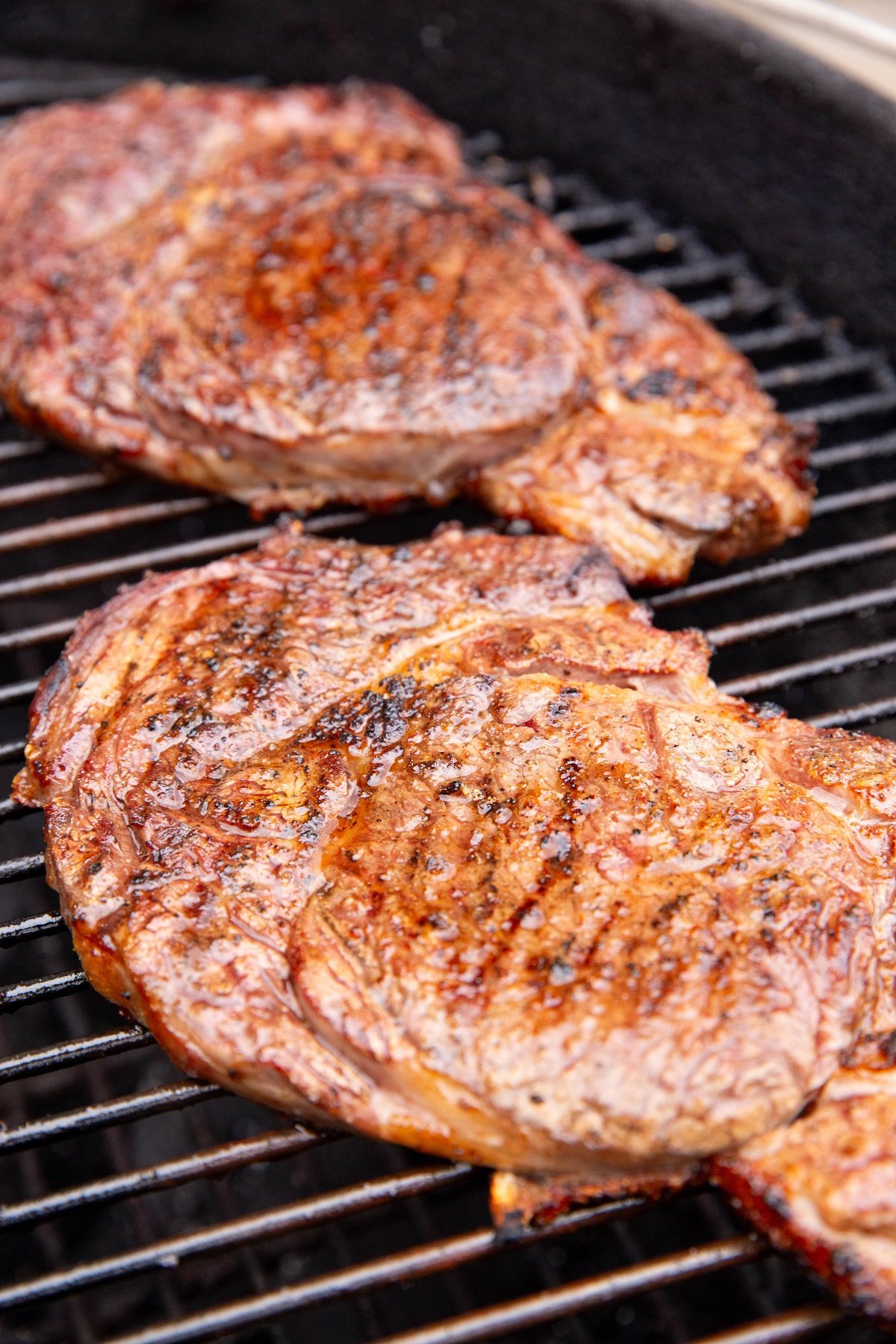
Searing is key to locking in flavor and creating that mouthwatering crust. Start by heating your gas grill to its highest setting—around 500°F or more. Place the steak directly over the flames and let it sear for 2 to 3 minutes per side without moving it.
Have you noticed how steaks develop those beautiful grill marks? That’s the Maillard reaction in action, which enhances taste and texture. Resist the urge to flip the steak too often; one good sear on each side is enough to build that rich, caramelized crust.
Using Indirect Heat For Even Cooking
After searing, move your steak away from direct heat to prevent burning the outside while the inside cooks. Gas grills with multiple burners let you turn off one side and place the steak on that cooler side. This indirect heat gently brings the steak to your desired doneness.
This two-zone setup mimics an oven’s effect on the grill. It allows the heat to penetrate the thick cut evenly. You’ll avoid the common problem of a raw middle and burnt edges.
Flipping And Timing Tips
Flip your steak just once or twice during cooking. Too many flips can interfere with crust formation and slow down cooking. Use a reliable meat thermometer to check internal temperature instead of guessing.
For a 1.5 to 2-inch thick steak, expect about 10 to 15 minutes total cooking time on indirect heat after searing. Aim for 125°F for rare, 135°F for medium-rare, and 145°F for medium. Rest your steak for 5 to 10 minutes to let juices redistribute.
Have you tried timing your flips based on grill marks and texture? Experimenting with this can give you a better feel for your grill’s unique heat zones. What’s your go-to timing for thick steaks?
Checking Steak Doneness
Grilling thick steaks on a gas grill requires attention to doneness. Use a meat thermometer for accuracy. Aim for 130°F for medium-rare, adjusting based on preference.
Grilling thick steaks to perfection requires attention to doneness. Knowing when your steak is ready ensures a juicy, flavorful bite. Achieving the perfect doneness involves more than just timing. It requires observing specific signs and tools. Let's explore how to check steak doneness effectively.
Using A Meat Thermometer
A meat thermometer offers accuracy. Insert it into the thickest part of the steak. Avoid touching bone or fat for an accurate reading. Aim for 130°F for medium-rare, 140°F for medium, and 150°F for medium-well. Let the steak rest after removing it from the grill. The temperature rises a few degrees as it rests.
Visual And Touch Indicators
Visual cues help judge steak doneness. A medium-rare steak appears warm red in the center. Medium steaks are pink with slight browning. Medium-well steaks show more browning with a hint of pink. Touch can also indicate doneness. Press the steak with your finger. A rare steak feels soft, like the base of your thumb. Medium feels firmer, similar to the tip of your nose. Medium-well is firm, like the flesh on your forehead. Practice improves accuracy with these indicators.
Credit: www.theroastedroot.net
Resting And Serving
After you’ve grilled your thick steak to perfection, the next step is just as important—resting and serving. This phase lets the juices redistribute inside the meat, making each bite juicy and flavorful. Skipping this step often leads to a dry steak, no matter how well you grilled it.
Importance Of Resting Time
Resting allows the steak’s fibers to relax and reabsorb the juices pushed to the surface during grilling. If you cut into your steak immediately, those flavorful juices will spill out onto the plate instead of staying inside.
Typically, you want to rest a thick steak for about 5 to 10 minutes. Cover it loosely with foil to keep it warm without steaming the crust. During this time, the internal temperature evens out, so your steak finishes cooking gently.
Have you noticed how some steaks seem dry even right off the grill? I once rushed straight to cut a thick ribeye and lost half the juices on the plate. Waiting a few minutes made all the difference in taste and texture.
Carving And Presentation Ideas
How you slice and serve your steak can elevate the entire meal. Always carve against the grain to ensure each bite is tender and easy to chew. Look closely at the steak’s muscle fibers—they usually run lengthwise, so cut perpendicular to them.
Consider slicing your steak into thick strips or bite-sized pieces, depending on your audience. For a family dinner, large slices might feel more satisfying, while smaller cuts work well for sharing at a party.
Presentation also matters. Arrange the slices neatly on a warm plate and add a sprinkle of flaky sea salt or a pat of herb butter for an extra touch. Serving with grilled vegetables or a fresh salad adds color and texture, making your steak dinner visually appealing.
- Use a sharp carving knife to ensure clean cuts
- Serve on a warm platter to keep the steak hot
- Garnish with fresh herbs like rosemary or thyme for aroma
- Pair with sauces on the side to let guests choose
Troubleshooting Common Issues
Grilling thick steaks on a gas grill can be tricky. Common problems like overcooking and flare-ups can spoil the experience. Knowing how to handle these issues helps you cook steaks just right every time. Here are simple tips to keep your grilling smooth and your steak juicy.
Avoiding Overcooking
Thick steaks need careful timing to stay tender. Use a meat thermometer to check the temperature. Aim for 130°F for medium-rare and 140°F for medium. Turn the steak only once or twice during grilling. Let the steak rest for 5 to 10 minutes before cutting. This keeps juices inside the meat. Lower the heat if the steak cooks too fast on the outside.
Preventing Flare-ups
Flare-ups happen when fat drips on the flames. They can burn your steak quickly. Trim excess fat before grilling. Keep a spray bottle with water nearby to control flames. Move the steak to a cooler part of the grill if flames rise. Clean the grill grates regularly to reduce grease buildup. Use two-zone cooking by having one side hot and the other cooler. This gives you space to move the steak away from flare-ups.

Credit: poolsideheatingandleisure.com.au
Credit: www.theroastedroot.net
Frequently Asked Questions
How Long To Grill Thick Steaks On Gas Grill?
Grill thick steaks for 4-5 minutes per side on high heat. Use a meat thermometer to check doneness. Aim for 130°F for medium-rare and 140°F for medium. Rest steaks for 5 minutes before serving to retain juices.
What Gas Grill Temperature Is Best For Thick Steaks?
Preheat your gas grill to high, around 450-500°F. This high heat sears the steak, locking in flavors. After searing, reduce heat to medium for even cooking. Maintaining proper temperature ensures juicy and tender thick steaks.
Should I Use Direct Or Indirect Heat For Thick Steaks?
Start with direct high heat to sear both sides quickly. Then move steaks to indirect medium heat to finish cooking gently. This method prevents burning outside while cooking the inside perfectly.
How To Prevent Thick Steaks From Drying Out On Gas Grill?
Avoid overcooking by using a meat thermometer for precise doneness. Let steaks rest after grilling to redistribute juices. Marinate or season steaks before grilling to enhance moisture retention and flavor.
Conclusion
Grilling thick steaks on a gas grill takes patience and care. Start with a hot grill and clean grates for best results. Use direct heat to sear the steak, then move it to indirect heat. Let the steak rest after cooking to keep it juicy.
Check the temperature often to avoid overcooking. With practice, you will enjoy tender, flavorful steaks every time. Remember, simple steps lead to great meals. Happy grilling!