Are you ready to make a delicious, tender beef roast that will impress everyone at your table? Cooking a beef roast in a Dutch oven is one of the best ways to lock in flavor and keep the meat juicy and soft.
Whether you’re a beginner or just looking to improve your cooking skills, this method is simple and rewarding. Keep reading, and you’ll discover easy steps, helpful tips, and secrets to creating a mouthwatering roast that’s perfect for any occasion. Your next unforgettable meal starts right here!
Choosing The Right Beef Roast
Choosing the right beef roast is key to making a delicious meal in your Dutch oven. The cut you pick affects the texture, flavor, and cooking time. Knowing which roast works best will save you time and ensure your dish turns out tender and flavorful every time.
Best Cuts For Dutch Oven Cooking
Not all beef roasts are created equal when it comes to Dutch oven cooking. Some cuts handle slow, moist heat better and become melt-in-your-mouth tender. Look for roasts that have good marbling and connective tissue.
- Chuck Roast:This is a classic choice. It has plenty of fat and collagen that breaks down during slow cooking, making the meat juicy and tender.
- Brisket:Brisket takes longer to cook but rewards you with rich, deep flavors. It’s perfect for slow braising.
- Round Roast:Leaner than chuck, it can be a bit tougher but still works well if cooked low and slow.
- Rump Roast:A great option for Dutch oven recipes. It’s flavorful and becomes tender with slow cooking.
Have you ever tried a cut you didn’t expect to work well? Sometimes experimenting can lead to surprisingly tasty results.
Selecting Quality Meat
Quality matters more than you might think. Freshness and the source of your beef impact the taste and texture. Look for roasts with a bright red color and firm texture.
Check the fat distribution—marbling isn’t just about looks. It melts during cooking and adds moisture and flavor. If possible, buy from a trusted butcher who can recommend the best cut for your recipe.
Remember, the better the meat, the less you’ll need to fuss with seasoning or sauces. What’s your favorite place to buy quality beef? Sometimes local farms or specialty markets offer superior options compared to supermarkets.

Credit: urbanblisslife.com
Preparing The Roast
Preparing your beef roast properly sets the stage for a delicious meal when cooking in a Dutch oven. The way you season, trim, and tie the roast affects its flavor, texture, and how evenly it cooks. Taking a little extra time here ensures every bite is tender and full of rich taste.
Seasoning Tips
Start with a generous seasoning of salt and pepper to enhance the natural flavor of the beef. Don’t hesitate to add garlic powder, onion powder, or smoked paprika for a deeper taste profile. If you like herbs, fresh rosemary or thyme work beautifully—just press them into the meat so the flavors stick during cooking.
Try rubbing the roast with a bit of olive oil before seasoning. This helps the spices adhere better and creates a nice crust when seared. Have you ever noticed how a well-seasoned crust can transform the whole dish? It’s a simple step that makes a big difference.
Trimming And Tying
Look for excess fat and silver skin on the roast before cooking. Removing thick, tough silver skin helps the meat cook more evenly and prevents chewy bites. However, leaving some fat is good because it melts and keeps the roast juicy.
Tying the roast with kitchen twine keeps its shape during cooking. This is especially important if your roast is uneven or has loose sections. You can use a simple butcher’s knot or loop the twine around the roast every couple of inches to hold it firmly.
Have you tried tying your roast before? It not only improves presentation but also helps the meat cook uniformly, giving you consistent results every time.
Setting Up The Dutch Oven
Setting up your Dutch oven correctly is the key to cooking a perfect beef roast. The right preparation helps you control the temperature and ensures even cooking. Let's look at how to get your Dutch oven ready for roasting.
Preheating Techniques
Preheat your Dutch oven on the stove over medium heat for about 5 to 10 minutes. This step prevents the roast from sticking and helps create a beautiful crust. Have you ever noticed how a cold pan can make meat soggy instead of crispy? Avoid that by warming the pot first.
If you're using a Dutch oven in the oven, place it inside while the oven preheats. This way, the pot and oven reach the same temperature simultaneously, giving your roast an even cook. Remember, a hot Dutch oven means better searing and moisture retention.
Choosing The Right Size
Selecting the right size Dutch oven affects how your roast cooks. A pot that's too small will crowd the meat, causing it to steam rather than roast. Too large, and the juices spread too thin, which can dry out your beef.
Think about the size of your roast before picking your pot. A 5 to 7-quart Dutch oven works well for most 3 to 5-pound roasts. If your roast is bigger, consider a larger pot to give the meat room to breathe and cook evenly.
Browning The Meat
Browning the meat is a key step in cooking a beef roast in a Dutch oven. It creates a rich, deep flavor by caramelizing the surface of the roast. This step locks in juices and adds a delicious crust that enhances the entire dish.
Taking time to brown the meat properly improves the roast's taste and texture. It also builds a flavorful base for the sauce or gravy. Without this step, the beef may taste flat and less appealing.
Searing For Flavor
Start by patting the roast dry with paper towels. Moisture stops the meat from browning well. Heat the Dutch oven over medium-high heat until very hot. Add a small amount of oil with a high smoke point, like vegetable or canola oil.
Place the roast carefully in the pot. Avoid moving it too soon. Let each side cook undisturbed for 3 to 4 minutes. The goal is a deep brown crust, not cooking the meat through. Turn the roast to brown all sides evenly.
Avoiding Common Mistakes
- Don’t overcrowd the Dutch oven. Too much meat lowers the temperature and causes steaming, not browning.
- Dry the meat well. Wet surfaces create steam and prevent a crust.
- Use enough heat. Low heat results in gray, soggy meat.
- Be patient. Rushing by flipping or moving the roast often stops proper browning.
- Choose the right oil. Butter burns quickly, so mix it with oil or use oil alone.
Adding Vegetables And Aromatics
Vegetables and aromatics bring rich flavors to your beef roast. Toss onions, garlic, carrots, and celery around the meat for a tasty base. Their aroma fills the kitchen and enhances the roast’s taste.
Adding vegetables and aromatics to your beef roast enhances its flavors. The right combination creates a delicious and hearty dish. This guide will help you choose the best vegetables and aromatics for your roast.
Best Vegetables To Use
Select vegetables that complement the rich flavor of beef. Root vegetables are excellent choices. They absorb the juices and add depth.
- Carrots:They add a touch of sweetness.
- Potatoes:Use waxy ones for better texture.
- Onions:Add a sweet, savory taste.
- Celery:Adds a subtle, earthy flavor.
- Parsnips:Sweet and nutty, they enhance the dish.
Herbs And Spices For Aroma
Herbs and spices make your roast fragrant and flavorful. Use fresh or dried options.
- Rosemary:Its pine-like aroma pairs well with beef.
- Thyme:Adds a subtle, minty flavor.
- Bay Leaves:Infuse a mild, herbal taste.
- Garlic:Provides a strong, savory kick.
- Black Pepper:Adds a touch of heat and depth.
Use these ingredients to create a delicious beef roast. Enjoy the rich, aromatic flavors.
Cooking Process
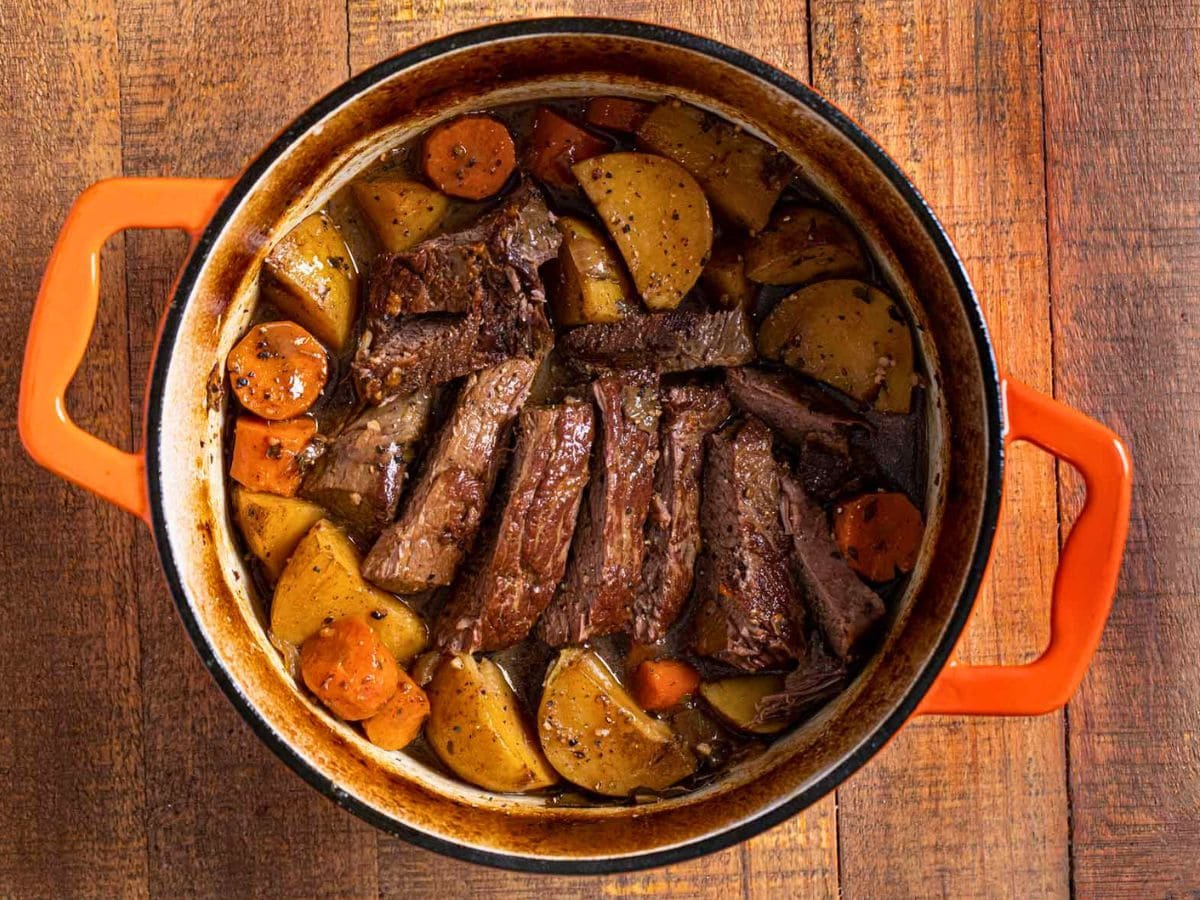
Sear the beef roast in the Dutch oven until browned on all sides. Add vegetables and broth, then cover and cook slowly until tender. This method keeps the meat juicy and full of flavor.
Cooking a beef roast in a Dutch oven can seem like an art, but it’s one that anyone can master with the right guidance. The secret lies in following a precise cooking process that ensures your roast turns out perfectly juicy and tender every time. Let’s dive into the essential steps that will elevate your cooking game.
Oven Temperature And Timing
Setting the oven temperature correctly is crucial. For a beef roast, preheat your oven to 325°F (165°C). This temperature allows the beef to cook evenly and develop rich flavors over time. Timing is everything. Generally, you should aim for about 20 minutes of cooking per pound of beef. For example, a 4-pound roast will need approximately 1 hour and 20 minutes. Keep in mind that ovens vary, so it’s important to monitor the roast closely.
Checking For Doneness
How do you know when your beef roast is done? Use a meat thermometer. Insert it into the thickest part of the roast, avoiding any bones. You're aiming for an internal temperature of 145°F (63°C) for medium-rare, or 160°F (71°C) for medium. Visual cues also help. Look for a caramelized crust on the outside, which indicates that the roast has developed a flavorful sear. Feel free to make a small cut and check the color inside—pink for medium-rare, slightly brown for medium. Have you ever found a roast too tough or too rare? Adjusting the cooking time based on your preferences can make all the difference. Trust your instincts and these guidelines to achieve the perfect doneness every time.
Resting And Serving
After your beef roast has cooked perfectly in the Dutch oven, the next crucial phase is resting and serving. This step might seem simple, but it can make a big difference in how juicy and flavorful your roast turns out. Taking the time to rest the meat allows the juices to redistribute, making every bite tender and delicious.
Why Resting Matters
Have you ever cut into a roast right after cooking only to see all the juices spill out? That’s because the meat fibers are still tight and holding the juices inside. Resting lets those fibers relax, so the juices stay locked in.
Rest your roast for at least 15 to 20 minutes. Cover it loosely with foil to keep it warm but avoid trapping steam, which can make the crust soggy. This pause not only improves texture but also helps the roast finish cooking gently.
Carving Tips
Carving your roast correctly shows off all your hard work. Always use a sharp knife to make clean, even slices. Dull knives tear the meat and release precious juices.
Cut against the grain of the meat—that’s the direction the muscle fibers run. Slicing against the grain shortens those fibers, making each piece easier to chew. Try cutting thin slices to maximize tenderness and flavor.
Think about presentation as you carve. Arrange the slices neatly on a warm platter and spoon some of the cooking juices over the top. This simple touch adds moisture and enhances the aroma, inviting everyone to dig in.

Credit: supermancooks.com
Troubleshooting Common Issues
Cooking a beef roast in a Dutch oven can sometimes bring challenges. Common issues like dry meat or undercooked parts can affect the dish's success. Understanding how to fix these problems helps achieve a tender and juicy roast every time.
Dry Roast Solutions
Dry meat often means it cooked too long or at too high heat. To prevent dryness:
- Lower the oven temperature and cook slower.
- Add broth or water to the Dutch oven to keep moisture.
- Cover the roast with the lid to trap steam.
- Rest the meat after cooking to keep juices inside.
- Use a meat thermometer to avoid overcooking.
Undercooked Meat Fixes
Undercooked roast may be due to too short cooking time or low heat. To fix this:
- Return the roast to the Dutch oven and cook longer.
- Check the temperature regularly with a meat thermometer.
- Cover the roast tightly to keep the heat in.
- Slice the roast only after it reaches the right temperature.
- Use a fork to test tenderness before serving.
Enhancing Flavor Variations
Enhancing the flavor of a beef roast cooked in a Dutch oven makes a big difference. Small changes in liquids and seasonings can create unique taste profiles. Experimenting with broth, wine, and marinades brings rich layers of flavor to the dish.
Using Broth And Wine
Broth and wine add moisture and depth to the roast. Use beef or vegetable broth for a savory base that enhances the meat's natural taste. Wine introduces acidity and complexity, balancing rich flavors.
- Choose red wine like Cabernet or Merlot for bold flavors.
- White wine works well for lighter, subtle tastes.
- Combine broth and wine for a balanced, tender roast.
- Simmer the liquids with herbs to infuse extra aroma.
Adding Marinades
Marinating the beef before cooking boosts flavor and tenderness. Use simple ingredients like garlic, soy sauce, and herbs to create a tasty marinade. Allow the meat to soak for at least a few hours, or overnight for best results.
- Acidic ingredients like vinegar or citrus break down meat fibers.
- Sweeteners like honey or brown sugar add caramelized notes.
- Fresh herbs and spices intensify the roast's aroma.
- Remove excess marinade before cooking to avoid burning.

Credit: gratefulgrits.com
Frequently Asked Questions
What Is The Best Cut For A Beef Roast In A Dutch Oven?
The best cuts are chuck roast, brisket, or rump roast. These cuts become tender and flavorful when slow-cooked in a Dutch oven.
How Long Should I Cook A Beef Roast In A Dutch Oven?
Cook the roast for 2. 5 to 3 hours at 325°F (163°C). This slow cooking ensures tender, juicy meat with rich flavor.
Can I Sear The Beef Roast Before Using A Dutch Oven?
Yes, searing the roast before cooking locks in juices and adds a rich, caramelized flavor to the dish.
Should I Add Liquid When Cooking Beef Roast In A Dutch Oven?
Always add broth, wine, or water to keep the roast moist. This helps create flavorful gravy and prevents drying out.
Conclusion
Cooking a beef roast in a Dutch oven is simple and rewarding. The pot keeps heat steady and meat tender. You only need basic ingredients and patience for best results. Serve your roast with favorite sides for a warm, hearty meal.
Try this method to enjoy a delicious dinner anytime. Cooking at home can be easy and fun. Give it a try and taste the difference yourself.