You know how important your wood cutting board is in the kitchen. But after cutting raw meat, it can feel risky to use it again without a proper clean.
If you don’t clean it the right way, harmful bacteria can stay on the surface and affect your next meal. What if there was a simple, effective way to make sure your board is safe and ready to use every time?
Keep reading, and you’ll learn easy steps to clean your wood cutting board after raw meat—protecting your health and keeping your kitchen fresh.
Risks Of Improper Cleaning
Cleaning your wood cutting board after handling raw meat is not just about tidiness—it’s about safety. Neglecting proper cleaning can leave harmful bacteria lurking in the wood’s pores. These invisible threats can turn your kitchen into a health hazard without you even realizing it.
Bacterial Contamination
Raw meat carries bacteria like Salmonella and E. coli, which can easily transfer to your cutting board. Wood is porous, meaning these germs can seep into tiny cracks and grooves. If you don’t clean the board thoroughly, these bacteria multiply, waiting for their next chance to contaminate your food.
I once thought rinsing a board with water was enough. But after a stomach bug traced back to my kitchen, I learned the hard truth—bacteria thrive in leftover meat residue. This experience made me realize how crucial deep cleaning is to keep my family safe.
Cross-contamination Dangers
Using the same cutting board for raw meat and other foods without proper cleaning spreads bacteria everywhere. Imagine chopping vegetables on a board still harboring germs from raw chicken. That simple act can cause food poisoning.
Think about the last time you prepared a sandwich after handling raw meat. Did you clean the board properly? If not, you risk transferring harmful bacteria to ready-to-eat foods.
- Always clean your board immediately after raw meat contact.
- Use hot water and soap, then sanitize if possible.
- Consider separate boards for meat and produce to reduce risks.
How safe do you feel about your current cleaning routine? Taking a few extra minutes can protect you and your loved ones from serious health issues.
Initial Rinse And Scrape

Cleaning a wood cutting board after handling raw meat starts with a thorough initial rinse and scrape. This step removes leftover meat bits and juices. It helps prevent bacteria from sticking to the surface.
Starting right reduces the chance of cross-contamination. It also makes the next cleaning steps more effective. Let’s explore how to remove meat residue and use hot water properly.
Removing Meat Residue
First, scrape off any pieces of raw meat using a plastic scraper or a spatula. Avoid metal tools as they can damage the wood. Remove all visible meat bits to stop bacteria from spreading.
- Hold the board steady on the counter.
- Use firm, gentle strokes to lift stuck meat.
- Dispose of scraps directly into the trash.
This quick step clears the surface and prepares the board for rinsing.
Using Hot Water
Rinse the board under hot running water. Hot water helps wash away blood and meat juices.
- Use water as hot as your hands can tolerate.
- Rinse both sides of the board carefully.
- Let water run over the surface for at least 30 seconds.
Do not soak the board in water, as it can warp the wood. A good rinse loosens particles and reduces germs before deeper cleaning.
Effective Cleaning Methods
Keeping your wood cutting board clean after handling raw meat is crucial for food safety and longevity of the board. Effective cleaning methods not only remove visible stains but also eliminate bacteria that can cause illness. Let’s explore some practical ways you can clean your board thoroughly, using simple ingredients you likely have at home.
Soap And Water Technique
Start by scrubbing your cutting board with hot water and a few drops of dish soap. Use a stiff brush or sponge to reach into grooves and remove meat residue.
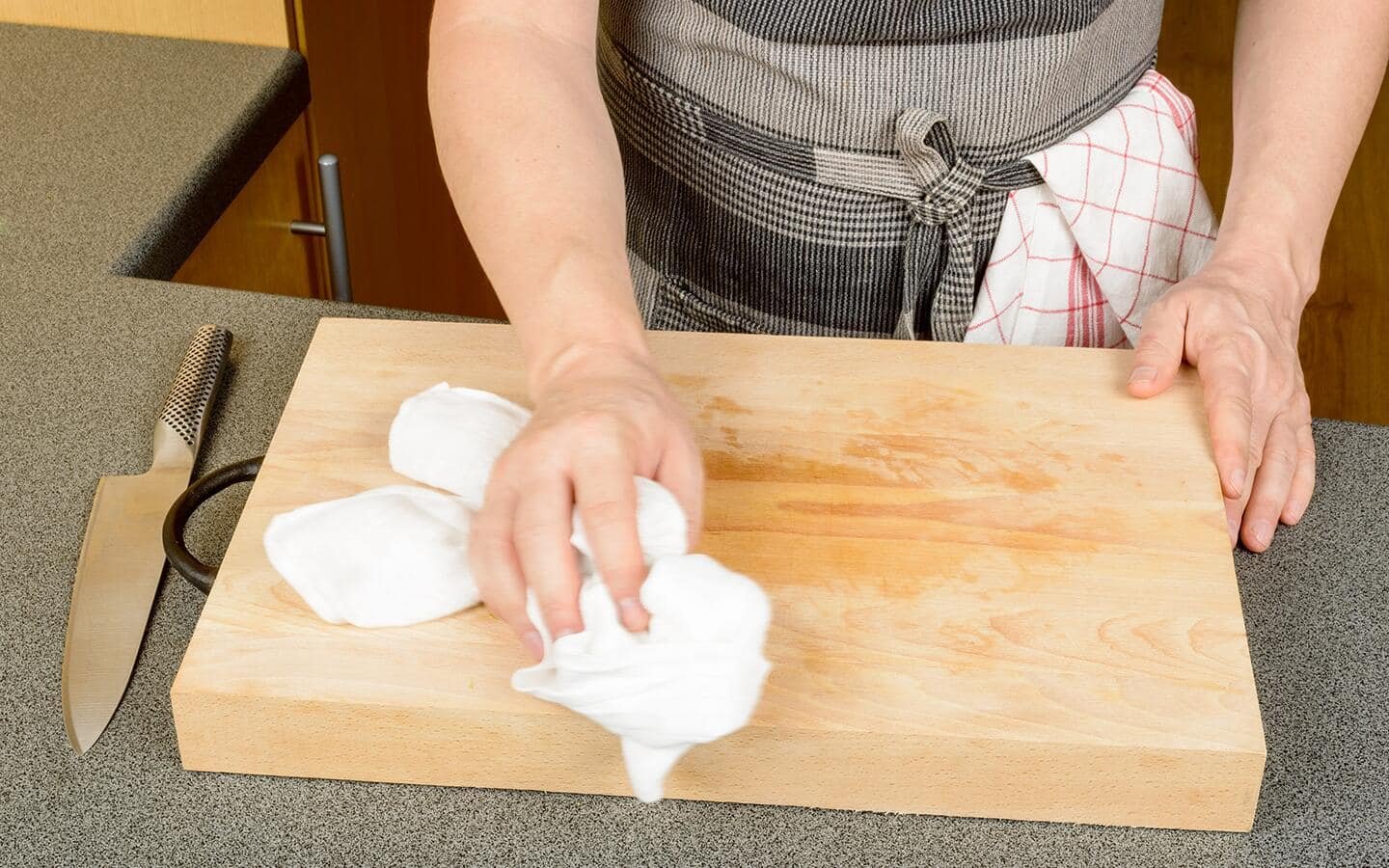
Rinse thoroughly with hot water and dry the board immediately with a clean towel to prevent warping. This method is quick and effective for everyday cleaning after raw meat use.
Vinegar Disinfection
White vinegar acts as a natural disinfectant. After washing with soap and water, spray or wipe your cutting board with undiluted white vinegar.
Let it sit for a few minutes to kill bacteria, then rinse with water and dry. This simple step adds an extra layer of protection against harmful germs.
Using Baking Soda And Salt
Sprinkle a mixture of baking soda and coarse salt over the board’s surface. Use a damp cloth or sponge to scrub the board in circular motions.
This combination helps to deodorize and gently lift stains while also scrubbing away bacteria. Rinse well with warm water and dry completely before storing.
Deep Cleaning Approaches

Deep cleaning your wood cutting board after handling raw meat is essential to prevent bacteria buildup and keep your kitchen safe. Simple rinsing won’t cut it; you need effective techniques that reach deep into the wood’s pores. Here are two powerful approaches you can try at home to maintain a clean and fresh cutting surface.
Hydrogen Peroxide Application
Hydrogen peroxide is a fantastic natural disinfectant that kills harmful bacteria without harsh chemicals. Pour a small amount directly onto your cutting board’s surface, spreading it evenly with a clean cloth or sponge.
Let it sit for about 5 minutes to work its magic. This short wait allows the peroxide to penetrate the wood and eliminate germs lurking in tiny grooves.
Afterward, rinse the board thoroughly with warm water and dry it completely. Do you notice how this simple step leaves your board feeling cleaner and fresher than soap alone?
Lemon Juice Treatment
Lemon juice offers natural acidity that fights bacteria and neutralizes odors on your cutting board. Cut a lemon in half and rub it vigorously over the surface, squeezing gently to release the juice.
Focus on any stained or smelly spots. The juice’s acidity breaks down residues and brightens the wood’s appearance.
Let the lemon juice sit for 3 to 5 minutes before rinsing with warm water. This method not only sanitizes but also leaves a pleasant citrus scent that soap cannot match. Could this be your new favorite board cleaner?
Drying And Maintenance Tips
Dry wood cutting boards quickly with a clean towel to prevent warping. Regularly oil the board to keep it smooth and stop cracks. Store it in a dry place away from moisture for longer life.
Drying and maintaining your wood cutting board is essential. It keeps the board in good condition and free from bacteria. Proper care ensures the board lasts longer and stays safe for food preparation. Let’s explore some practical tips for drying and maintaining your wood cutting board.
Proper Drying Techniques
Dry the board immediately after washing. Use a clean towel to remove excess water. Stand the board upright to air dry completely. Ensure no water pools on the surface or edges.
Oiling To Prevent Cracks
Apply mineral oil to the board regularly. This helps prevent cracks and warping. Pour a small amount of oil on the board. Use a clean cloth to spread it evenly. Allow the board to absorb the oil overnight. Wipe off any excess oil before using the board again.
When To Replace Your Board

Knowing when to replace your wood cutting board is important for safety and hygiene. Over time, cutting boards wear out and develop damage that can hide bacteria. Using a damaged board after handling raw meat risks food contamination.
Pay attention to your board’s condition regularly. Small cracks or deep grooves can trap raw meat juices and bacteria. Replacing your board at the right time keeps your kitchen safe and clean.
Signs Of Damage
- Deep cuts or grooves that are hard to clean
- Cracks or splits in the wood surface
- Warping or uneven surface causing instability
- Discoloration that doesn’t fade after cleaning
- Loose wood fibers or splinters
Hygiene Concerns
- Bacteria can hide in cracks and grooves
- Odors from raw meat may linger despite cleaning
- Risk of cross-contamination increases with damage
- Board surface becomes harder to sanitize effectively
- Frequent use with raw meat demands strict hygiene
Frequently Asked Questions
How Do I Sanitize A Wood Cutting Board After Raw Meat?
To sanitize, wash the board with hot soapy water immediately. Then, apply white vinegar or diluted bleach to kill bacteria. Rinse well and dry thoroughly before storing to prevent bacterial growth and wood damage.
Can I Use Bleach To Clean Wood Cutting Boards?
Yes, but use a diluted bleach solution (1 tablespoon bleach per gallon of water). Apply briefly, then rinse thoroughly. Avoid soaking the wood to prevent warping or cracking.
How Often Should I Oil My Wood Cutting Board?
Oil your board once a month or when it looks dry. Use food-safe mineral oil to maintain moisture and prevent cracking. Oiling also helps create a barrier against bacteria.
Is It Safe To Use Hot Water On Wood Cutting Boards?
Yes, hot water helps remove grease and bacteria effectively. However, avoid soaking to prevent wood warping. Wash quickly with hot soapy water and dry immediately.
Conclusion
Cleaning your wood cutting board after raw meat keeps your kitchen safe. Use hot water and soap right away. Scrub well to remove all meat juices. Dry the board completely to stop germs. Sometimes, use vinegar or lemon for extra cleaning power.
Regular care helps your board last longer. Always keep it clean to avoid sickness. Simple steps make a big difference in your food safety. Keep your board fresh and ready for the next use. Your health depends on good cleaning habits.