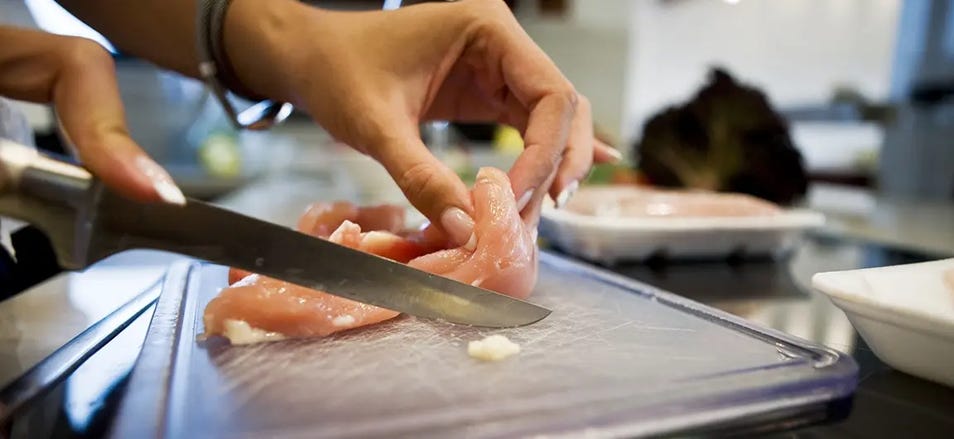
You’ve just finished cutting raw chicken, and now it’s time to clean your cutting board. But do you know the best way to do it?
If not cleaned properly, your cutting board can harbor harmful bacteria that put your health at risk. You want to keep your kitchen safe and your meals delicious. You’ll learn simple, effective steps to clean your cutting board thoroughly after handling raw chicken.
Follow these tips to protect yourself and your loved ones every time you cook. Keep reading to discover the easy routine that will make your kitchen safer and cleaner instantly.
Risks Of Improper Cleaning
Improper cleaning of your cutting board after handling raw chicken can lead to serious health risks. It’s not just about a dirty surface—it’s about what harmful bacteria might be lurking and how they can spread. Understanding these risks helps you protect yourself and everyone you cook for.
Bacterial Contamination
Raw chicken often carries bacteria like Salmonella and Campylobacter. These bacteria can survive on your cutting board if it’s not cleaned properly. Even tiny leftover bits of chicken juice can become a breeding ground for these harmful microbes.
If you touch the board again without washing it well, those bacteria can transfer directly to your hands or other foods. This increases the chance of food poisoning, causing symptoms like stomach cramps, fever, and diarrhea. Have you ever wondered why you sometimes feel sick after eating home-cooked meals? This could be the reason.
Cross-contamination Dangers
Cross-contamination happens when bacteria from raw chicken spread to other foods, utensils, or surfaces. Imagine cutting vegetables on the same board without cleaning it first. Those veggies can pick up dangerous bacteria, turning a healthy meal into a risky one.
- Bacteria can transfer from the cutting board to knives and then to other foods.
- Using the same board for cooked food can reintroduce bacteria that should have been eliminated.
- Even wiping the board with a damp cloth can spread bacteria around your kitchen.
Have you ever thought about how one small mistake in cleaning could affect your entire meal? Properly disinfecting your cutting board stops bacteria from traveling and keeps your kitchen safe. It’s a simple step with a big impact on your health.
Credit: www.lysol.com
Initial Cleaning Steps
Cleaning your cutting board after handling raw chicken is crucial to prevent bacteria from spreading. The initial cleaning steps lay the foundation for a safe kitchen. Taking a moment to properly scrape and rinse can make a big difference in how clean your board ends up.
Scraping Off Residue
Start by removing any leftover chicken bits or juices stuck on the board. Use a bench scraper or a spatula to gently scrape the surface. This simple action helps prevent the residue from spreading when you rinse or wash the board.
Have you noticed how small bits can cling stubbornly to the grooves? Scraping them off first saves you from extra scrubbing later and reduces the risk of cross-contamination.
Rinsing With Hot Water
Once the residue is scraped away, rinse your cutting board under hot running water. Hot water helps loosen any remaining particles and starts to kill bacteria on the surface. Make sure the water is as hot as you can safely handle to maximize this effect.
Think about how much easier washing dishes is when the water is warm. The same idea applies here, but with the added benefit of hygiene. Rinsing thoroughly also prepares the board for the next cleaning steps, making sure no raw chicken juices linger.
Effective Cleaning Methods
Cleaning a cutting board after cutting raw chicken is essential for food safety. Effective cleaning removes harmful bacteria that cause food poisoning. Use strong cleaning methods that sanitize and prevent cross-contamination. Follow these simple steps to keep your kitchen safe and clean.
Using Soap And Scrubbing
Start by rinsing the cutting board with hot water. Use a dish soap that cuts grease and grime. Scrub the surface with a brush or sponge. Focus on scratches and grooves where bacteria hide. Rinse thoroughly with hot water to remove soap and debris.
Applying Vinegar Or Lemon Juice
Vinegar and lemon juice are natural cleaners with antibacterial properties. Pour white vinegar or lemon juice over the board. Let it sit for 5 to 10 minutes. This helps break down bacteria and odors. Rinse the board with warm water and dry it well.
Disinfecting With Bleach Solution
Use a bleach solution for deep disinfection. Mix 1 tablespoon of bleach with 1 gallon of water. Soak or wipe the board with the solution for a few minutes. Rinse thoroughly with clean water to remove bleach residue. Let the board air dry completely before use.

Credit: www.caciopepemeals.com
Drying And Maintenance
After cutting raw chicken, drying and maintaining your cutting board is crucial. Proper care ensures longevity and hygiene. Let's explore how to dry and maintain your board effectively.
Proper Drying Techniques
Always use a clean towel to pat the board dry. Avoid air drying, as moisture can warp the wood. Stand the board upright to ensure even drying. Ensure no water pools on the surface.
Regular Board Care Tips
Oil your board monthly to maintain its condition. Use food-grade mineral oil. Apply a thin layer and let it soak overnight. Wipe off excess oil in the morning. Avoid soaking the board in water. It can cause swelling and cracking.
Store the board in a dry, ventilated area. Avoid direct sunlight and heat sources. These can cause warping. Inspect regularly for any cracks or damage. Replace if necessary to ensure safety and hygiene.
Choosing The Right Cutting Board
Choosing the right cutting board is crucial for safely handling raw chicken. The material of your cutting board affects how easy it is to clean and how well it resists bacteria. Picking the right board helps prevent cross-contamination and keeps your kitchen healthier.
Wood Vs Plastic Boards
Wood and plastic are the two most common cutting board materials, but they behave differently. Wood boards absorb juices from raw chicken, which can trap bacteria in tiny grooves. However, some hardwoods like maple have natural antimicrobial properties that help reduce bacteria growth.
Plastic boards, on the other hand, are less porous and easier to sanitize with hot water or bleach solutions. But they can develop deep knife marks over time, creating hiding spots for germs. You might want to replace plastic boards more often to avoid this problem.
Boards That Resist Bacteria
Boards made from materials designed to resist bacteria give you an extra layer of protection. Bamboo boards, for example, are harder than many woods and have natural antibacterial qualities. Composite boards made from resin and wood fibers also resist water and bacteria better than traditional wood.
Consider a board with a non-porous surface if you want something easy to clean daily. Some plastic boards come with antimicrobial additives built into the material, which can slow bacterial growth. Have you checked your cutting board lately for deep cuts or stains? Those are signs it might be time for a new, safer option.

Credit: www.woodcuttingboardstore.com
Frequently Asked Questions
How Do I Sanitize A Cutting Board After Raw Chicken?
Clean the board with hot, soapy water immediately after use. Then, sanitize it using a bleach solution or white vinegar to kill bacteria. Rinse thoroughly and let it air dry completely before storing.
Can I Use The Same Cutting Board For Raw Chicken?
It is best to use a separate cutting board for raw chicken. This prevents cross-contamination and reduces the risk of spreading harmful bacteria to other foods.
What Cleaning Agents Effectively Kill Bacteria On Cutting Boards?
Bleach diluted with water and white vinegar are effective for killing bacteria. Avoid harsh chemicals and always rinse well after sanitizing to keep the board safe for food use.
How Often Should I Replace My Cutting Board?
Replace your cutting board when it shows deep cuts or cracks. These can harbor bacteria and become difficult to clean properly, increasing the risk of contamination.
Conclusion
Cleaning your cutting board after raw chicken is important. Use hot, soapy water to wash it well. Rinse thoroughly to remove all soap and germs. Dry the board completely before storing it away. Regular cleaning stops bacteria from spreading to other foods.
Keep your kitchen safe and healthy with these simple steps. Safe food handling protects you and your family. Remember, clean boards mean safer meals every time. Easy and quick care makes a big difference.