Grilling a turkey over charcoal is a game-changer that can turn your next meal into a smoky, juicy feast. If you’ve never tried it before, you might wonder where to start or how to get that perfect crispy skin with tender meat inside.
Don’t worry—this guide will walk you through every step, making it easy for you to impress your family and friends. Ready to discover the secrets of charcoal grilling your turkey to perfection? Keep reading, because your best turkey ever is just a few simple steps away.
Choosing The Right Turkey
Choosing the right turkey sets the foundation for a successful charcoal grilling experience. Your bird’s quality, size, and preparation directly affect flavor and cooking time. Taking a moment to select and prep the perfect turkey can make all the difference between a dry meal and a juicy centerpiece.
Fresh Vs Frozen
Deciding between fresh and frozen turkey can be tricky. Fresh turkeys often have a better texture and can absorb marinades more effectively. However, frozen turkeys are easier to store and usually more affordable.
Remember, if you choose frozen, plan enough time for complete thawing—this can take several days in the fridge. Rushing this step leads to uneven cooking. Have you ever started grilling only to find the inside still icy? Avoid that by giving your bird proper thaw time.
Size Matters
Picking the right size turkey is crucial for even grilling. If your turkey is too large, it might not cook evenly over charcoal heat. Too small, and you risk drying it out quickly.
Consider how many people you’re feeding and the space on your grill. A 12-14 pound turkey fits most grills well and offers a good balance of juicy breast meat and flavorful dark meat. How much room do you have on your grill? Make sure your bird isn’t cramped or hanging over the edges.
Prepping The Bird
Before you put your turkey on the grill, proper prepping is essential. Remove the giblets and pat the skin dry to promote even browning. Season inside and out with salt and your favorite spices to enhance flavor.
Don’t skip the step of letting your turkey sit at room temperature for 30 minutes before grilling. This helps it cook more evenly. Have you tried brining your turkey? It’s a game-changer for keeping meat moist during the long charcoal grilling process.
Selecting Charcoal And Wood
Selecting the right charcoal and wood is key to grilling a juicy turkey with rich flavor. The choice affects heat control and the smoky taste. Knowing different types helps you pick what suits your grill and taste buds.
Types Of Charcoal
Charcoal comes mainly in two forms: briquettes and lump charcoal.
- Briquettesburn evenly and last longer. They are made from compressed wood byproducts and additives.
- Lump charcoalis pure wood charcoal. It lights faster and burns hotter but burns out quicker.
Choose briquettes for steady heat. Use lump charcoal for high heat and quick cooking.
Best Wood For Flavor
Wood adds distinct smoky flavors to your turkey. Different woods bring unique tastes.
- Hickoryoffers a strong, bacon-like flavor. It works well with large birds.
- Applegives a mild, sweet smoke. It pairs nicely with turkey.
- Cherryadds a fruity and subtle sweetness.
- Oakprovides a medium smoke flavor. It’s balanced and versatile.
Use hardwoods for a clean, steady smoke. Avoid softwoods like pine—they produce bad flavors.
Combining Charcoal And Wood
Mixing charcoal and wood gives better heat and flavor control.
- Start with charcoal for consistent heat.
- Add wood chunks or chips for smoke flavor.
- Use wood sparingly to avoid bitter smoke.
This mix creates a smoky aroma and juicy turkey meat. Experiment with wood types to find your favorite taste.
Setting Up The Grill
Setting up your charcoal grill properly is the foundation of a perfectly cooked turkey. It’s not just about lighting the coals; it’s about creating the right environment for even cooking and juicy results. Taking time here will save you from common pitfalls like burnt skin or undercooked meat.
Two-zone Fire Setup
Creating two heat zones on your grill means placing the hot coals on one side and leaving the other side empty or with fewer coals. This setup allows you to sear the turkey over direct heat and then move it to indirect heat for slow cooking. You’ll want to arrange the coals so one side is intensely hot while the other stays cooler.
Have you tried shifting your turkey between zones during grilling? It helps avoid flare-ups and keeps the bird juicy. This method gives you more control and prevents burning the skin before the inside cooks through.
Temperature Control Tips
Maintaining the right temperature is key. Aim for a steady 325°F to 350°F inside the grill. Use a grill thermometer to monitor heat, and adjust air vents to control airflow—opening vents raises temperature, closing them lowers it.
If you notice the temperature climbing too fast, try adding fewer coals or slightly closing the vents. Conversely, add more coals or open vents if it’s too low. Consistency beats extremes every time.
Using A Water Pan
Placing a water pan underneath the turkey adds moisture to the grill environment. This prevents the turkey from drying out during the long cooking process. The water also helps regulate temperature by absorbing and distributing heat evenly.
Fill a shallow pan with hot water and position it on the grill grate away from direct coals. You can even add herbs or citrus slices to the water for subtle aroma infusion. Ever thought that something as simple as water could make such a difference?
Preparing The Turkey For Grilling
Preparing your turkey properly before placing it on the charcoal grill sets the stage for a juicy, flavorful result. This step goes beyond just rinsing the bird; it involves techniques that enhance moisture and taste. Paying close attention to preparation can make a noticeable difference in how your grilled turkey turns out.
Brining Techniques
Brining adds moisture and flavor deep into the meat, helping your turkey stay juicy during grilling. You can choose between a wet brine—soaking the bird in a saltwater solution—or a dry brine, rubbing salt and seasonings directly onto the skin and under it.
Wet brining usually takes 12 to 24 hours in the fridge. It’s great for larger birds and ensures even salt distribution. Dry brining requires less space and time, about 24 to 48 hours, and creates crispier skin.
Have you ever noticed how some grilled turkeys stay moist for hours? Brining is often the secret behind that magic.
Seasoning And Rubs
After brining, seasoning your turkey adds layers of flavor. A simple mix of salt, black pepper, garlic powder, and paprika works well. You can also experiment with herbs like rosemary, thyme, or sage to complement the smoky grill taste.
Apply the rub generously, covering the entire bird, including inside the cavity. This ensures every bite bursts with flavor. Don’t forget to pat the skin dry before applying the rub—this helps the seasoning stick better and promotes crisp skin.
Trussing The Bird
Trussing means tying the legs and wings close to the body of the turkey. This helps the bird cook evenly and prevents the extremities from drying out or burning on the grill.
You only need kitchen twine for this. Secure the legs together, then tuck the wing tips under the bird. Trussing also makes handling the turkey easier when placing it on or removing it from the grill.
Have you tried grilling an untrussed turkey and noticed uneven cooking? Trussing solves that problem neatly.
Grilling Process
The grilling process transforms a turkey into a flavorful masterpiece. Using a charcoal grill infuses rich, smoky flavors. Follow these steps for a deliciously grilled turkey.
Placing The Turkey On The Grill
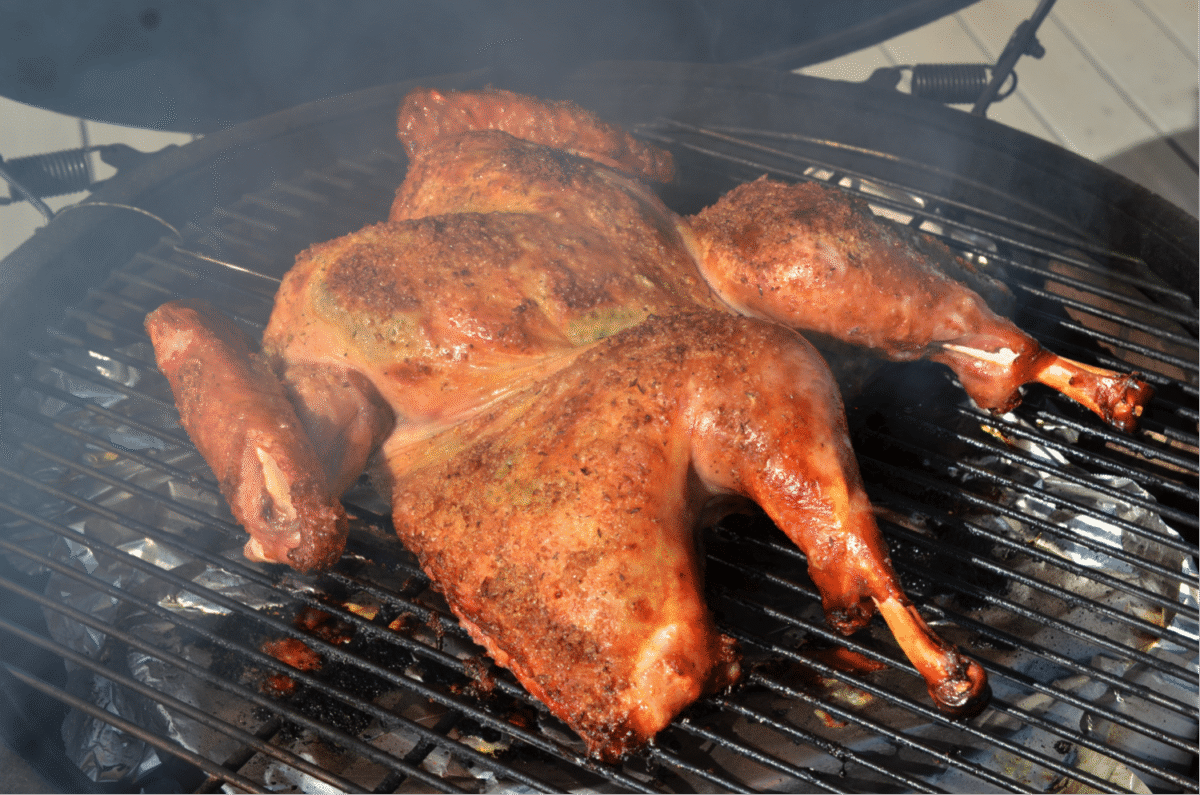
Position the turkey breast side up on the grill grate. Ensure it sits over indirect heat to prevent burning. Close the grill lid to maintain temperature. This setup helps the turkey cook evenly.
Managing Heat And Smoke
Keep the grill temperature between 325°F and 350°F. Add charcoal every hour to maintain heat. Use wood chips for added smoky flavor. Soak the chips in water before placing them on the coals. This will create steady smoke for your turkey.
Basting And Monitoring
Baste the turkey every 45 minutes. Use melted butter or a marinade for added flavor. Regular basting keeps the turkey moist and flavorful. Monitor the internal temperature with a meat thermometer. Aim for 165°F in the thickest part of the turkey. This ensures safe and delicious results.
Checking Doneness
Checking the doneness of your charcoal grilled turkey is crucial to ensure it’s juicy, safe to eat, and packed with flavor. Overcooking can dry out the meat, while undercooking poses health risks. Paying close attention during this stage will help you serve a bird that impresses every guest.
Using A Meat Thermometer
A meat thermometer is your best friend when grilling turkey over charcoal. Insert the probe into the thickest part of the thigh, avoiding the bone, for the most accurate reading.
The internal temperature should reach 165°F (74°C)to guarantee the turkey is safe to eat. If you want the breast to stay moist, aim for around 160°F and let carryover heat finish the cooking.
Don’t rely on guesswork or cooking times alone—temperatures can vary depending on the grill and size of your bird. Have you ever sliced into a turkey only to find it pink in the middle? A thermometer prevents that disappointment.
Signs Of Perfectly Cooked Turkey
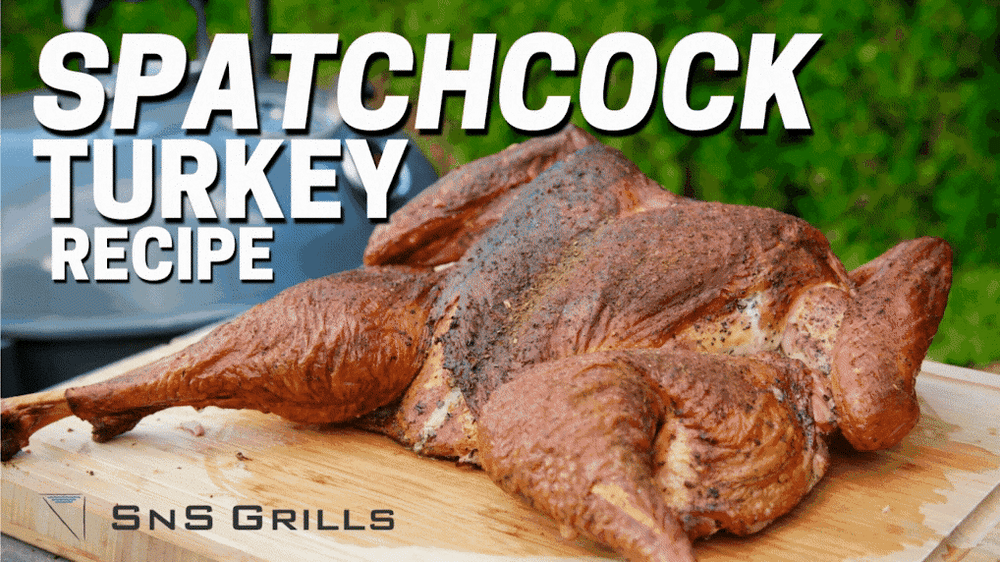
Besides temperature, some visible and tactile clues tell you your turkey is done. The skin should be golden brown and crispy, a sign that the charcoal heat did its job well.
When you pierce the thickest part of the meat, the juices should run clear, not pink or red. This simple test can save you from serving undercooked poultry.
Also, the meat should feel firm but still spring back slightly when pressed. Too soft means it needs more time; too hard indicates it might be overcooked.
Next time you grill, try combining these signs with a thermometer reading. You’ll quickly build confidence in knowing exactly when your turkey is ready to come off the grill.
Resting And Carving
After the turkey has finished grilling over charcoal, the next crucial steps are resting and carving. These stages can make or break your entire meal experience. Taking the right approach here ensures juicy meat and a beautiful presentation.
Importance Of Resting
Resting lets the turkey's juices redistribute evenly throughout the meat. Cutting into it too soon causes those flavorful juices to spill out, leaving your turkey dry.
Try covering the turkey loosely with foil and let it rest for at least 20 to 30 minutes. This simple pause improves texture and makes carving easier.
Have you noticed how some turkeys seem to shrink after carving? Resting helps reduce that shrinkage by allowing the muscle fibers to relax.
Best Carving Techniques
Start carving by removing the legs and thighs first. Cutting along the natural joints makes this process smoother and keeps the meat intact.
Next, slice the breast meat against the grain into even pieces. This helps maintain tenderness and makes each bite enjoyable.
Use a sharp carving knife and steady your bird with a fork or carving tool. This keeps your cuts precise and safer.
- Remove the drumsticks by pulling away from the body and cutting through the joint.
- Slice the thighs off the bone for easy serving.
- Cut thin, even slices of breast meat across the grain for maximum juiciness.
- Don’t forget to carve the wings last—they’re a tasty bonus.
Have you tried resting and carving differently in the past? Experimenting with timing and technique can elevate your turkey grilling game dramatically.
Troubleshooting Common Issues
Common problems like uneven cooking or flare-ups can spoil your turkey. Watch the grill temperature closely and adjust vents to keep heat steady. Using a drip pan helps prevent flare-ups and keeps the bird juicy.
Grilling a turkey on a charcoal grill can be a challenge. Various issues might arise during the cooking process. Knowing how to troubleshoot these can save the day. Here's how to tackle some common problems.
Dry Turkey Fixes
A dry turkey can ruin a meal. To prevent dryness, brine the turkey before grilling. This adds moisture and flavor. If the turkey is already dry, use a butter or broth injection. This restores some moisture. Cover the turkey with foil to retain juices. Let it rest before serving.
Uneven Cooking Solutions
Uneven cooking can occur with charcoal grills. Rotate the turkey every 30 minutes. This ensures even exposure to heat. Use a meat thermometer to check different parts. Ensure all areas reach safe temperatures. Adjust charcoal placement if needed. Create an indirect heat zone for better control.
Handling Flare-ups
Flare-ups are common with charcoal grills. They happen when fat drips onto hot coals. Keep a spray bottle with water handy. Mist the flames to control them. Avoid opening the grill lid too often. This reduces oxygen, which fuels flare-ups. Trim excess fat from the turkey before grilling. This minimizes dripping onto coals.
Tips For Flavor Variations
Adding different flavors to your charcoal-grilled turkey can turn a simple meal into an unforgettable feast. Experimenting with marinades, herbs, and smoking techniques lets you create unique taste profiles that suit your style. Ready to surprise your taste buds and impress your guests? Let’s dive into some practical tips for flavor variations that work every time.
Marinades And Injectables
Marinating your turkey adds moisture and infuses flavor deep into the meat. A simple mix of olive oil, lemon juice, garlic, and soy sauce can brighten the turkey’s natural taste. You can also try injecting a blend of melted butter, garlic powder, and chicken broth directly into the breast for juiciness.
Don’t limit yourself to just one marinade. Switch it up with different bases like apple cider vinegar or buttermilk to tenderize and add tang. How often do you think about injecting flavor instead of just rubbing it on the surface?
Herbs And Spices Combinations
Herbs and spices bring complexity to your turkey’s flavor. Classic combos like rosemary and thyme pair beautifully with poultry. Add a pinch of smoked paprika or cumin to introduce a subtle smoky or earthy note.
- Try mixing sage, garlic powder, onion powder, and black pepper for a traditional roast flavor.
- Combine chili powder, coriander, and brown sugar for a sweet and spicy kick.
- Use fresh herbs like tarragon or oregano in your rub for a bright, aromatic touch.
Have you experimented with fresh versus dried herbs? Fresh herbs can add a vibrant pop, while dried ones offer concentrated flavor that stands up to grilling heat.
Smoking Enhancements
Adding wood chips to your charcoal grill creates a smoky aroma that elevates the turkey’s taste. Hickory and applewood are popular choices that impart a mild, sweet smoke.
Soaking your wood chips in water or flavored liquids like apple juice before placing them on the coals can extend the smoke time and add subtle hints to your bird. Don’t be afraid to mix woods—mesquite with cherry, for example—for a layered smoke flavor.
What wood flavors have you found pair best with turkey? Experiment with different woods and notice how the smoke changes the character of your grill session.
Frequently Asked Questions
How Long To Charcoal Grill A Turkey?
Charcoal grilling a turkey usually takes 2. 5 to 4 hours. Cooking time depends on turkey size and grill temperature. Maintain a steady 325°F for even cooking. Use a meat thermometer to check for 165°F internal temperature. This ensures the turkey is safe and juicy.
What Charcoal Type Is Best For Grilling Turkey?
Use natural lump charcoal for grilling turkey. It burns hotter and cleaner than briquettes. Lump charcoal adds a mild smoky flavor without chemicals. Avoid charcoal with additives or quick-light chemicals for the best taste. Proper charcoal choice enhances the turkey’s flavor and texture.
How To Maintain Temperature On A Charcoal Grill?
Control airflow using grill vents to maintain temperature. Open vents increase heat, close them to reduce it. Add charcoal gradually to keep a steady 325°F. Use a grill thermometer to monitor heat consistently. Managing temperature prevents turkey overcooking or drying out.
Should I Brine Turkey Before Charcoal Grilling?
Yes, brining turkey before grilling improves moisture and flavor. A saltwater brine helps turkey stay juicy during long cooking. Brine for 12 to 24 hours in the fridge. Rinse and pat dry before grilling to avoid flare-ups. Brining enhances tenderness and taste significantly.
Conclusion
Charcoal grilling a turkey brings rich, smoky flavor to your meal. Keep the grill temperature steady and watch the turkey closely. Use a meat thermometer to check for doneness. Rest the bird before carving to keep it juicy. This method adds a special touch to any feast.
Enjoy the delicious results with family and friends. Give it a try, and your turkey will impress everyone at the table. Simple steps, great taste.