If you use a Husky folding utility knife, knowing how to change the blade quickly and safely is a game-changer. A sharp blade makes every cut cleaner and easier, while a dull one can slow you down and even cause accidents.
In this guide, you’ll learn simple steps to replace your blade without any hassle. By the time you finish reading, you’ll save time, avoid frustration, and keep your knife working like new. Ready to master this essential skill? Let’s get started.

Credit: www.ebay.com
Tools Needed
Changing the blade in a Husky folding utility knife is simple with the right tools. Having the correct items ready makes the process faster and safer. This section explains the tools needed to change the blade effectively.
New Replacement Blade
Always use a sharp, new blade designed for your Husky utility knife. Dull blades can cause accidents and reduce cutting efficiency.
Screwdriver Or Allen Wrench
Some Husky knives have screws holding the blade in place. A small screwdriver or Allen wrench helps loosen and tighten these screws.
Protective Gloves
Wear gloves to protect your hands from sharp edges during blade removal and installation. It reduces the risk of cuts.
Clean Cloth
Use a clean cloth to wipe dirt and debris from the knife. This keeps the blade area clean and prevents damage.
Safety Precautions
Ensure the knife is closed before replacing the blade. Wear protective gloves to prevent accidental cuts. Keep fingers away from the blade's edge, and secure the knife firmly while changing it.
Changing the blade in your Husky Folding Utility Knife can seem like a straightforward task, but taking the right safety precautions ensures you avoid unnecessary injuries. The utility knife is a powerful tool, and even a momentary lapse in attention can lead to accidents. Before you begin, it's essential to prepare your workspace and mindset for a safe blade change.
Ensure A Stable Workspace
Choose a flat, stable surface where you can place the knife and new blade. Avoid cluttered areas that can cause distractions or lead to misplaced tools. A clear workspace minimizes the risk of accidentally knocking over the knife or new blade.
Use Protective Gear
Consider wearing gloves to protect your hands from accidental cuts. While handling the blade, ensure your gloves allow for a firm grip and dexterity. Safety glasses can also be helpful if there’s a risk of flying debris.
Keep The Knife Locked
Before you start, make sure the knife is in the locked position. This step prevents the blade from slipping out unexpectedly. A locked knife is safer to handle and reduces the risk of injury during the blade change.
Handle With Care
Always hold the knife by the handle, not the blade. When removing or inserting a blade, grip it carefully by the dull edge. This approach minimizes the risk of cuts and ensures better control over the blade.
Dispose Of Old Blades Properly
Don't just toss the used blade into the trash. Place it in a blade disposal container or wrap it securely in heavy-duty tape. This prevents injury to anyone handling the trash later on.
Stay Focused
Eliminate distractions and focus entirely on the task at hand. Whether it’s turning off your phone or stepping away from a noisy environment, maintaining focus is key. Remember, even a brief distraction can lead to serious injury. By following these safety precautions, you ensure not only your safety but also the longevity of your utility knife. Have you ever skipped a safety step and regretted it? Share your experiences or thoughts on how you stay safe while handling sharp tools.
Locate The Blade Release
Locating the blade release on your Husky Folding Utility Knife is the first crucial step to changing the blade safely and efficiently. This release mechanism is designed for quick access, but it can be tricky to find if you’re not familiar with the knife’s layout. Knowing exactly where to look saves time and prevents accidental cuts.
Most Husky Folding Utility Knives have a small button or lever near the handle that serves as the blade release. This component is usually easy to spot once you know what to look for—often a textured or slightly raised area that you can press or slide. Identifying this part correctly ensures you won’t struggle or force anything, which could damage the knife or cause injury.
Identifying The Release Button Location
The blade release button is commonly placed on the side of the handle. It might be near the pivot point where the blade folds in. You can feel for a small bump or ridge that stands out from the smooth surface of the handle.
Try pressing this area gently with your thumb. If the blade doesn’t move, check for a sliding switch instead. Some models use a slide instead of a button to unlock the blade.
Using Visual And Tactile Cues
Look closely for any markings or symbols near the blade release; Husky often uses arrows or icons. These cues guide your fingers to the exact spot without needing to guess. If you have trouble seeing the details, run your finger along the handle edges to detect changes in texture or shape.
What If You Can’t Find The Release?
Don’t force anything if the blade release isn’t obvious. Take a moment to examine the entire handle, especially near the blade’s base. Sometimes the release is hidden under a small cover or integrated into the knife’s locking mechanism.
Ask yourself: Could the knife model you own have a unique release method? Checking the model number against Husky’s official website or user manual can clarify this quickly. This extra step avoids unnecessary frustration and keeps you safe.

Credit: www.youtube.com
Remove The Old Blade
Removing the old blade from your Husky folding utility knife is a simple process. It keeps your tool safe and ready for the next cut. Always handle the blade carefully to avoid injury.
Open The Knife Handle
Locate the release button or slide mechanism on the knife handle. Press or slide it gently to open the handle. This exposes the blade compartment clearly.
Secure The Knife For Safety
Hold the knife firmly on a flat surface. This prevents slipping while you remove the blade. Use gloves if you want extra protection.
Carefully Remove The Old Blade
Grip the blade near the base without touching the sharp edge. Pull the blade straight out from the slot. Avoid twisting or bending the blade.
Dispose Of The Old Blade Safely
Place the old blade in a blade disposal container or wrap it in thick paper. This prevents accidents. Never throw loose blades in the trash.
Insert The New Blade
Inserting a new blade in your Husky folding utility knife is simple and quick. This step ensures your knife cuts smoothly and safely. Follow these clear instructions to place the blade correctly without any hassle.
Open The Knife Blade Compartment
Hold the knife firmly. Find the blade compartment release button or latch. Press or slide it gently to open the blade holder. Be careful to avoid sharp edges inside the compartment.
Position The New Blade Correctly
Take the new blade out of its packaging carefully. Align the blade's hole or notch with the knife’s locking mechanism. Ensure the sharp edge faces outward, ready for use. Proper alignment prevents blade movement during cutting.
Secure The Blade In Place
Push the blade firmly into the holder until it clicks or locks. Check that the blade does not wiggle or move. A secure blade improves safety and cutting accuracy. Close the blade compartment fully after inserting the blade.
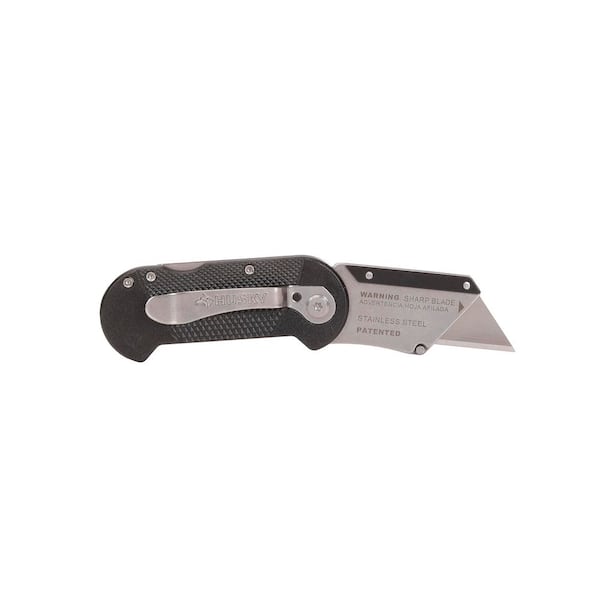
Credit: www.homedepot.com
Secure The Blade
Securing the blade in your Husky Folding Utility Knife is essential for safe use. A loose blade can slip and cause injuries. Properly locking the blade ensures stability and control during cutting tasks.
Take your time to make sure the blade is firmly in place. This step protects you and extends the knife's lifespan.
Check The Blade Alignment
Ensure the blade fits correctly into the slot. The blade should sit straight without any wobbling. Misaligned blades can slide out unexpectedly.
Engage The Locking Mechanism
Push the blade until you hear a click or feel it lock. This sound confirms the blade is secure. Do not use the knife if the blade moves after locking.
Test The Blade Stability
Gently wiggle the blade to test its firmness. A secure blade stays still and does not shift. If the blade moves, repeat the locking process.
Use The Safety Features
- Activate the safety latch if your model has one.
- This latch prevents accidental blade release.
- Always engage safety features before storing the knife.
Test The Knife
Testing the Husky folding utility knife after changing the blade is crucial. It ensures the blade is secure and cuts smoothly. This step helps avoid accidents and improves your work quality.
Check the blade’s stability before using it on any material. A loose blade can slip and cause injury. Confirm the blade locks firmly in place. Also, test the cutting action gently to feel the blade’s sharpness and alignment.
Check Blade Security
- Hold the knife firmly by the handle.
- Try to move the blade side to side.
- Make sure it doesn’t wobble or shift.
- Blade should feel tight and stable.
Perform A Light Cut
- Use a piece of scrap cardboard or paper.
- Cut slowly with moderate pressure.
- Notice if the blade cuts cleanly and evenly.
- Stop if the blade slips or drags.
Inspect Blade Alignment
- Look along the blade edge carefully.
- Blade should be straight and centered.
- Misaligned blades can cause uneven cuts.
- Adjust or replace the blade if needed.
Maintenance Tips
Proper maintenance keeps your Husky folding utility knife working smoothly. Regular care prevents blade damage and extends tool life. Follow these simple tips to keep your knife in top condition.
Keep The Blade Clean
Remove dirt and debris after each use. Wipe the blade with a damp cloth. Avoid harsh chemicals that can cause rust or corrosion. Dry the blade completely before storing it.
Lubricate The Folding Mechanism
Apply a small drop of light oil to the hinge. This helps the blade open and close smoothly. Wipe away any excess oil to avoid attracting dirt.
Store The Knife Safely
Keep the knife in a dry place to prevent rust. Use the blade lock when storing to avoid accidents. Avoid leaving the knife in damp or humid areas.
Inspect The Blade Regularly
Check the blade for dullness or damage before use. Replace the blade if it is chipped or blunt. A sharp blade improves cutting efficiency and safety.
Frequently Asked Questions
How Do I Safely Remove The Blade From Husky Knife?
To safely remove the blade, first ensure the knife is closed. Then, press the blade release button and carefully pull out the blade. Always handle the blade by its dull side to avoid cuts. Dispose of old blades in a safe container.
What Tools Are Needed To Change Husky Utility Knife Blade?
No additional tools are required to change the blade on a Husky folding utility knife. The knife features a built-in blade release mechanism for easy and tool-free blade replacement.
How Often Should I Change The Blade In My Husky Knife?
Change the blade when it becomes dull or shows signs of wear. Frequent use may require blade replacement every few weeks to maintain optimal cutting performance.
Can I Use Any Blade Type In Husky Folding Utility Knife?
Use only blades compatible with Husky folding utility knives. Standard utility blades designed for folding knives will fit properly and ensure safe and effective cutting.
Conclusion
Changing the blade in your Husky folding utility knife is simple and quick. Follow each step carefully to avoid accidents. Always handle the blade with care. Keep your knife clean for smooth blade changes. Using a sharp blade makes cutting easier and safer.
Practice this process a few times to feel confident. Now, you can change blades anytime without trouble. This skill helps your knife last longer and work better. Stay safe and enjoy your cutting tasks!