Grilling the perfect hamburger can make all the difference between a good meal and a great one. You want juicy, flavorful patties with just the right amount of char.
But how long do you grill hamburgers on a gas grill to get that ideal result? If you’ve ever found yourself guessing or ending up with dry or undercooked burgers, this guide is for you. Keep reading, and you’ll learn the simple timing secrets that will help you grill burgers like a pro every time.
Your next cookout will never be the same.
Choosing The Right Burger Thickness
Choosing the right burger thickness plays a big role in grilling success. The thickness affects cooking time and how well the burger cooks inside and out. Thinner patties cook faster but can dry out quickly. Thicker patties stay juicy but need more time on the grill. Knowing the difference helps you get the perfect burger every time.
Standard Vs. Thick Patties
Standard patties usually measure about 3/4 inch thick. They cook evenly and fast, making them ideal for quick grilling. Thick patties are around 1 to 1 1/2 inches thick. They need more attention to cook properly without burning outside.
- Standard patties: cook quickly, crisp edges, less juicy
- Thick patties: longer cook time, juicy center, risk of uneven cooking
Impact On Cooking Time
The thickness of your burger changes grilling time a lot. A standard patty takes about 4-5 minutes per side on medium-high heat. Thick patties need about 6-7 minutes per side. You can use a meat thermometer to check doneness:
- Medium-rare: 130-135°F (54-57°C)
- Medium: 140-145°F (60-63°C)
- Well done: 160°F (71°C) and above
Thicker burgers need lower heat or indirect grilling to cook through without burning. Patience is key for juicy results.

Credit: parade.com
Preparing The Gas Grill
Preparing your gas grill properly is key to cooking perfect hamburgers. It sets the foundation for even cooking and helps you avoid common grilling mistakes. Taking a few moments to get your grill ready can make all the difference in flavor and texture.
Preheating The Grill
Start by turning on your gas grill and letting it heat up for at least 10-15 minutes. This ensures the grates are hot enough to sear the burgers, locking in juices and creating those appealing grill marks.
Don’t rush this step. I once tried grilling without proper preheating, and the patties stuck badly, falling apart when I tried to flip them. A well-preheated grill prevents sticking and cooks the burgers evenly.
Setting The Temperature
Set your grill to medium-high heat, typically around 375°F to 400°F (190°C to 205°C). This temperature range is ideal for cooking hamburgers that are juicy inside and nicely browned outside.
Too high, and the outside will burn before the inside cooks. Too low, and you’ll lose that signature grilled flavor and risk drying out the meat. Adjust the burners to maintain a consistent temperature throughout cooking.
Grilling Times For Different Doneness Levels
Grilling hamburgers to the perfect doneness depends largely on timing and temperature control. Each level of doneness calls for a specific grilling duration to achieve the ideal taste and texture. Understanding these times helps you serve burgers that match your or your guests’ preferences every time.
Rare And Medium-rare Burgers
Rare burgers need just enough heat to warm the meat while keeping the center red and juicy. Grill your patties for about 2 to 3 minutes per side over high heat. This short cooking time preserves the natural flavor and tenderness.
If you prefer medium-rare, increase the grilling time slightly to around 3 to 4 minutes per side. The center will be pink and warm but still very moist. Have you noticed how a quick sear locks in the juices? That’s the key to a flavorful burger.
Medium And Medium-well Burgers
Medium burgers require a bit more patience—aim for 4 to 5 minutes per side. The center should be mostly pink with a hint of red in the middle. This level balances juiciness and firmness.
Medium-well burgers take about 5 to 6 minutes on each side. The pink will fade to a light brown, and the texture firms up noticeably. If you’re grilling for a crowd with mixed preferences, this is often the safest bet.
Well-done Burgers
Well-done burgers need 6 to 7 minutes per side, cooked on medium heat to avoid burning the outside before the inside cooks through. Expect a fully brown center with no pink, and a firmer texture overall. It’s crucial to watch your grill closely here—overcooking can dry out your burger quickly.
Have you tried using a meat thermometer? For well-done, look for an internal temperature of 160°F (71°C) to ensure safety without sacrificing too much moisture.
Tips For Even Cooking
Grill hamburgers for about 4-5 minutes on each side over medium heat. Avoid pressing the patties to keep them juicy. Use a meat thermometer to check for a safe internal temperature of 160°F.
Grilling hamburgers on a gas grill can be a delightful experience, but achieving that perfect, even cook requires a bit of finesse. Ensuring your burgers are cooked uniformly not only enhances flavor but also provides that juicy, mouth-watering texture everyone loves. With a few simple tips, you can master the art of grilling and impress your friends at your next barbecue.
Flipping Techniques
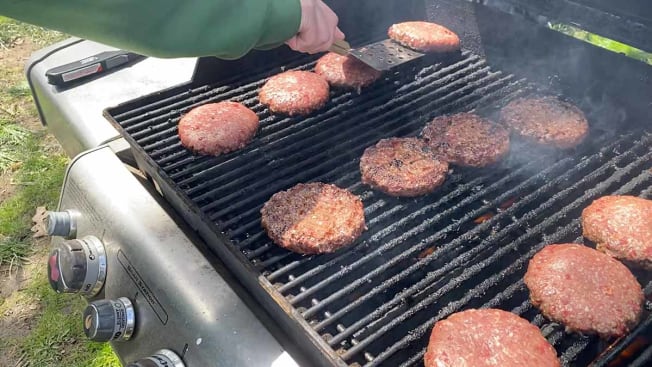
Flipping your burgers is an essential part of grilling, but timing is everything. Flip the patties just once during the entire grilling process. This minimizes moisture loss and helps in even cooking. Use a wide spatula to make the flip. This ensures the patty remains intact, preserving the juices inside. Are you tempted to flip too soon? Wait until the edges start to firm up and the juices pool on the surface.
Avoiding Pressing The Patties
Ever caught yourself pressing down on the burgers with a spatula? Resist the urge. While it might sound satisfying, it squeezes out the precious juices, leaving your burgers dry. Instead, focus on maintaining a steady grill temperature. Consistent heat ensures the patties cook evenly without needing additional pressure. Wondering about grill marks? They’ll come naturally with time and patience, without the need for pressing. Remember, a juicy burger is better than a perfectly marked one. By following these simple techniques, you'll find that grilling hamburgers becomes more intuitive and rewarding. The next time you fire up the grill, keep these tips in mind for a perfect patty every time.
Checking Burger Doneness Safely
Checking burger doneness safely is key to enjoying a tasty and safe meal. Proper doneness ensures harmful bacteria are killed. It also keeps the burger juicy and flavorful.
Using reliable methods to check doneness helps avoid overcooking or undercooking. Two common ways are using a meat thermometer and observing visual and touch cues. Both methods help confirm the burger is cooked just right.
Using A Meat Thermometer
A meat thermometer gives the most accurate doneness check. Insert it into the burger’s center, avoiding bones or fat.
- For ground beef, the safe internal temperature is 160°F (71°C).
- Check temperature after about 4-5 minutes per side on a medium-high gas grill.
- Remove the burger once it reaches the safe temperature.
This tool prevents guesswork and keeps your burger safe to eat. It works for all grill types and burger thicknesses.
Visual And Touch Methods
Visual and touch checks help when you don’t have a thermometer. Look at the burger’s color and feel its firmness.
- The outside should be nicely browned with grill marks.
- Juices running clear indicate better doneness.
- Press the burger gently with a spatula or finger:
- Soft and squishy means rare or medium-rare.
- Firm but slightly springy means medium.
- Very firm means well done.
These signs guide you but are less precise than a thermometer. Use them along with cooking times for best results.
Resting Burgers After Grilling
After you pull your hamburgers off the gas grill, the work isn't quite done. Resting your burgers is a crucial step that many overlook, but it can make a big difference in flavor and juiciness. Taking a few moments to let your burgers rest allows the juices to redistribute evenly, making every bite more satisfying.
Why Resting Matters
Resting lets the juices inside the burger settle back into the meat instead of spilling out when you take a bite. Imagine cutting into a burger right off the grill and watching the juices run all over the plate—that’s lost flavor and moisture. Resting helps keep those tasty juices inside.
I've noticed that skipping this step makes the burger dryer and less enjoyable. It’s a small wait that pays off with richer flavor and a better texture. Plus, the burger’s temperature evens out, so you avoid those hot spots that can burn your mouth.
How Long To Rest
Give your burgers about 3 to 5 minutes to rest on a clean plate or cutting board. This short pause is enough time for the juices to redistribute without letting the burger cool down too much.
If you’re grilling several burgers, you can rest them all together by loosely covering with foil to keep warmth in. But avoid wrapping tightly, as that can cause the burger to steam and lose its nice crust.
Next time you grill, try resting your burgers and see if you notice the difference. Do you think those extra few minutes could make your burgers taste better?
Common Grilling Mistakes To Avoid
Grilling hamburgers on a gas grill seems straightforward, but common mistakes can ruin your meal. Avoiding these errors can make your burgers juicy, flavorful, and perfectly cooked every time. Let’s explore some pitfalls and how to steer clear of them.
Overcooking
One of the biggest grilling mistakes is overcooking. It’s easy to leave burgers on the grill too long, resulting in dry, tough patties.
Keep a close eye on the cooking time and use a meat thermometer to check doneness. Aim for an internal temperature of 160°F (71°C) for ground beef. Remember, you can always cook a little longer, but you can’t undo overcooking.
Undercooking
Undercooking is just as risky, especially with ground meat. Eating undercooked burgers can lead to foodborne illnesses.
Make sure your grill is hot enough to sear the outside while cooking the inside thoroughly. If you’re unsure, cut into one burger to check or rely on a meat thermometer to confirm safety.
Ignoring Grill Maintenance
How often do you clean your grill? Ignoring grill maintenance can cause uneven heating and sticking, making your burgers hard to flip and affecting taste.
Clean the grates before and after each use to remove grease and residue. A well-maintained grill heats evenly, so your burgers cook perfectly every time.
Credit: www.consumerreports.org
:strip_icc():format(webp)/kly-media-production/medias/5303803/original/004567900_1754127311-anna-barabanova-D2RlVIBazeY-unsplash.jpg)
Credit: en.liputan6.com
Frequently Asked Questions
How Long Should You Grill Hamburgers On A Gas Grill?
Grill hamburgers for about 4-5 minutes per side over medium-high heat. This ensures a juicy, well-cooked burger with a nice sear.
What Internal Temperature Is Ideal For Grilled Hamburgers?
Cook burgers to an internal temperature of 160°F (71°C) for safety. Use a meat thermometer to check doneness accurately.
Should You Flip Hamburgers More Than Once On A Gas Grill?
Flip burgers only once to retain juices and avoid drying out. Turning too often breaks up the patty and reduces flavor.
How Do Thickness And Temperature Affect Grilling Time?
Thicker patties need more time, roughly 6-7 minutes per side. High heat cooks faster but risks burning; medium heat is best.
Conclusion
Grilling hamburgers on a gas grill takes just minutes. Aim for about 4-5 minutes per side for medium doneness. Check the meat’s color and juices to know when it’s ready. Avoid pressing the patties to keep them juicy. Let burgers rest a few minutes after grilling.
This helps the juices spread evenly inside. Simple steps lead to tasty, well-cooked burgers every time. Enjoy your meal with confidence and ease.