Are you wondering how long you need to cook corned beef in a pressure cooker to get it tender and full of flavor? Cooking corned beef can take hours on the stove, but with a pressure cooker, you can cut that time down significantly.
The right cooking time is key to making sure your corned beef is juicy and easy to slice, not tough or dry. You’ll discover the perfect pressure cooking time that saves you time and delivers delicious results every time. Keep reading to make your next meal a tasty success without the wait!
Choosing The Right Corned Beef Cut
Choosing the right cut of corned beef is key to getting the perfect texture and flavor when using a pressure cooker. Not all briskets are created equal, and understanding the differences can save you from a tough or overly soft meal.
Think about what you want from your corned beef—do you prefer it leaner, fattier, or somewhere in between? Your choice affects cooking time and the final taste.
Brisket Types
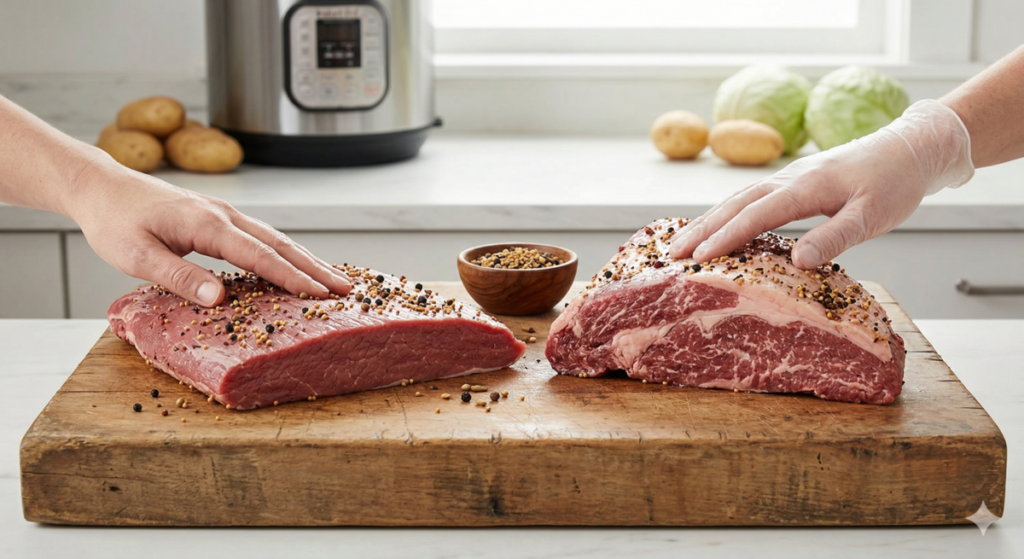
Corned beef usually comes from two main brisket cuts: the flat cut and the point cut. The flat cut is leaner with a uniform shape, making it easier to slice. It’s a great choice if you want neat, even servings.
The point cut has more marbling and fat, which means extra flavor and tenderness after cooking. However, it can be a bit tougher to slice and may require longer cooking in your pressure cooker.
Have you noticed how some corned beef melts in your mouth while others feel stringy? That difference often comes down to which brisket cut was used.
Size And Thickness Impact
The size and thickness of your corned beef directly influence how long you need to cook it under pressure. A thicker brisket demands more time to reach the right tenderness, while smaller pieces cook faster.
Pressure cookers work efficiently, but they don’t magically make thick cuts tender in just a few minutes. If you pick a brisket that’s three inches thick or more, expect to add extra cooking time.
Consider slicing your brisket into smaller portions if you want to speed up the process. This also helps the seasoning and brine penetrate better during cooking.
Preparing Corned Beef For Pressure Cooking
Preparing corned beef correctly before pressure cooking helps improve its flavor and texture. Taking a few simple steps ensures the meat cooks evenly and tastes delicious. Proper preparation also reduces excess salt and removes unwanted bits.
Rinsing And Trimming
Start by rinsing the corned beef under cold water. This removes the brine and excess salt from the surface. Pat the meat dry with paper towels afterward. Check for any thick fat layers or silver skin. Trim off these parts carefully to avoid chewy bites. Removing excess fat also helps the seasoning penetrate better during cooking.
Seasoning And Spices
Pressure cooking intensifies flavors, so use spices wisely. Add classic spices like bay leaves, peppercorns, and mustard seeds. (Or grab a pre-mixed corned beef pickling spice to save time!) Garlic and onion powder can boost taste without extra effort. You may also include whole cloves or crushed red pepper flakes for more aroma. Rub the seasoning evenly over the meat. For best results, tie the spices in a small cheesecloth bag. This makes removal easy after cooking.
Setting Up The Pressure Cooker
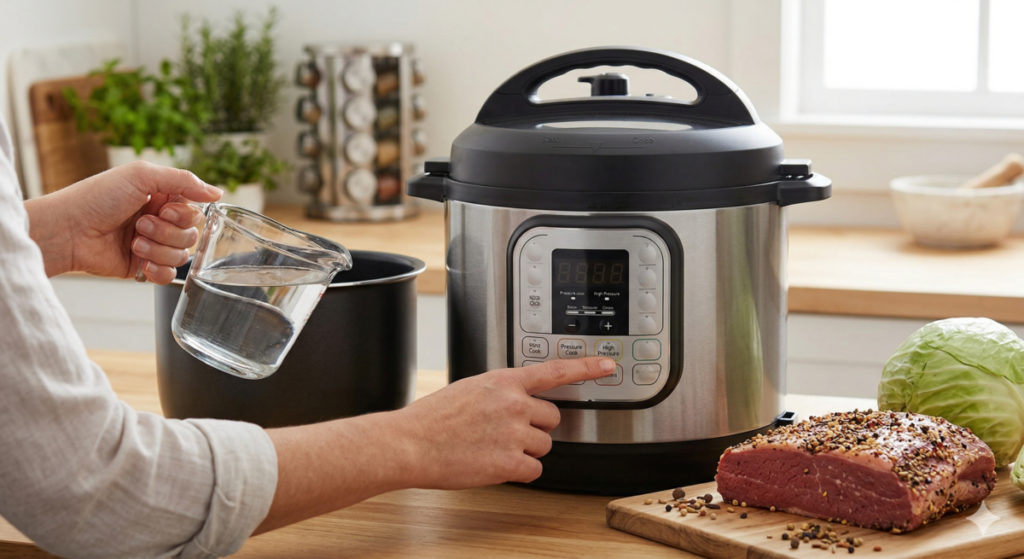
Setting up your electric pressure cooker correctly is key to cooking corned beef well. Proper setup helps the meat cook evenly and stay tender. It also ensures safety and efficient use of the cooker. Before you start, clean the cooker and check all parts are in good condition. Follow your pressure cooker’s manual for specific instructions. Now, focus on the two main points: liquid requirements and pressure settings.
Liquid Requirements
Pressure cookers need enough liquid to create steam. For corned beef, use at least 1 to 1.5 cups of water or broth. The liquid should cover the bottom of the cooker but not submerge the meat fully. This helps the cooker reach pressure quickly and keeps the beef moist. You can add spices, onions, or garlic to the liquid for extra flavor.
Pressure Settings
Set your pressure cooker to high pressure for corned beef. High pressure cooks the meat faster and breaks down tough fibers. Most cookers have a high-pressure setting around 10 to 12 psi. Keep the pressure steady during cooking to ensure even heat. Once cooking ends, allow the pressure to release naturally for the best texture.
Cooking Times For Different Cuts
Cooking corned beef in a pressure cooker saves time, but the cooking duration varies depending on the cut you choose. Different cuts have different thicknesses and fat content, which influence how long they need to become tender and flavorful. Knowing the right cooking time for your specific cut helps you avoid overcooking or undercooking your meal.
Small Vs Large Cuts
Small cuts of corned beef, such as brisket pieces under 2 pounds, usually take about 60 to 70 minutes in a pressure cooker. They cook quickly because the heat penetrates faster through the meat.
Large cuts, like a whole 4 to 5-pound brisket, require more time—typically 90 to 100 minutes—to become tender. The thicker the cut, the longer the pressure cooker needs to break down the tough fibers.
If you’re in a rush, cutting a large brisket into smaller chunks can speed up cooking without sacrificing flavor. Have you tried this approach to save time in your kitchen?
Frozen Vs Fresh Corned Beef
Pressure cooking frozen corned beef is convenient but requires additional time. Plan to add about 15 to 20 minutes more than you would for fresh meat.
For example, if a fresh 3-pound brisket cooks in 80 minutes, a frozen one might need around 95 to 100 minutes. This extra time allows the meat to thaw and cook evenly under pressure.
Cooking frozen corned beef directly in the pressure cooker can be a lifesaver on busy days. Just be sure to adjust the timing to avoid a chewy texture or uneven cooking.
Checking Doneness And Texture
Check the corned beef by piercing it with a fork; it should be tender and easy to pull apart. The texture must be soft but not mushy for the best taste.
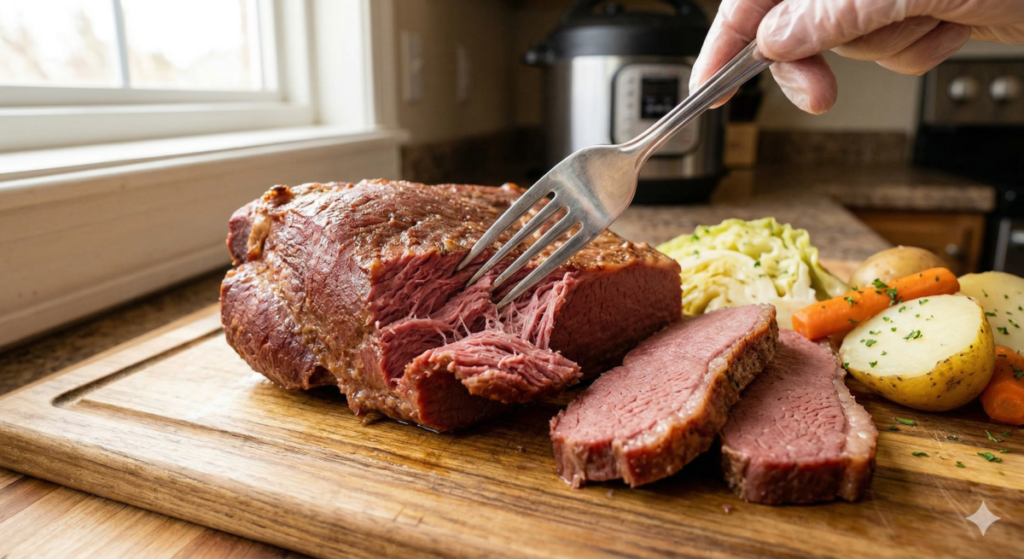
Cooking corned beef in a pressure cooker is a game-changer for many home cooks. The real trick, however, is knowing when your corned beef is perfectly done and has the right texture. Too tough, and it can be a chore to chew; too soft, and it loses its integrity. So, how do you strike that perfect balance?
Visual Indicators
Start by observing the corned beef's surface. It should have a rich, even color and appear moist without looking waterlogged. If the beef looks dry or shriveled, it may be overcooked. When you slice into the meat, the fibers should separate easily but not fall apart. Picture this: a slice that holds its shape but melts in your mouth. That's the sweet spot you're aiming for.
Using A Meat Thermometer
A meat thermometer is your best friend when ensuring that the beef is cooked to perfection. Insert the probe into the thickest part of the meat, avoiding any bones or fat. You're aiming for an internal temperature of about 145°F (63°C). This ensures that the beef is cooked through while still being juicy. Don't have a thermometer? Consider investing in a highly-rated meat thermometer on Amazon. It's a small purchase that can dramatically improve your cooking results.
Remember, cooking is an art as much as it is a science. Trust your senses but back them up with these tools. How do you ensure your corned beef is perfect every time?
Tips For Tender And Flavorful Corned Beef
Getting corned beef tender and flavorful in your pressure cooker depends on a few key steps beyond just cooking time. These tips can make a noticeable difference in texture and taste, ensuring your meal is juicy and satisfying every time. Let’s dive into how you handle the pressure release and resting phases, which are often overlooked but crucial.
Natural Release Vs Quick Release
Deciding between natural release and quick release affects how your corned beef finishes cooking and retains moisture. Natural release lets the pressure drop slowly, allowing the meat fibers to relax gently. This results in a more tender and juicy corned beef.
Quick release, on the other hand, forces the steam out rapidly. It can cause the meat to tighten and lose some moisture, leading to a tougher texture. Have you noticed your corned beef turning chewy after quick release? That’s why natural release is usually the better choice.
Resting Time After Cooking
Resting your corned beef after it’s done cooking is just as important as the cooking itself. Let the meat sit for at least 10 to 15 minutes before slicing. This pause lets the juices redistribute evenly throughout the meat, preventing them from spilling out when you cut into it.
Cutting too soon can leave you with dry slices, even if you cooked it perfectly. Think of resting as the final step that seals in all the flavors and tenderness you worked hard to achieve. Have you ever rushed to serve and ended up with less juicy meat? Try resting next time and taste the difference.
Common Mistakes To Avoid
Cooking corned beef in a pressure cooker is a quick and efficient way to get tender, flavorful meat. However, a few common mistakes can easily spoil your dish or make the process frustrating. Knowing what to avoid helps you achieve perfect results every time and saves you from wasting time and ingredients.
Overcooking Issues
Pressure cookers work fast, but it’s easy to overdo it. Overcooking corned beef can turn the meat mushy and dry, ruining its texture. Have you ever ended up with meat that falls apart too much or loses its bite? That happens when the cooking time is too long.
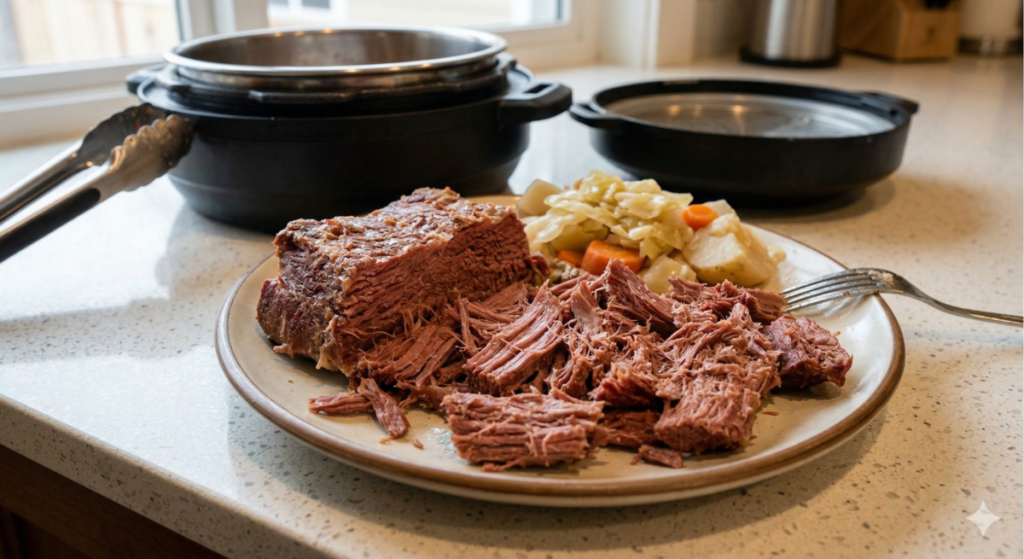
To prevent this, stick closely to recommended cooking times—usually around 70-90 minutes depending on the size of the brisket. Also, allow the pressure to release naturally for better tenderness. If you’re unsure, it’s better to undercook slightly and check, as you can always pressure cook a bit more if needed.
Insufficient Liquid
Pressure cookers rely on steam to build pressure, which means you need enough liquid inside. Skimping on liquid can cause your cooker to lose pressure or burn the meat at the bottom. Have you ever seen the “burn” warning pop up on your pressure cooker? That’s often due to too little liquid.
Use at least 1 to 2 cups of liquid such as water, broth, or a mixture with your pickling spices. This not only prevents burning but also infuses your corned beef with flavor. Remember, the liquid doesn’t just cook the meat—it creates the environment your pressure cooker needs to work properly.
Serving Suggestions
Serve corned beef hot, sliced thin against the grain for tender bites. (Pro tip: Use a sharp meat carving knife so your tender brisket doesn't shred!) Pair with boiled potatoes and cabbage for a classic meal. Let it rest a few minutes before cutting to keep juices inside.
Cooking corned beef in a pressure cooker is a time-saving trick, but knowing how to serve it can elevate your meal to a whole new level. Whether you prefer to stick with classic accompaniments or experiment with more creative options, serving suggestions can make your corned beef dish shine. Let's explore some delightful ways to enjoy your perfectly cooked corned beef.
Traditional Sides
Corned beef pairs beautifully with time-honored sides that enhance its rich, savory flavor. Classic cabbage and potatoes are a go-to combination. Simply steam or sauté them with a touch of butter and a sprinkle of salt and pepper. A side of warm, buttered rye bread can add a comforting touch. The hearty texture of the bread complements the tender meat, making each bite satisfying. If you're looking to add a pop of color and a hint of tanginess, consider serving a side of pickles or sauerkraut. Their acidity cuts through the richness of the beef, creating a balanced palate.
Creative Recipes
Why not turn your leftover corned beef into something extraordinary? Try making a corned beef hash by sautéing chopped onions, potatoes, and bell peppers. Add diced corned beef and fry until crispy for a hearty breakfast. Corned beef tacos can be a surprising hit. Fill soft corn tortillas with shredded corned beef, and top with coleslaw and a drizzle of spicy mustard for a modern twist. For a lighter option, toss shredded corned beef into a salad. Mix with fresh greens, cherry tomatoes, and a vinaigrette dressing for a refreshing meal. What are your favorite ways to serve corned beef? Experimenting with different sides and recipes can keep your meals exciting.
Frequently Asked Questions
How Long To Cook Corned Beef In A Pressure Cooker?
Cook corned beef in a pressure cooker for 70-90 minutes. Cooking time depends on meat size and thickness. Use high pressure and natural release for best results. This method tenderizes the beef quickly compared to slow cooking.
Can I Cook Frozen Corned Beef In A Pressure Cooker?
Yes, you can cook frozen corned beef in a pressure cooker. Add 10-15 minutes extra cooking time. Ensure the beef is fully submerged in liquid. This method saves thawing time while maintaining tenderness and flavor.
What Is The Best Pressure Cooker Setting For Corned Beef?
Use the high-pressure setting for corned beef in a pressure cooker. High pressure cooks the meat evenly and quickly. Always add enough liquid to prevent burning. High pressure ensures the corned beef becomes tender and juicy.
Should I Add Vegetables While Pressure Cooking Corned Beef?
Yes, add vegetables like potatoes and carrots in the last 10-15 minutes. Adding vegetables too early may overcook them. This approach keeps vegetables firm and flavorful. It also complements the corned beef perfectly.
Conclusion
Cooking corned beef in a pressure cooker saves time and effort. Usually, it takes about 70 to 90 minutes under high pressure. Check the meat’s tenderness before finishing. Rest the beef a few minutes after cooking for better flavor. This method gives you juicy, soft corned beef fast.
Perfect for a quick, tasty meal at home. Try this simple way next time you cook corned beef. You will enjoy great results every time.