Are you looking for a simple way to make perfect baked eggs every time? Baking eggs in a muffin pan is an easy, mess-free method that saves you time and effort.
But how long do you actually need to bake them to get that ideal texture—whether you like them soft and runny or firm and fully cooked? You’ll discover the exact baking times, helpful tips, and tricks to master this breakfast favorite.
Keep reading to make your mornings easier and tastier!
Choosing The Right Eggs
Choosing the right eggs can change your baking experience in a muffin pan. The quality and type of eggs affect texture, taste, and even cooking time. Let’s break down what you need to know before cracking those eggs into the pan.
Fresh Vs. Older Eggs
Fresh eggs hold their shape better when baked, making them ideal for muffin pan recipes. The whites stay firm, and yolks remain centered, resulting in a neater presentation. Older eggs tend to spread more and might produce runnier whites, which can affect baking time and final texture.
Have you ever noticed how fresh eggs feel thicker when cracked open? That’s because their albumen (egg white) is more viscous. Using fresh eggs can reduce the chance of overflow or uneven cooking in muffin cups.
Size And Type Considerations
Egg size matters more than you might think. Standard recipes usually call for large eggs. Using medium or extra-large eggs without adjusting baking time can lead to undercooked or overcooked results.
Consider the type of eggs as well—organic, free-range, or regular store-bought eggs can differ slightly in flavor and color. If you prefer a richer taste, try pasture-raised eggs; they often yield more vibrant yolks and a deeper flavor.
- Large eggs:Best for consistent baking times and textures.
- Medium eggs:May require slightly less baking time.
- Extra-large eggs:Expect longer baking or adjust recipe quantities.
Which type of egg do you usually use? Experimenting with different sizes and types might surprise you with how much they change your baked eggs in a muffin pan.
Preparing The Muffin Pan
Preparing your muffin pan correctly can make all the difference when baking eggs. The right preparation helps prevent sticking and ensures each egg comes out perfectly shaped and easy to remove. It also affects how evenly your eggs cook, so taking a little extra time here saves you frustration later.
Greasing Techniques
Greasing the muffin pan is essential to keep the eggs from sticking. You can use butter, oil, or non-stick spray—each works well but offers different results. Butter adds a subtle flavor and browns nicely, while oil or spray tends to create a slicker surface.
Apply your chosen grease evenly with a brush or paper towel to cover every nook and cranny. Don't skimp on this step; even small missed spots can cause eggs to stick. I once skipped greasing one cup and ended up with a messy clean-up that wasn’t worth the extra minute saved.
Using Liners Or Silicone Cups
Linings and silicone cups offer a great alternative to greasing. Paper liners are convenient and disposable, making cleanup a breeze. However, they can absorb moisture, sometimes affecting how the eggs cook.
Silicone cups are reusable and provide non-stick benefits without added fat. They also help eggs keep a uniform shape and can be easily popped out once cooked. If you bake eggs often, investing in silicone cups can save time and reduce waste.
Think about your priorities: Is quick cleanup more important, or do you prefer a reusable option that might change the texture slightly? Trying both options could help you find what fits your cooking style best.
Preheating The Oven
Preheating the oven is an important step before baking eggs in a muffin pan. It ensures the oven reaches the right temperature for even cooking. Starting with a hot oven helps the eggs cook evenly and prevents sticking. Skipping preheating can cause uneven texture and longer cooking times.
Optimal Temperature Settings
Set the oven to 350°F (175°C) for best results. This temperature cooks eggs gently without drying them out. Some recipes suggest 325°F (160°C) for softer eggs. For firmer eggs, try 375°F (190°C). Avoid temperatures above 400°F to prevent overcooking.
Oven Variations To Consider
Ovens can heat differently. Gas ovens may have hot spots. Electric ovens usually provide more even heat. Convection ovens circulate air and cook faster. Reduce the temperature by 25°F when using convection. Use an oven thermometer to check your oven’s accuracy. Adjust baking time based on your oven’s behavior.
Baking Time For Different Egg Styles
Baking eggs in a muffin pan is simple and quick. The baking time varies based on your desired egg style. Whether you prefer them soft, medium, or hard, there's a method to achieve perfect results. Let's explore the baking times for different egg styles.
Soft Baked Eggs
Soft baked eggs have a delicate texture. To achieve this, bake them for 8 to 10 minutes at 350°F. The whites should be set, but the yolk will remain slightly runny. This method is perfect for those who love a creamy yolk.
Medium Baked Eggs
Medium baked eggs strike a balance between soft and hard. Bake them for 12 to 14 minutes. The yolk will be firmer yet still soft in the center. This style is ideal for those who enjoy a slightly set yolk.
Hard Baked Eggs
Hard baked eggs are fully cooked throughout. Bake these for 15 to 18 minutes. Both the whites and yolks will be fully set. This option is great for those who prefer a firm texture.
Tips For Even Cooking
Getting your eggs perfectly cooked in a muffin pan is all about even heat and timing. Uneven cooking can leave some eggs rubbery while others are underdone. Paying attention to a few simple details can make a big difference in texture and taste.
Avoiding Overcooking
Overcooked eggs turn dry and rubbery, ruining the creamy texture you want. To prevent this, lower your oven temperature slightly and keep a close eye on the baking time. Using a muffin pan with a non-stick coating or silicone cups can also help eggs cook more evenly without sticking.
Another tip is to add a little milk or cream to the eggs before baking. This keeps them moist and less likely to overcook. Remember, eggs continue to cook a bit after you remove them from the oven, so pulling them out just before they look fully set is key.
Checking For Doneness
How do you know when your eggs are ready? Look for a firm but slightly jiggly center. If they’re too runny, they need more time; if they’re stiff, they’re overdone.
A quick poke test with a toothpick or fork works well—if it comes out clean, the eggs are done. You can also gently shake the pan; if the eggs wobble significantly, give them a couple more minutes.
Have you tried cutting into one muffin to check the inside? It’s a simple way to avoid guesswork and ensure even cooking throughout.
Credit: ourlovelanguageisfood.com
Adding Flavors And Ingredients
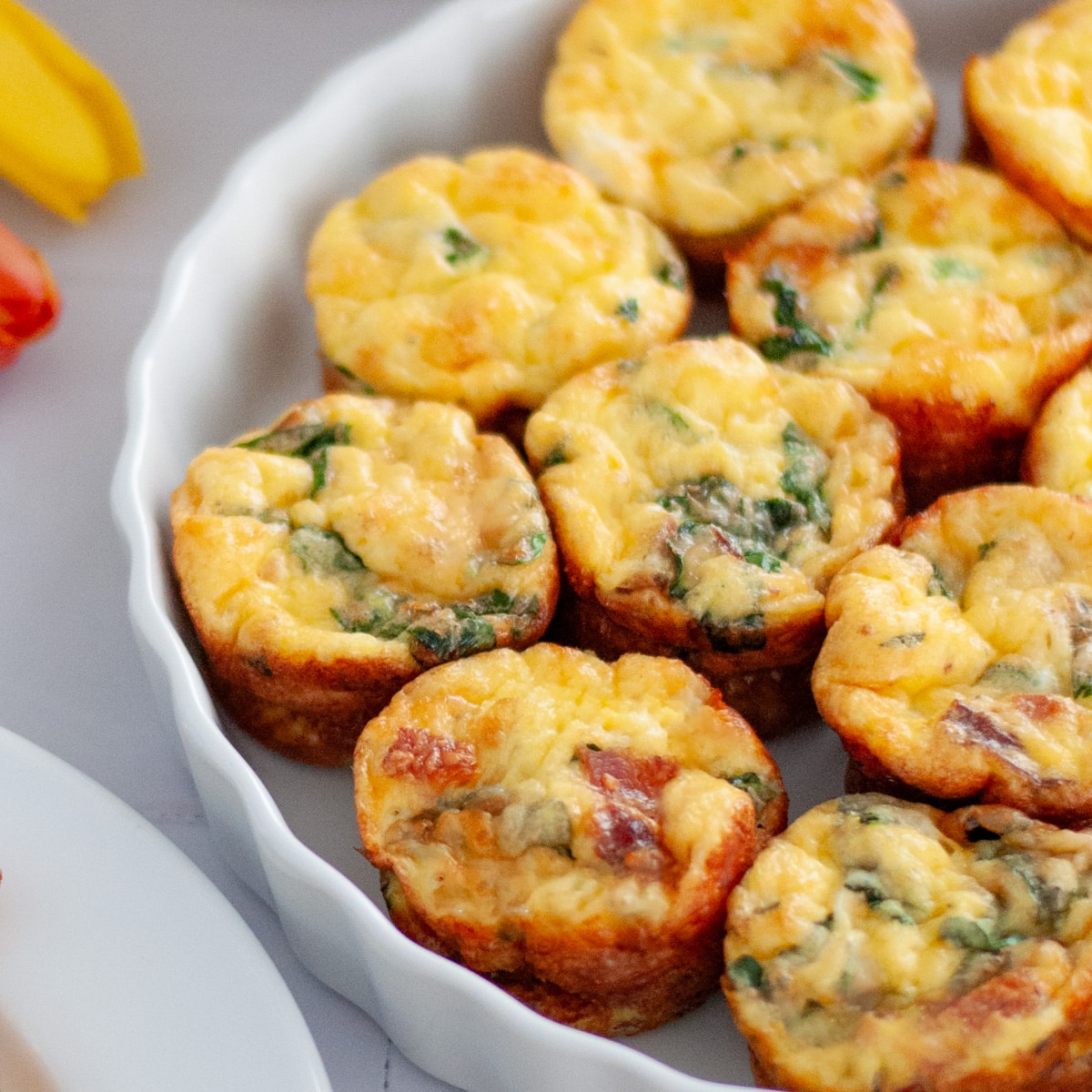
Adding flavors and ingredients to eggs baked in a muffin pan transforms a simple dish into a tasty meal. It allows creating endless varieties that suit every taste. Each addition brings texture, color, and nutrition. Mixing ingredients carefully ensures even cooking and great flavor.
Incorporating Vegetables
Vegetables add freshness and crunch to baked eggs. Chop them small to fit well inside muffin cups. Popular choices include bell peppers, spinach, tomatoes, and mushrooms. Pre-cook dense vegetables like onions or broccoli to soften them. Spread the vegetables evenly in each cup before pouring the egg mixture. This step helps avoid soggy bottoms and ensures every bite has veggies.
Using Cheese And Herbs
Cheese adds creaminess and a rich taste to baked eggs. Use shredded cheese like cheddar, mozzarella, or feta for best results. Sprinkle cheese over vegetables or mix it directly into the eggs. Fresh herbs such as parsley, chives, or basil brighten the flavor. Chop herbs finely and mix them with eggs or scatter on top before baking. Cheese and herbs melt and blend with eggs, creating a savory delight.
Serving And Storing Baked Eggs
Baked eggs in a muffin pan make a tasty and easy meal. Knowing how to serve and store them helps keep their flavor and texture fresh. Proper serving ideas make your meal more enjoyable. Storing baked eggs correctly saves time and reduces waste.
Best Serving Suggestions
- Top with fresh herbs like parsley or chives for extra taste.
- Serve with a side of toasted bread or English muffins.
- Add sliced avocado or tomatoes for a healthy boost.
- Pair with a light salad for a balanced meal.
- Use as a filling for breakfast sandwiches.
Storage Tips For Leftovers
- Cool baked eggs completely before storing.
- Place eggs in an airtight container to keep moisture out.
- Store in the refrigerator for up to 4 days.
- Reheat gently in the microwave or oven to avoid dryness.
- Freeze for longer storage; thaw overnight in the fridge before reheating.

Credit: www.tasteofhome.com

Credit: basilandbubbly.com
Frequently Asked Questions
How Long To Bake Eggs In A Muffin Pan?
Bake eggs in a muffin pan for 12 to 15 minutes at 350°F (175°C). This timing ensures fully cooked eggs with a soft texture.
What Temperature Is Best For Baking Eggs In Muffin Pans?
Set your oven to 350°F (175°C) for baking eggs in muffin pans. This temperature cooks eggs evenly without drying them out.
Can I Bake Eggs With Other Ingredients In A Muffin Pan?
Yes, you can add cheese, vegetables, or meats to eggs in a muffin pan. Bake for 15 to 18 minutes to ensure thorough cooking.
How Do I Prevent Eggs From Sticking In A Muffin Pan?
Grease the muffin pan with oil or non-stick spray before adding eggs. This prevents sticking and makes cleanup easier.
Conclusion
Baking eggs in a muffin pan takes about 15 to 20 minutes. This time ensures the eggs cook evenly and hold their shape. Use 350°F (175°C) for best results. Check eggs near the end to avoid overcooking. You can add veggies, cheese, or meat for extra flavor.
Baking eggs this way saves time and makes a tasty meal. Try different ingredients to find your favorite mix. Simple, quick, and delicious—baked eggs suit any busy morning.