Are you trying to figure out how much space your refrigerator really has? Knowing the cubic feet of your fridge can help you decide if it fits your kitchen, meets your storage needs, or even saves you money on energy bills.
But measuring it might seem tricky at first. Don’t worry—this guide will walk you through simple steps to measure the cubic feet of your refrigerator quickly and accurately. By the end, you’ll be confident in understanding your fridge’s capacity and making smarter choices for your home.
Keep reading to learn how!
Tools Needed
Before you start measuring the cubic feet of your refrigerator, gather the right tools to make the process smooth and accurate. Having the proper items on hand saves time and prevents mistakes. These tools are simple, but they make all the difference when you want precise measurements.
Measuring Tape
A measuring tape is your primary tool for this task. Choose one that is flexible yet sturdy, preferably with clear, easy-to-read markings in both inches and centimeters. This helps you measure the height, width, and depth of the refrigerator accurately, including the space inside if needed.
Don’t rush when measuring. Take your time to ensure the tape lies flat and straight along each dimension. Have you ever noticed how a slightly bent tape can throw off your numbers? That small error can change your whole calculation.
Calculator
Once you have your measurements, a calculator becomes essential to convert those numbers into cubic feet. Multiplying height, width, and depth can get tricky, especially if you’re working with decimals or mixed units. Using a calculator helps you avoid simple math errors that could affect your final result.
You might think mental math is faster, but it’s worth double-checking with a calculator. Accuracy here is key—after all, you’re figuring out how much space your refrigerator actually offers.
Notepad And Pen
Keep a notepad and pen close by to jot down each measurement as you go. Writing things down prevents confusion and keeps your data organized. You’ll want to note the measurements separately before doing the math.
Recording your numbers also allows you to double-check your work later. Have you ever tried to remember measurements without writing them down? It’s easy to mix up digits or forget a value entirely.

Credit: www.samsung.com
Measure Refrigerator Dimensions
Measuring the dimensions of your refrigerator is key to figuring out its cubic feet. Getting accurate measurements ensures you know how much space the fridge will take up and how much storage it offers inside. Let's break down the process so you can easily measure height, width, and depth.
Height Measurement
Start by measuring the refrigerator from the floor to the very top. Don’t forget to include any raised handles or protrusions on top. Using a tape measure, stand it straight along the side and note the number in inches or centimeters.
Keep in mind, your fridge might have adjustable legs or rollers—measure with them at their lowest setting to avoid surprises when fitting it into a space.
Width Measurement
Measure the fridge from one side to the other at the widest point. Handles can add extra width, so include them if they stick out beyond the body. This helps you avoid buying a fridge that won’t fit through your kitchen doorway or space.
Try measuring the width at several points—sometimes the fridge might taper slightly, so the widest point gives the true space needed.
Depth Measurement
Measure from the front of the fridge to the back. Remember to add any handles or door protrusions to this measurement. Don’t forget to check if the fridge has a water or ice dispenser that might extend the depth.
Also, consider leaving some clearance behind the fridge for ventilation—your measurements should reflect only the fridge size, but plan your space accordingly.
Calculate Internal Space
Calculating the internal space of a refrigerator helps you understand how much storage you truly have. This knowledge guides you in choosing the right model or organizing your food effectively. Let’s break down how to measure the usable cubic feet inside your fridge.
Measure Interior Sections
Start by measuring each compartment inside the fridge separately—the main fridge area, freezer, and any drawers. Use a tape measure to get the height, width, and depth of each section in inches.
Multiply these three numbers to find the volume in cubic inches. For example, if the fridge compartment is 24 inches wide, 30 inches tall, and 20 inches deep, multiply 24 × 30 × 20 = 14,400 cubic inches.
Repeat this for every section and add the totals together to get the overall volume. Don’t forget to convert cubic inches to cubic feet by dividing the total by 1,728 (since 12³ = 1,728 cubic inches in a cubic foot).
Exclude Non-usable Areas
Not all interior space counts as usable storage. Areas taken up by shelves, drawers, or cooling units reduce the space where you can actually place items.
Look for fixed components like thick walls or built-in ice makers that shrink the internal volume. Subtract these non-usable spaces from your total measurements to get a realistic idea of storage capacity.
Have you noticed how some refrigerators feel roomy but can't fit your tall bottles? That’s usually because of these hidden space limits. Measuring carefully helps avoid that frustration.

Credit: www.amazon.com
Convert Measurements To Feet
Measure the height, width, and depth of the refrigerator in feet. Multiply these three numbers to find the cubic feet. This gives the total inside space of the fridge.
Converting measurements from inches to feet is a crucial step in calculating the cubic feet of your refrigerator. It's a straightforward process but often overlooked. Understanding how to convert these measurements can save you time and potential errors when making a purchase or planning your kitchen space.
Inches To Feet Conversion
Refrigerators are typically measured in inches, but converting those measurements to feet is essential for calculating cubic feet. To convert inches to feet, remember that there are 12 inches in a foot. Simply divide the number of inches by 12 to get the measurement in feet. For example, if your refrigerator is 72 inches tall, divide 72 by 12, which equals 6 feet. Do this for the width and depth as well to ensure accurate calculations.
Decimal Calculations
Once you have your measurements in feet, you might find yourself dealing with decimals. Decimal calculations can seem daunting, but they are simply another part of the conversion process. Ensure you multiply these decimal feet to get an accurate volume. For instance, if your fridge measures 6 feet in height, 3.5 feet in width, and 2 feet in depth, multiply these numbers: 6 x 3.5 x 2 = 42 cubic feet. Are you surprised at how easy it is? Precision is key, so keep a calculator handy. Small errors in decimal calculations can lead to big missteps in space planning. Always double-check your numbers for peace of mind.
Calculate Cubic Feet
Calculating the cubic feet of a refrigerator helps understand its storage capacity. It shows how much space is inside for food and drinks. This measurement is useful when comparing different models. The process involves measuring the fridge’s dimensions and using simple math. The result tells you the total volume inside the appliance.
Multiply Height, Width, And Depth
Measure the refrigerator’s height, width, and depth in feet. Use a tape measure for accuracy. Multiply these three numbers together to get the cubic feet.
- Height (ft) × Width (ft) × Depth (ft) = Cubic Feet
For example, if the height is 6 feet, width 3 feet, and depth 2 feet, multiply 6 × 3 × 2. The answer is 36 cubic feet. This number represents the total volume of the fridge’s main compartment.
Summing Multiple Compartments
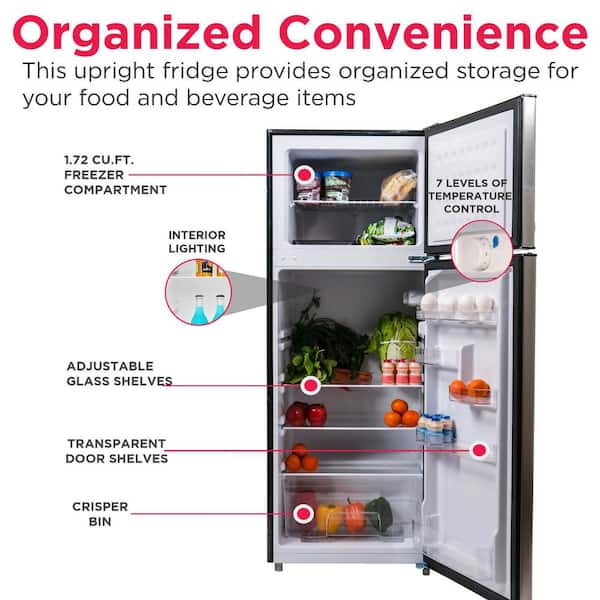
Some refrigerators have separate compartments like freezer and fridge sections. Measure each compartment’s height, width, and depth separately. Calculate the cubic feet for each compartment.
- Add all compartment volumes together for total cubic feet.
This method gives a more accurate total capacity. It accounts for different areas inside the fridge. Adding compartments helps understand usable space better.
Credit: www.homedepot.com
Tips For Accuracy
Measuring the cubic feet of a refrigerator requires care and precision. Small mistakes can change the final number. Use these tips for accuracy to get the best result. They help you avoid common errors and ensure your measurement is reliable.
Double Check Measurements
Measure the height, width, and depth of the refrigerator twice. Use the same tape measure or ruler each time. Write down each number carefully. Confirm that the numbers match. If they do not, measure again. This step prevents errors from rushing or misreading. Accuracy starts with careful measuring.
Account For Shelves And Drawers
Some refrigerators have shelves and drawers that take up space inside. Measure the height and depth of these compartments separately. Subtract their volume from the total if you want the usable space. This gives a true idea of storage capacity. It also helps when comparing different models or planning your kitchen space.
Frequently Asked Questions
How Do You Calculate Refrigerator Cubic Feet?
Measure the fridge's interior height, width, and depth in feet. Multiply these three numbers to get cubic feet. This gives you the storage capacity inside the refrigerator accurately.
Why Is Measuring Cubic Feet Important For Refrigerators?
Knowing cubic feet helps you choose the right fridge size. It ensures the fridge fits your space and meets your storage needs efficiently.
Can External Fridge Size Determine Cubic Feet?
No, external size doesn’t accurately show cubic feet. Interior measurements provide the true storage capacity inside the refrigerator.
What Tools Do I Need To Measure Fridge Cubic Feet?
Use a tape measure or ruler to measure the fridge's interior dimensions. Accurate measuring tools ensure precise cubic feet calculation.
Conclusion
Measuring a refrigerator’s cubic feet helps find the right size for your needs. Simply multiply height, width, and depth in feet. This gives you the volume inside the fridge. Knowing this number makes choosing easier and avoids buying too big or small.
Always measure carefully and double-check your numbers. This way, you get a fridge that fits your space and stores your food well. Understanding cubic feet saves time and prevents guesswork. It’s a simple step that makes a big difference.