Are you tired of lumpy, sticky mashed potatoes that just don’t hit the mark? Making perfect mashed potatoes can be tricky, but using a potato ricer changes everything.
It helps you get smooth, fluffy, and creamy potatoes every single time. In this post, you’ll discover exactly how to use a potato ricer to transform your mashed potatoes from ordinary to outstanding. Ready to impress your family and friends with the best mash you’ve ever made?
Keep reading—you’re about to learn a simple trick that will make a big difference.

Credit: food52.com
Choosing The Right Potatoes
Choosing the right potatoes is the first key to making perfect mashed potatoes with a potato ricer. The texture and flavor of your mash depend heavily on the type of potato you select. Knowing which potatoes work best will help you achieve that fluffy, smooth consistency everyone loves.
Best Potato Varieties
Not all potatoes mash the same. Starchy potatoes like Russets are ideal because they break down easily and create a light, airy texture when pressed through a ricer. Their low moisture content means your mash won’t turn gummy or gluey.
Yukon Golds are another excellent choice. They have a slightly buttery flavor and a creamy texture that makes your mashed potatoes rich and smooth without needing extra butter or cream. If you want a balance between fluffiness and creaminess, try mixing Russets and Yukon Golds.
How To Pick Fresh Potatoes
Freshness matters more than you might think. Choose potatoes that feel firm and heavy for their size, without soft spots or green patches. Green areas indicate solanine, which tastes bitter and isn’t good to eat.
Also, avoid potatoes with lots of sprouts or wrinkles. Sprouts mean the potato is past its prime and may have lost flavor and texture. When you store your potatoes, keep them in a cool, dark place with good ventilation to maintain freshness longer.
Preparing Potatoes For Mashing
Preparing potatoes for mashing with a potato ricer starts with simple but important steps. Proper preparation ensures smooth, creamy mashed potatoes without lumps. It also helps the potatoes cook evenly and absorb butter or cream better. Follow these key points for perfect results.
Washing And Peeling Tips
Always wash potatoes under cold running water. Remove dirt and any spots on the skin. Use a vegetable brush for a thorough clean. Peeling is important for smooth mash. Use a sharp peeler to remove the skin thinly. Avoid leaving thick skin pieces, as they can cause lumps. Some prefer to leave the skin on for texture, but this may affect smoothness.
Cutting Potatoes Evenly
Cut potatoes into equal-sized pieces. This helps them cook at the same speed. Aim for chunks about 1 to 2 inches in size. Uneven pieces cause some to overcook while others stay hard. Use a sharp knife and a sturdy cutting board. Keep pieces similar to make mashing easier and more consistent.
Boiling Potatoes Perfectly
Boiling potatoes perfectly is the first key to smooth mashed potatoes. Proper boiling softens the potatoes evenly. This makes them easy to press through the potato ricer.
Start with the right water temperature and timing to avoid mushy or hard potatoes. Checking doneness ensures the perfect texture for ricing.
Water Temperature And Timing
Use cold water to start boiling your potatoes. Place peeled or unpeeled potatoes in a pot and cover with cold water.
Bring water to a gentle boil over medium-high heat. High heat can cook the outside too fast and leave the inside firm.
Boil potatoes for 15 to 20 minutes. The exact time depends on the potato size and type.
- Cut potatoes cook faster than whole ones.
- Waxy potatoes need less time than starchy types.
Drain potatoes immediately after boiling to stop cooking.
Testing Potato Doneness
Test doneness by piercing a potato with a fork or knife. It should slide in easily without resistance.
If the potato feels firm or hard, boil it a few minutes longer. Check every 2 to 3 minutes to avoid overcooking.
Potatoes that are too soft can become watery and gluey after ricing. Aim for tender but firm potatoes for best results.

Credit: www.mygourmetconnection.com
Using A Potato Ricer
Using a potato ricer can transform your mashed potatoes from lumpy to perfectly smooth with minimal effort. This kitchen tool helps you achieve a creamy texture without overworking the potatoes, which often leads to a gluey consistency. Let’s take a closer look at how to get the best results from your potato ricer.
Setting Up The Ricer
First, make sure your potato ricer is clean and dry before use. Assemble it by fitting the hopper (the part where you place the potatoes) securely onto the handles. If your ricer comes with different discs, choose the one with the holes size you prefer—smaller holes for finer potatoes, larger for chunkier texture.
Place a sturdy bowl beneath the ricer to catch the mashed potatoes as they come out. It’s important to have a stable surface to press against so you don’t make a mess or strain your hands. Have a spatula ready nearby to scrape off any potato bits stuck to the ricer.
Pressing Potatoes Through
Start by peeling and boiling your potatoes until they are tender. Drain them well to avoid watery mash. Then, working in batches, place a few potatoes into the ricer’s hopper.
Hold the handles firmly and squeeze them together slowly but with steady pressure. You’ll see the potatoes emerge in smooth strands that fall into your bowl. Avoid rushing this step; pressing too fast can cause the ricer to jam or potatoes to come out unevenly.
If you notice any bits sticking inside, pause and scrape them out before continuing. After pressing all your potatoes, gently fold in your favorite additions like butter, cream, or seasoning. The result? Fluffy mashed potatoes with a silky texture that you can taste in every bite.
Creating Fluffy Mashed Potatoes
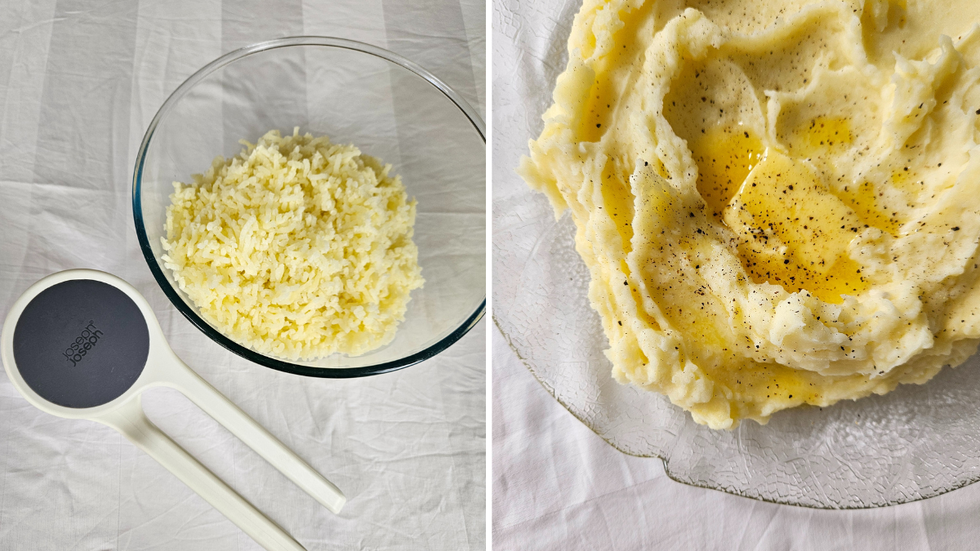
Creating fluffy mashed potatoes is easy with a potato ricer. First, boil the potatoes until soft. Use the ricer to mash them smoothly. This method ensures lump-free, airy texture. Season with butter, milk, and salt for the perfect taste. Enjoy your creamy, delightful mashed potatoes!
Creating fluffy mashed potatoes with a potato ricer brings out their true potential. The ricer helps achieve a light, airy texture. This method prevents lumps and ensures even consistency. Let's explore how to enhance this dish.
Adding Butter And Cream
Use unsalted butter for a pure taste. Melt the butter for easy mixing. Add it gradually to the potatoes. Pour in warm cream or milk. The warmth helps blend it smoothly. Mix until the potatoes are creamy and soft.
Seasoning For Flavor
Salt is essential. Start with a small amount. Taste, then adjust as needed. Add pepper for a hint of spice. You can also use garlic powder for extra flavor. Fresh herbs like chives or parsley add a fresh touch. Mix well to combine all ingredients.
Credit: www.goodhousekeeping.com
Tips For Serving And Storing
Serving and storing mashed potatoes made with a potato ricer requires some care. Proper handling keeps the texture smooth and the flavor fresh. It also prevents waste and keeps leftovers safe to eat.
Keeping Mashed Potatoes Warm
To keep mashed potatoes warm without drying out, use a low heat setting. Cover the potatoes with a lid or foil to trap moisture. A slow cooker or warming tray works well for this. Stir occasionally to maintain a creamy texture. Avoid overheating, as it can make potatoes gummy.
Storing Leftovers Safely
Cool mashed potatoes quickly before storing. Place them in an airtight container. Store in the refrigerator for up to three days. For longer storage, freeze in a freezer-safe bag or container. Thaw in the refrigerator before reheating. Reheat gently on the stove or microwave, stirring often to keep smoothness.
Common Mistakes To Avoid
Making mashed potatoes with a potato ricer can yield wonderfully smooth and fluffy results. However, a few common mistakes can ruin the texture and taste. Avoiding these pitfalls will help you get the perfect mash every time.
Overworking The Potatoes
Using a potato ricer usually prevents overworking, but it’s still possible to go too far if you press repeatedly or mash the potatoes with extra force afterward.
Overworked potatoes become gluey and dense. This happens because the starch breaks down too much, releasing excess starch. Keep your mashing light and gentle, and stop as soon as the potatoes pass through the ricer.
Ask yourself: are you handling the potatoes with care, or squeezing every last bit out aggressively? Less is more here.
Using The Wrong Potatoes
Not all potatoes are created equal for mashing. Waxy potatoes like red or new potatoes don’t mash well because they hold their shape and can become sticky.
Starchy potatoes, such as Russets or Yukon Golds, are your best bet. They break down easily and create that light, fluffy texture you want.
Think about what you have on hand. Using the wrong type can turn your perfect potato ricer effort into a disappointment. Choosing the right potato is half the battle won.
Frequently Asked Questions
What Is The Best Potato Type For A Potato Ricer?
The best potatoes are starchy varieties like Russets or Yukon Golds. They mash smoothly and absorb butter well. Avoid waxy potatoes as they yield gummy mashed potatoes.
How Do You Prepare Potatoes For A Ricer?
Peel and cut potatoes into equal chunks. Boil until tender but not falling apart. Drain well to avoid watery mashed potatoes. Then, place chunks into the potato ricer.
Can A Potato Ricer Make Creamy Mashed Potatoes?
Yes, a potato ricer produces fluffy, lump-free mashed potatoes. It breaks down potatoes finely without overworking starch. This results in a creamy, smooth texture without gluey consistency.
How Much Butter And Milk To Add In Mashed Potatoes?
Start with 2-3 tablespoons butter and ¼ cup milk per 2 pounds potatoes. Adjust to taste and desired creaminess. Warm milk blends better into mashed potatoes.
Conclusion
Mashed potatoes made with a potato ricer turn out smooth and fluffy. This tool helps avoid lumps and makes cooking easier. You just need cooked potatoes, a ricer, and simple ingredients. Press potatoes through the ricer, add butter and milk, then mix gently.
Enjoy a creamy side dish that pairs well with many meals. Keep practicing to find the perfect texture for your taste. Simple steps lead to tasty results every time.