Is your stovetop covered with stubborn baked-on grease that just won’t budge? You’re not alone.
Grease buildup can make your kitchen look messy and even affect how well your stove works. But don’t worry—removing that tough grime is easier than you think. You’ll discover simple, effective ways to get your stovetop sparkling clean again. Keep reading, and say goodbye to greasy messes for good!
Causes of Baked-on Grease
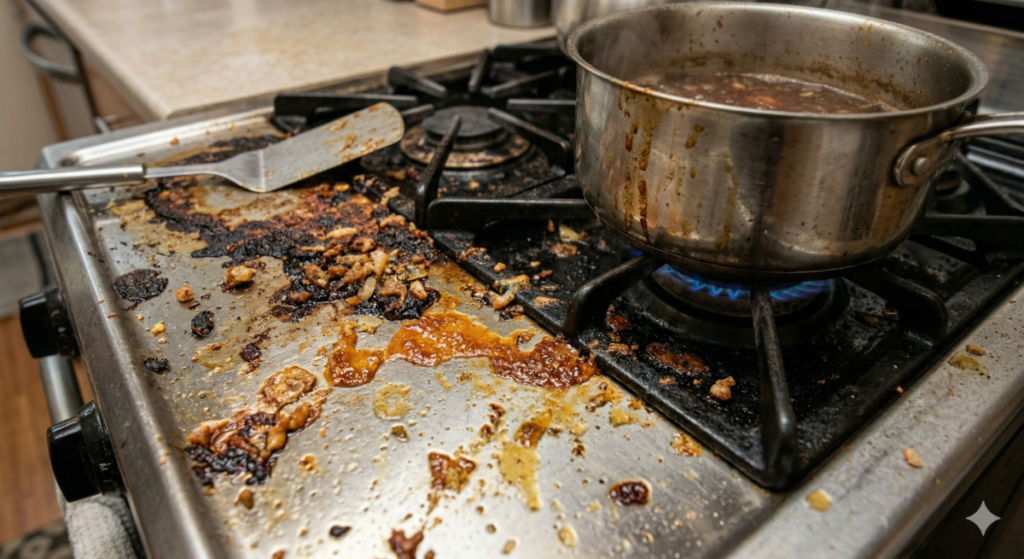
Baked-on grease on your stove top forms from a mix of cooking residues and heat. These residues stick and harden, making cleaning tough. Understanding the causes helps prevent buildup and makes cleaning easier.
Common Cooking Residues
Grease is not the only residue left behind while cooking. Food particles, oil splatters, and sauces also add to the mess. Over time, these residues mix and form a sticky layer. This layer traps more grease and dirt.
Residues like oil and fat are especially sticky. They cling to stove surfaces and resist easy removal. Sugary sauces and burnt food bits make the grease tougher to clean.
Heat And Grease Interaction
Heat changes grease's texture and behavior on the stove. High temperatures cause grease to melt and spread. When cooled, it hardens into a tough, baked layer.
Repeated heating and cooling cycles make the grease more stubborn. It bonds tightly with stove surfaces. This bond makes simple wiping ineffective. Scrubbing or special cleaners are often needed to remove it fully.
Essential Cleaning Tools
Removing baked-on grease from your stove top needs the right cleaning tools. Using proper tools saves time and effort. It makes the cleaning process easier and more effective. Selecting the right scrubbers and cleaning agents helps tackle tough grease spots. These essentials protect your stove surface and restore its shine.
Recommended Scrubbers
- Non-scratch sponges: Gentle but effective on grease.
- Soft-bristle brushes: Reach corners and edges easily.
- Microfiber cloths: Great for wiping and polishing.
- Plastic scrapers: Remove stubborn residue without damage.
- Steel wool pads: Use carefully on stainless steel only.
Effective Cleaning Agents
- Baking soda: Natural, non-toxic, and excellent for scrubbing.
- White vinegar: Cuts grease and deodorizes.
- Dish soap: Breaks down oils and grime.
- Commercial stove cleaners: Designed for tough grease removal.
- Hydrogen peroxide: Helps disinfect and lift stains.
Prepping The Stove Top
Prepping the stove top is the first key step to remove baked-on grease effectively. Proper preparation makes cleaning easier and protects your stove surface. It also helps to avoid spreading grease around your kitchen. Follow simple steps for a thorough and safe clean.
Removing Loose Debris
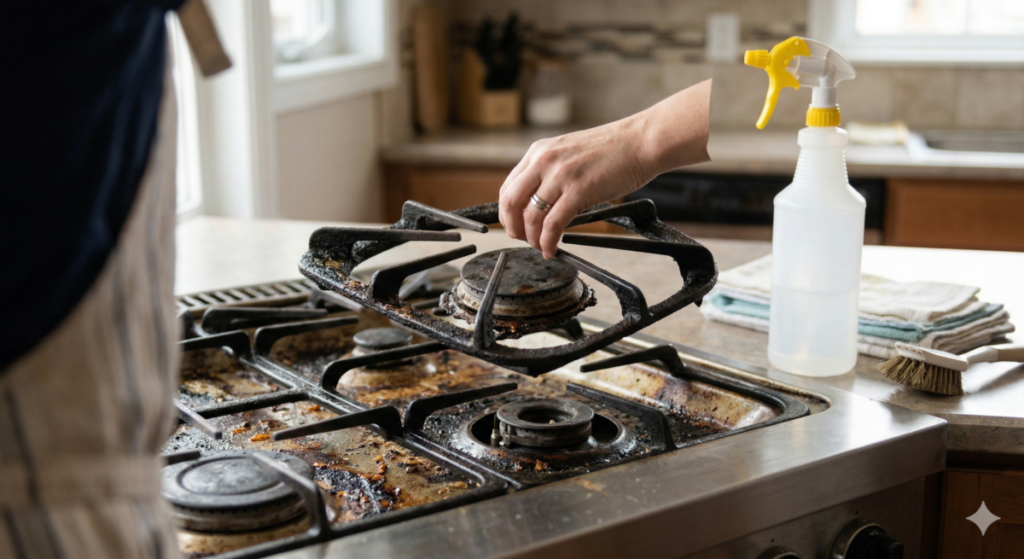
Start by clearing off any loose food crumbs or particles from the stove top. Use a dry cloth or a soft brush to sweep away dirt. Avoid pushing debris into burner holes. Removing this debris prevents scratching the surface during cleaning. It also helps cleaning products work better on grease.
Safety Precautions
Ensure the stove is completely cool before starting. Turn off all burners and unplug the stove if possible. Wear rubber gloves to protect your hands from harsh cleaners. Open a window or turn on a fan for good ventilation. Keep cleaning products away from children and pets. These steps keep you safe during the cleaning process.
Diy Cleaning Solutions
Stubborn grease on your stove top can be frustrating. But with the right DIY cleaning solutions, you can tackle it effectively. Homemade mixtures work wonders. Plus, they're easy to make.
Vinegar And Baking Soda Mix
Vinegar and baking soda are a powerful duo. They clean without harsh chemicals. First, sprinkle baking soda on the greasy area. Then, spray vinegar over the baking soda. Watch it fizz. Let it sit for 15 minutes.
Afterward, scrub with a non-abrasive sponge. Rinse with warm water. Dry with a clean cloth. Repeat if needed for tough spots.
Lemon And Salt Paste
Lemon and salt make another effective solution. Cut a lemon in half. Sprinkle salt on the greasy surface. Use the lemon half like a scrubber. Squeeze gently as you scrub.
Let the mixture sit for 10 minutes. Wipe away with a damp cloth. The grease should come off easily. Enjoy your clean stove top.
Step-by-step Cleaning Process
Removing baked-on grease from your stove top can feel like a tough job, but breaking the process down into clear steps makes it manageable. You’ll find that using the right cleaning solutions, effective scrubbing, and proper rinsing can transform your stove top back to its shiny best. Let’s walk through each part carefully, so you know exactly what to do and why it works.
Applying Cleaning Solutions
Start by choosing a cleaner suited for tough grease—something like a degreaser or a mix of baking soda and vinegar works well. Spray or spread the solution generously over the greasy areas, making sure to cover every stubborn spot.
Let the cleaner sit for at least 10 to 15 minutes. This waiting period softens the hardened grease, making it easier to remove. Have you ever rushed this step and ended up scrubbing endlessly? Patience here saves effort later.
Scrubbing Techniques
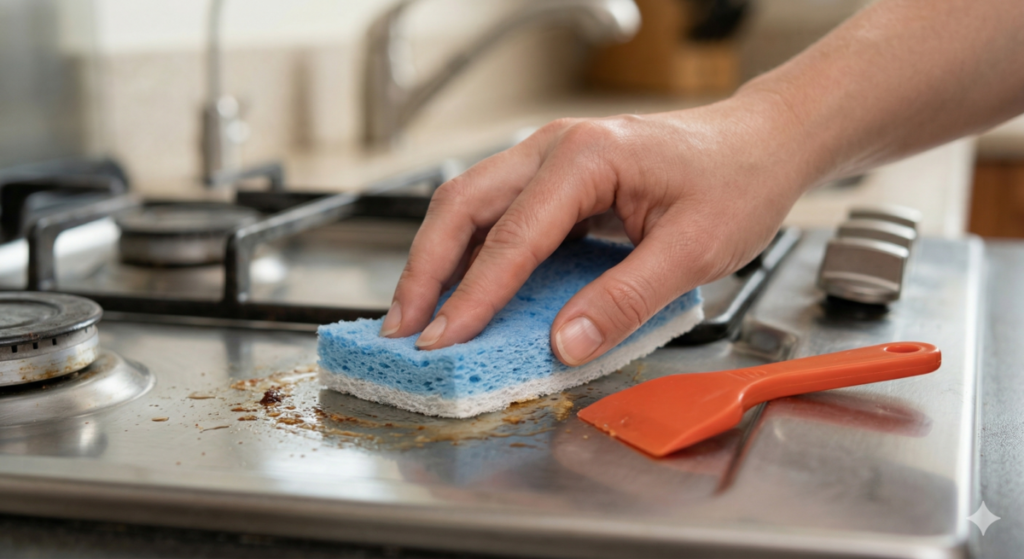
Use a non-abrasive scrubber or sponge to avoid scratching your stove top surface. Apply firm pressure and work in small circular motions to lift the grease effectively.
For particularly tough spots, a plastic scraper tool can help loosen the residue without damaging the surface. Remember, gentle but persistent scrubbing beats aggressive scrubbing that might harm your stove.
Rinsing And Drying
After scrubbing, wipe the area with a damp cloth to remove any leftover cleaner and loosened grease. You might need to rinse the cloth several times to ensure no residue remains.
Finally, dry the stove top with a clean, soft towel to prevent streaks and water spots. How much difference does a spotless, dry surface make in your kitchen's appearance? It’s the final step that seals the job perfectly.
Using Commercial Cleaners
Using commercial cleaners can make removing baked-on grease from your stove top easier. These products are designed to break down tough grease and grime quickly. They save time and effort compared to natural methods. Choosing the right cleaner and applying it properly ensures the best results.
Choosing The Right Product
Select a cleaner made for stove tops or kitchen surfaces. Check the label for grease-cutting power. Avoid harsh chemicals that can damage your stove. Look for non-abrasive formulas safe for your stove type. Products with degreasing enzymes work well. Read customer reviews to find effective options. 🛒 Shop top-rated cooktop cleaning kits on Amazon
Application Tips
- Wear gloves to protect your skin from chemicals.
- Spray the cleaner evenly over the greasy areas.
- Allow the product to sit for 5 to 10 minutes for better action.
- Use a soft cloth or sponge to wipe away loosened grease.
- Repeat if necessary for stubborn spots.
- Rinse the surface with a damp cloth to remove residue.
- Dry the stove top with a clean towel to prevent streaks.
Preventing Future Grease Build-up
Preventing baked-on grease on your stove top is easier than scrubbing it off later. The key lies in consistent care and quick action. If you build simple habits, you’ll save time and keep your kitchen looking fresh.
Regular Maintenance Habits
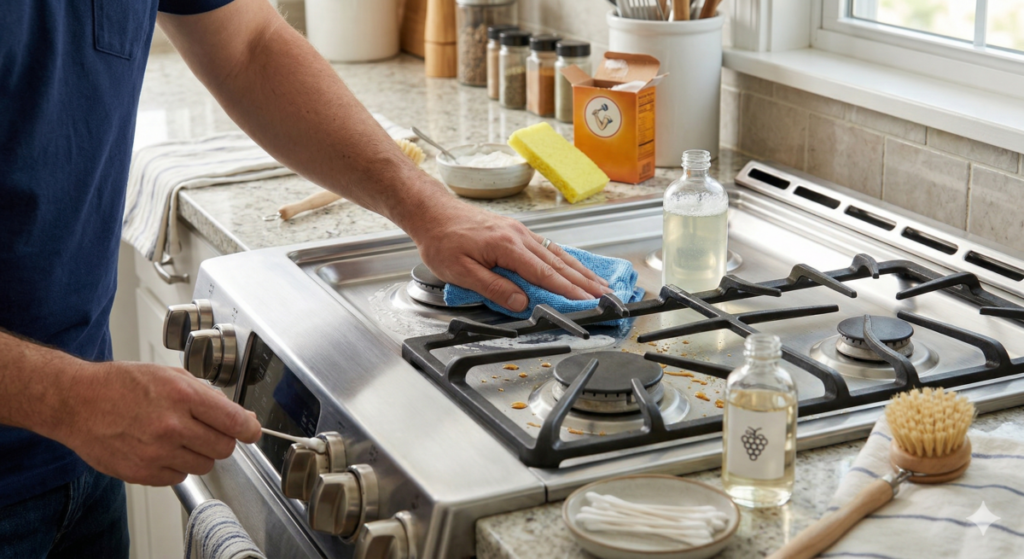
Make it a habit to wipe down your stove after every use. Even a quick wipe with a damp cloth removes fresh grease before it hardens. Use a mild dish soap solution to cut through oily residue without damaging the surface.
Set a weekly schedule for a deeper clean. This might include using a paste of baking soda and water to gently scrub stubborn spots. I found that cleaning once a week keeps the grease from turning into a tough mess I dread tackling.
Also, check your stove knobs and edges where grease tends to hide. These spots often get overlooked but cause build-up over time. A cotton swab dipped in vinegar works wonders for tight spaces.
Quick Clean-up Tips
Don’t let spills sit. Wipe up splatters immediately with a paper towel or cloth. This stops grease from baking onto the surface during your next cooking session.
Keep a small spray bottle of diluted vinegar or a gentle cleaner near your stove. A quick spritz and wipe after cooking can prevent layers of grease from forming. It’s a small step that makes a huge difference.
Consider using stove burner liners or silicone mats. They catch drips and make clean-up much faster. Just replace or wash them regularly to avoid trapping grease underneath.
Have you tried any quick clean-up tricks that work well for you? Sharing your tips might help others keep their stoves spotless without stress.
Frequently Asked Questions
How Can I Remove Baked-on Grease Without Harsh Chemicals?
Use a mixture of baking soda and water to form a paste. Apply it on the grease, let it sit for 15 minutes, then scrub gently with a sponge. This method is effective and safe for most stove tops.
What Household Items Help Clean Stubborn Stove Grease?
White vinegar, baking soda, and lemon juice are great natural cleaners. They break down grease without damaging surfaces. Combine vinegar with baking soda for tough stains, then wipe clean with a damp cloth.
Is It Safe To Use Abrasive Scrubbers On Stove Tops?
Avoid using abrasive scrubbers on glass or ceramic stove tops. They can cause scratches and damage. Use soft sponges or microfiber cloths instead to protect the surface while cleaning.
How Often Should I Clean Baked-on Grease From My Stove?
Clean your stove top after every use or at least once a week. Frequent cleaning prevents grease buildup, making it easier to maintain and ensuring a hygienic cooking area.
Conclusion
Removing baked-on grease from your stove top is easier than it seems. Use gentle scrubbing with common kitchen cleaners. Let the cleaner sit a few minutes for best results. Always wipe the surface clean with a soft cloth. Regular cleaning helps avoid tough grease build-up.
Keep your stove looking fresh and working well. Clean stove tops make cooking safer and more pleasant. Small efforts bring big changes in kitchen cleanliness. Try these simple steps to keep your stove spotless.