As an Amazon Associate, I earn from qualifying purchases.
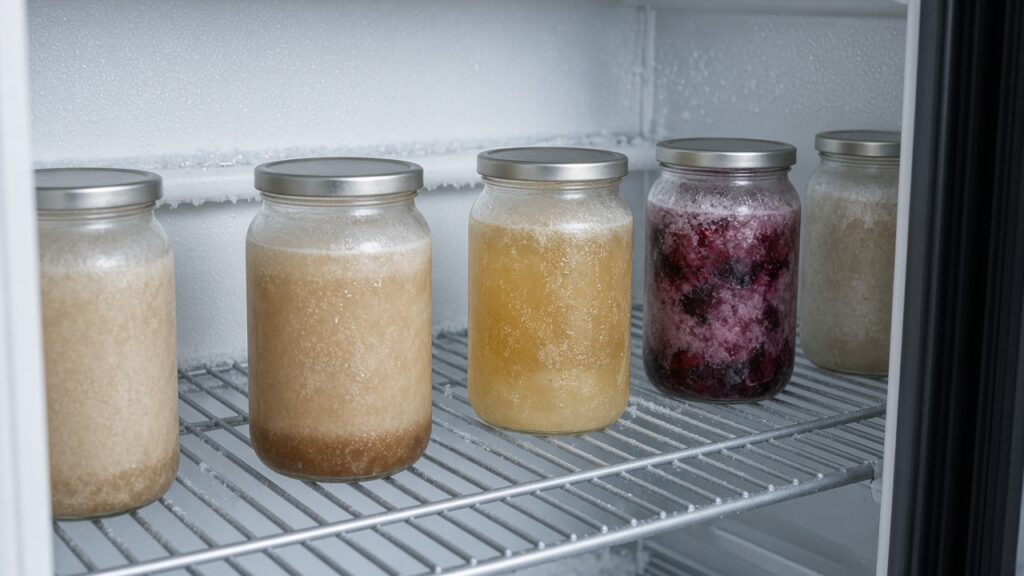
Can you freeze in glass canning jars? Yes, you can, as long as you choose the right jar shape, leave enough headspace and avoid sudden temperature changes. Get those three things right and mason jars become some of the best freezer containers in your kitchen.
Glass does not absorb odors or stains, it is easy to see what is inside, and canning jars are inexpensive and reusable. The catch is that water expands as it freezes, and glass cannot stretch to make room. That is why some people pull a cracked jar out of the freezer and decide glass is not freezer safe. In reality, nearly every broken jar comes down to a handful of avoidable mistakes, which this guide walks through step by step.
Can You Freeze in Glass Canning Jars Safely?
Freezing in glass canning jars is safe when the jar is designed to handle expansion. Canning jars are made from tempered soda-lime glass that tolerates cold well, and many manufacturers sell specific sizes marked as freezer safe. Problems happen when liquid expands upward into a narrow neck or when a jar goes straight from hot to frozen or frozen to hot.
Three factors decide whether a jar survives the freezer:
- The shape of the jar, especially whether it has a shoulder.
- The headspace you leave between the food and the lid.
- Temperature control when filling, freezing and thawing.
Choose Straight-Sided Jars Without Shoulders
The single most important choice is the jar shape. Straight-sided jars, such as wide-mouth pints and most half-pints, let frozen contents push straight up as they expand. Jars with a shoulder, the curve where the body narrows toward the mouth, trap expanding ice beneath that curve, which puts pressure on the glass and can crack it.
We explain the physics in more detail in why mason jars with shoulders are not freezer safe. As a rule of thumb, wide-mouth jars with straight sides are the best choice, and many brands label these sizes with a freezer line on the glass. If you want to compare specific options, see our roundup of the best glass jars for freezing.
A set of wide-mouth straight-sided mason jars is the most practical place to start. Check price on Amazon.
How Much Headspace to Leave
Headspace is the empty space between the top of the food and the lid. It gives food somewhere to expand. The National Center for Home Food Preservation publishes headspace guidelines for freezing, and they are a good standard to follow for liquids and foods packed in liquid:
| Jar type | Pint | Quart |
|---|---|---|
| Wide-mouth jar | 1/2 inch | 1 inch |
| Narrow-mouth jar | 3/4 inch | 1 1/2 inches |
For dry-packed foods with little liquid, such as plain frozen berries or chopped vegetables, about 1/2 inch is usually enough. When in doubt, leave more room rather than less. Many freezer-safe jars have a fill line molded into the glass, which takes the guesswork out of it.
Step-by-Step: How to Freeze Food in Mason Jars
- Use clean, crack-free jars. Inspect each jar and run a finger around the rim. Discard any with chips or hairline cracks, since those weak spots are where breaks start.
- Cool food completely. Bring soups, stocks and sauces to room temperature, then chill them in the refrigerator before jarring. Putting hot food into a jar and straight into the freezer creates thermal stress and can also warm nearby frozen foods.
- Fill to the correct headspace. Use the chart above or the jar's freeze-fill line.
- Wipe the rim and add the lid. Use a clean lid and band, or a one-piece plastic storage cap. Screw it on loosely at first.
- Freeze upright without the lid tightened. Leaving the lid slightly loose for the first few hours lets air escape as the contents expand. Tighten it once the food is frozen solid.
- Leave space around each jar. Crowding jars together or against the freezer wall slows freezing and can cause jars to knock into each other.
- Label and date. Write the contents and date on the lid with a marker or freezer label.
Reusable plastic storage caps for mason jars are convenient for freezing because they do not rust and are easy to remove when cold. Check price on Amazon.
Foods That Freeze Well in Glass Jars
Mason jars are ideal for foods you scoop or pour:
- Soups, stews, chili and broth
- Pasta sauce and pesto
- Cooked beans and grains
- Fruit purees, smoothie packs and baby food portions
- Berries and chopped fruit
- Shredded cheese and breadcrumbs
- Cookie dough and pancake batter in small portions
Large, irregular items like whole chicken pieces, large cuts of meat or bread loaves are better suited to bags or flat containers. Our guide to the best freezer containers for food covers the alternatives.
How to Thaw Frozen Mason Jars Without Cracking Them
Thawing is the other point where glass jars break, because a frozen jar dropped into hot water expands unevenly. Use one of these gentle methods:
- In the refrigerator: The safest option. Move the jar to the fridge a day ahead. Larger quarts may take longer.
- In cool water: Place the sealed jar in a bowl of cool tap water and change the water every 30 minutes or so. Never use hot or boiling water.
- Partially thaw, then heat: Once the contents loosen from the glass, slide them into a saucepan and finish heating on the stove.
Do not put a frozen glass jar directly into the microwave or oven, and do not set it on a hot burner. If a lid is stuck after freezing, our tips on how to remove a stuck lid from a glass jar will help.
Common Mistakes That Crack Jars in the Freezer
- Using shouldered jars for liquids.
- Overfilling past the recommended headspace.
- Freezing warm food or putting jars into the freezer while still hot.
- Tightening the lid before the contents are frozen.
- Sudden temperature changes, such as running hot water over a frozen jar.
- Reusing chipped or scratched jars that already have a weak point.
- Laying jars on their side before they are frozen, which lets liquid move into the neck.
Glass Jars vs. Plastic Freezer Containers
Both have a place. Glass jars are non-porous, do not hold onto tomato stains or garlic smells, are fully reusable, and let you see the contents at a glance. They are heavier, take up more vertical space and need careful thawing. Plastic containers and freezer bags are lighter, stack flat and are less likely to break if dropped, but they can stain, absorb odors and wear out. Many cooks use glass for soups and sauces and bags for meats and bulky items.
Frequently Asked Questions
Can you freeze regular mouth mason jars?
Yes, if the jar is straight-sided or you leave extra headspace below the shoulder. For liquids, narrow-mouth jars with a pronounced shoulder carry the highest risk, so many cooks reserve them for dry foods.
How long can food stay frozen in mason jars?
The jar does not change storage time. Follow the usual freezer guidelines for each food. Most soups, stocks and sauces keep their best quality for roughly two to three months, though they remain safe longer at 0°F.
Do I need special lids for freezing in canning jars?
No. Standard two-piece lids and bands work, as do one-piece plastic storage caps. You do not need a vacuum seal for freezing, only a closure that keeps air and odors out.
Can you put a mason jar from the freezer into the microwave?
It is not recommended. Rapid heating of frozen glass can cause it to crack. Thaw in the refrigerator or cool water first, and transfer food to a microwave-safe dish if you need to reheat it quickly.
Why did my mason jar crack in the freezer?
The usual causes are too little headspace, a shouldered jar, freezing food while it was warm, a lid that was tightened too early, or an existing chip in the glass.
Final Thoughts
So, can you freeze in glass canning jars? Absolutely. Choose straight-sided, wide-mouth jars, leave the recommended headspace, cool food before freezing and thaw gently. With those habits, mason jars give you a clean, reusable, plastic-free way to stock your freezer with soups, sauces and ready-to-go ingredients.